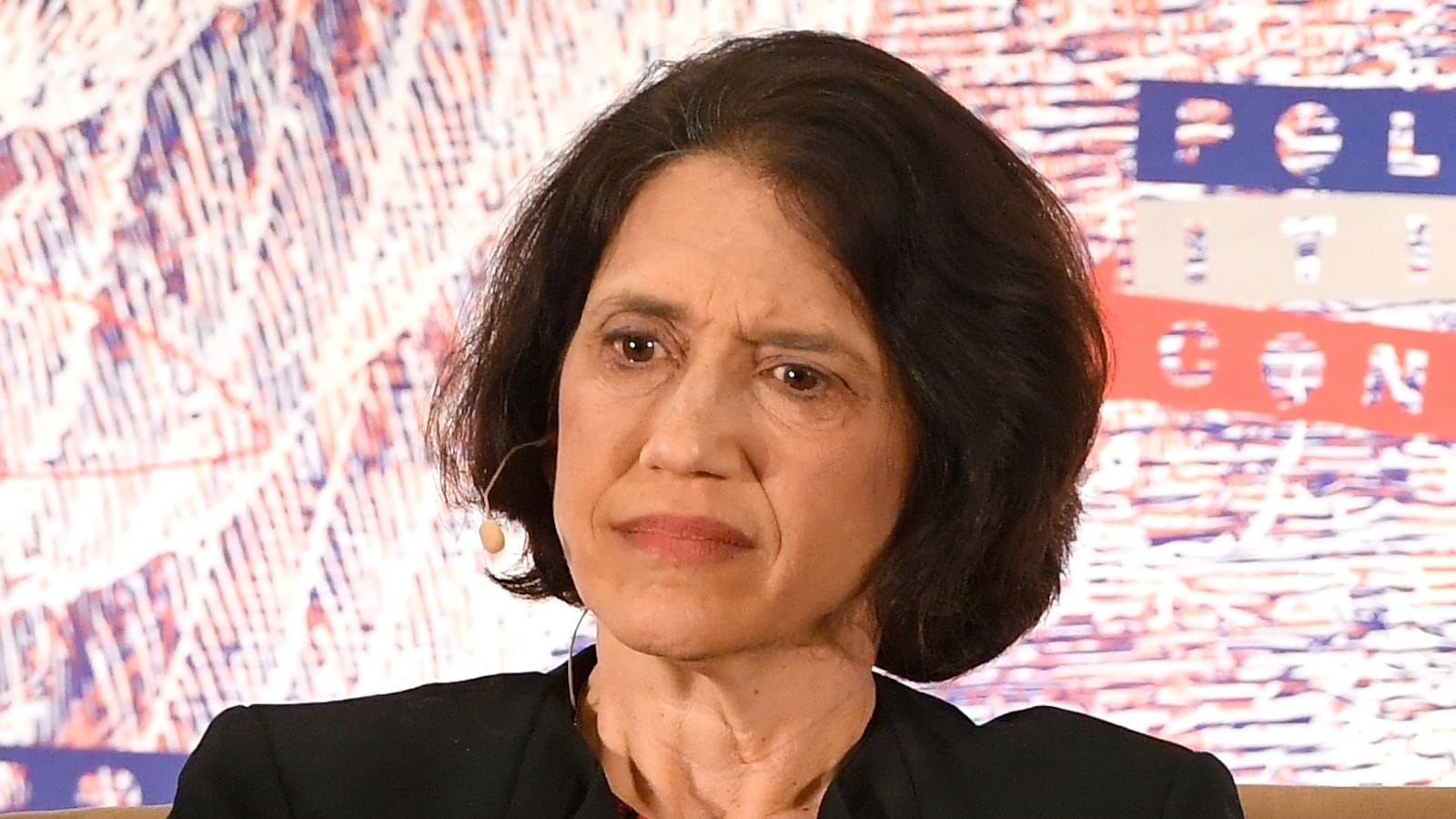
The star Washington Post columnist Jennifer Rubin resigned from the paper Monday and took a parting shot at Jeff Bezos, its billionaire owner.
Driving her departure was recent executive decisions at the Post, she told CNN. That included its refusal to publish a satirical cartoon showing Bezos bending at the knee for Donald Trump and its blocking of a planned Kamala Harris endorsement last fall.
Rubin often pens columns from a conservative perspective but has been a staunch critic of the president-elect. She said Monday the Post has “failed spectacularly at a moment that we most need a robust, aggressive free press.”
It is that belief that led Rubin to announce that she was beginning a new media venture with a tagline—“Not Owned By Anybody”—that makes clear her disdain for Bezos’ ownership.
The 62-year-old indicated she will continue to write scathing columns about Trump at her new site, The Contrarian, which she launched Monday along with the CNN legal analyst Norm Eisen (who is also exiting his role).
“Our goal is to combat, with every fiber of our being, the authoritarian threat that we face,” Rubin told CNN.
She went more in depth in a statement shared with the Daily Beast: “We’ve watched as corporate and billionaire owners of media outlets abused their audiences’ loyalty and undercut journalism’s vital role in a free democracy. Instead of safeguarding democratic values, they have enabled the gravest threats to democracy—Donald Trump and his allies—at the very time when a robust and independent press is most essential. We need an alternative, truly independent outlet that is unafraid of the administration and unwilling to equivocate or bend the knee.”
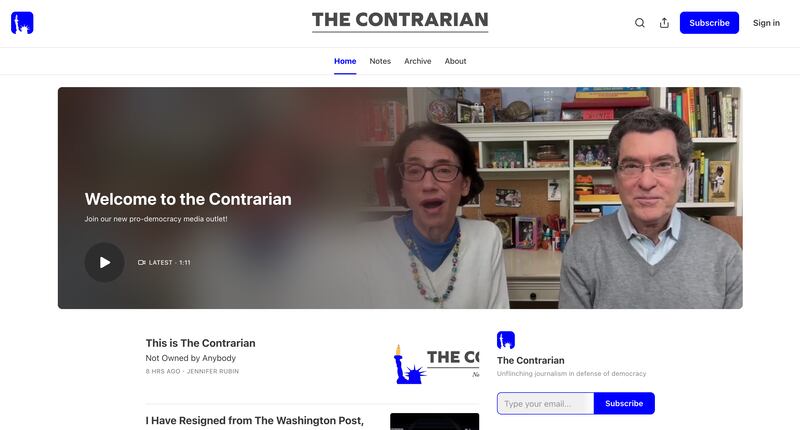
The Contrarian is hosted by the Substack newsletter platform—like The Bulwark and Drop Site News, other recent additions to the media landscape—and will cost $7 a month. A handful of free articles are available at its launch, however.
Eisen, 64, said his vision for The Contrarian is a “defiant and uncompromising platform free from false equivalence.” He added that the U.S., on the verge of Trump 2.0, faces an “existential threat to American democracy.”
The site plans to feature about two dozen contributors who are “diverse across parties and generations,” but are “connected by the shared belief that we need an unshackled media in order to meet this moment.” Rubin posted to X that the site will not be all politics, however, and will include “cooking, humor, film, and even pets.”
Rubin’s exit is the latest high-profile departure at the Post, which its executive editor, Matt Murray, said Monday is going through a “period of significant change.” That change included the storied paper laying off four percent of its staff last week, including nearly its entire public relations department.

The Pulitzer Prize-winning cartoonist Ann Telnaes resigned on Jan. 3 after her Bezos cartoon was nixed. Like Rubin, Telnaes has a Substack and she took to there to grill her former employer of 17 years.
The Post’s online audience has shrunk significantly since 2021, a Semafor report revealed Monday. Its website pulled in as many as 22.5 million daily active users shortly after the Capitol riot on Jan. 6, 2021, but was down to as low as 2.5 million to 3 million daily users last summer—numbers from before there was a subscriber exodus in the hundreds of thousands over the blocking of a Harris endorsement.
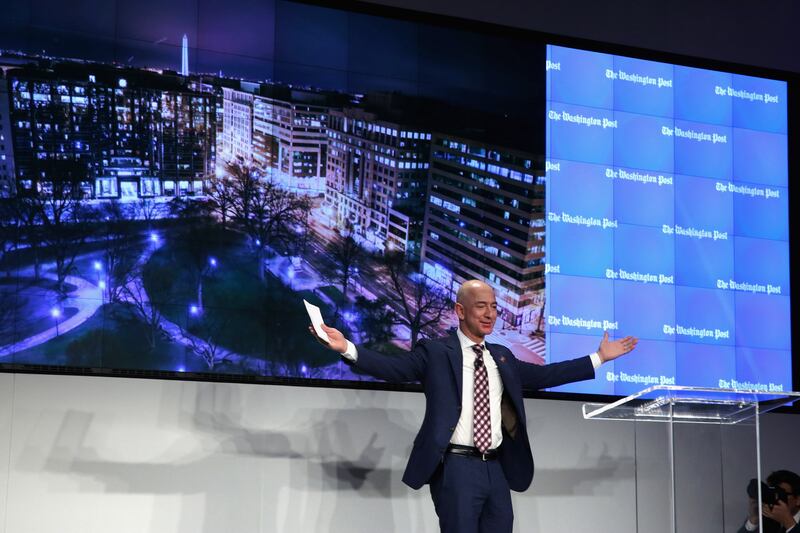
That steep falloff may be why Bezos appears as involved as ever in the paper’s operations. He purchased the Post for $250 million in 2013 from the Graham family after 80 years of ownership. It was home to journalism titans—like former editor Ben Bradlee—and won 68 Pulitzer Prizes, but has notched just two since 2020. The New York Times has won 10 in that same time frame.
Murray sent a lengthy email to Post staffers on Monday morning with “The Future” as its subject line. He adressed the growing list of departures, business challenges, and the paper’s restructuring.
“The Post has come through tough moments before, and I am confident we will again,” he said. “The world needs a stronger Post. That’s why I came here, and why I’m proud to be here. My sincere and deepest hope as we embark on a new year is that together we can forge a new path, rooted in our great legacy but pointed squarely at building The Post of the future.”