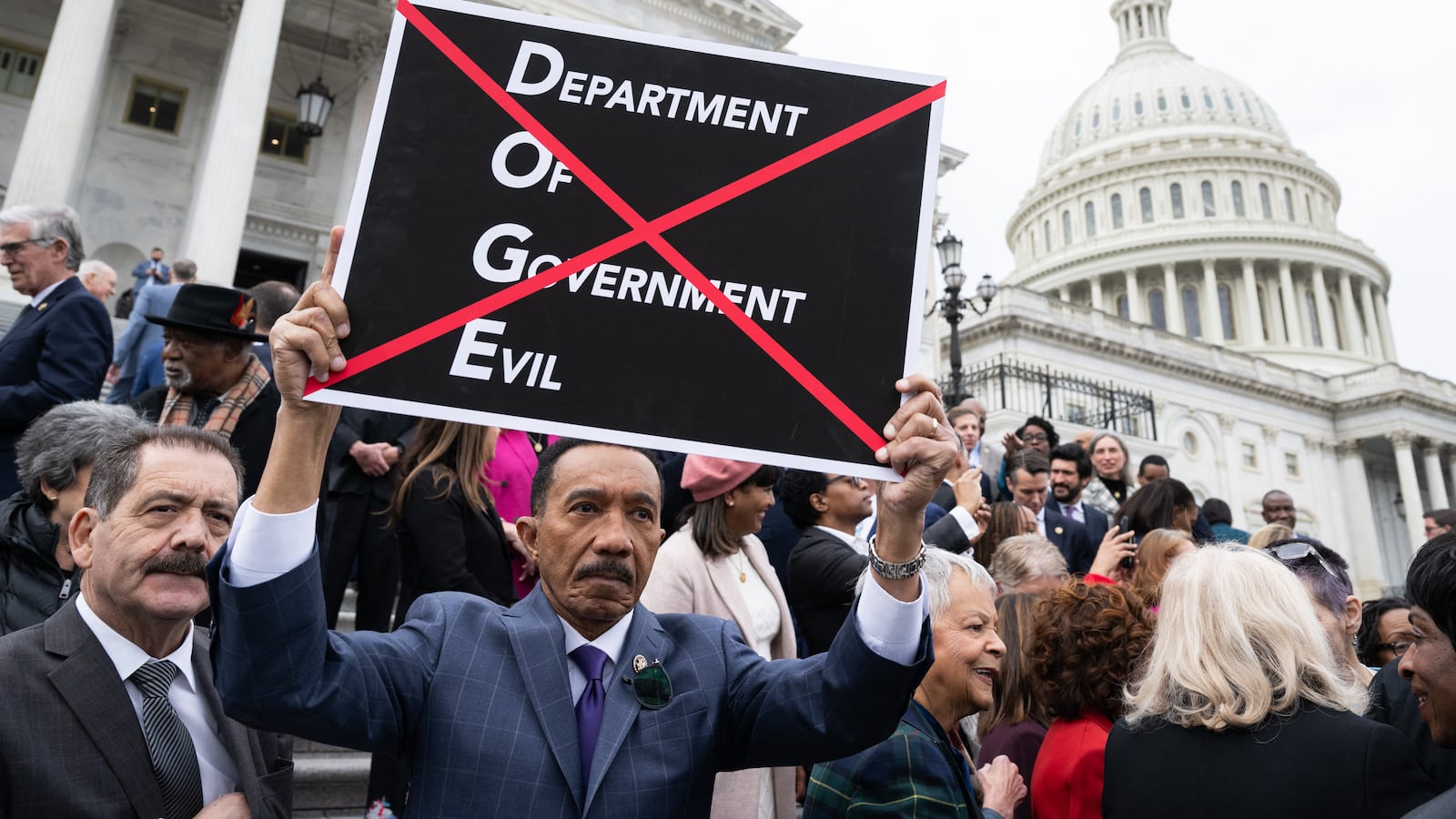
Elon Musk may be persona non grata at the White House, but DOGE lives on.
The Supreme Court ruled on Friday that the Department of Government Efficiency should be allowed access to Social Security Administration data, lifting a previously issued injunction that blocked the department from doing so.
While the court’s majority did not provide a detailed explanation of their ruling, they did write, “We conclude that, under the present circumstances, SSA may proceed to afford members of the SSA DOGE Team access to the agency records in question in order for those members to do their work.”
The three liberal justices dissented, with Justice Ketanji Brown Jackson questioning the urgency of the application and expressing concerns about the potential privacy risks that would result from the ruling.

She wrote, “In essence, the ‘urgency’ underlying the government’s stay application is the mere fact that it cannot be bothered to wait for the litigation process to play out before proceeding as it wishes.”
The Trump administration had previously argued that DOGE employees needed access to SSA data in order to halt fraudulent payments, but a federal judge in Maryland ruled that DOGE being granted such access violated federal law and put millions of people’s data at risk.
Two unions—the American Federation of State, County and Municipal Employees, and the American Federation of Teachers—brought the lawsuit alongside the Alliance for Retired Americans. The groups argued that allowing DOGE broader access to individuals’ personal data would violate the Privacy Act and the Administrative Procedure Act.

“The agency is obligated by the Privacy Act and its own regulations, practices, and procedures to keep that information secure—and not to share it beyond the circle of those who truly need it,” their lawyers wrote.
The data DOGE employees now have access to includes Social Security numbers, medical records, and tax and banking information.
In her dissent, Jackson argued that the Supreme Court had “truly lost its moorings,” by allowing the move and bending its usual standards to accommodate the Trump administration, adding, “The Court is… unfortunately, suggesting that what would be an extraordinary request for everyone else is nothing more than an ordinary day on the docket for this Administration.”