Supreme Court: One Texas District Was Racially Gerrymandered
In 5-4 decision, upholds map that lower courts said discriminated against black and Hispanic voters.
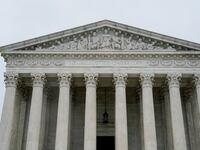
ERIN SCHAFF/REUTERES / Reuters
The Supreme Court ruled Monday that Texas’ congressional map was not gerrymandered to control its number of racial minority voters, with the exception of one district. Writing for a 5-4 majority in Abbot v. Perez, Justice Samuel Alito wrote that the state’s House District 90 was gerrymandered along racial lines, but specifically said House District 27, House District 32, and House District 34 were not. The decision reverses a lower court’s ruling that all of the districts were gerrymandered illegally. Justices John Roberts, Neil Gorsuch, Anthony Kennedy, and Clarence Thomas concurred. Justices Ruth Bader Ginsburg, Elena Kagan, Stephen Breyer, and Sonia Sotomayor dissented. “The court today goes out of its way to permit the State of Texas to use maps that the three-judge District Court unanimously found were adopted for the purpose of preserving the racial discrimination that tainted its previous maps,” Sotomayor wrote. The court on Monday also turned back a partisan-gerrymandering case from North Carolina, asking a lower court to reconsider its ruling in light of its recent Gill v. Whitford decision on Wisconsin’s state-assembly map.
Register below to read this article for free or subscribe
to unlock unlimited access to The Daily Beast.
Monthly
$1
First month then $5.99/month
Annual
$35
First year then $59.99/year
Premium
$79
First year then $119.99/year
*Substack access provided by the next business day, using your subscription email. Choosing the Premium plan constitutes your permission to share your subscription email with Substack and your agreement to Substack’s Privacy Policy.
Already have an account? Sign In
Looks like you already have a subscription!
You're all set!
Thanks for subscribing.