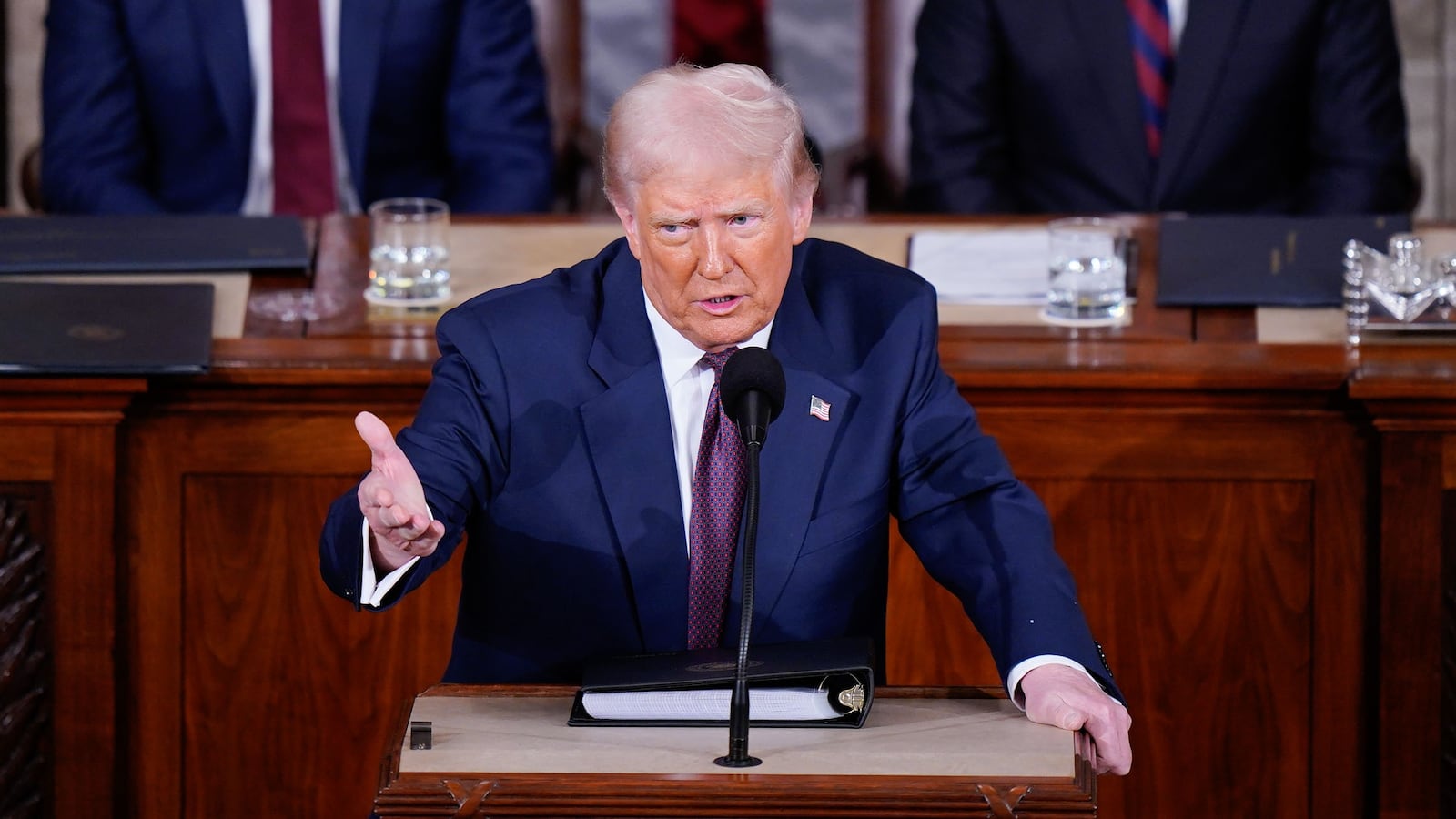
President Donald Trump’s redistricting arms race is causing chaos ahead of the midterms as courts around the country—including the Supreme Court—debate whether to strike down congressional maps just months before the November election.

The president has been pressuring Republican-controlled states to redraw their political maps to try to lock in Republican control of the House of Representatives before any votes are cast.
Democrats have fought back with their own redistricting drives, leading to legal and political battles in about a dozen states as proponents campaign for the new maps and opponents challenge the efforts in court.
The result is that candidates, voters, and election officials have no idea which district lines they will be asked to use, even though primary contests in some states are just weeks away, Politico reported.
That uncertainty makes it difficult for workers to prepare ballots and can lead to confusion for voters, sources said.
The Daily Beast has reached out to the White House for comment.
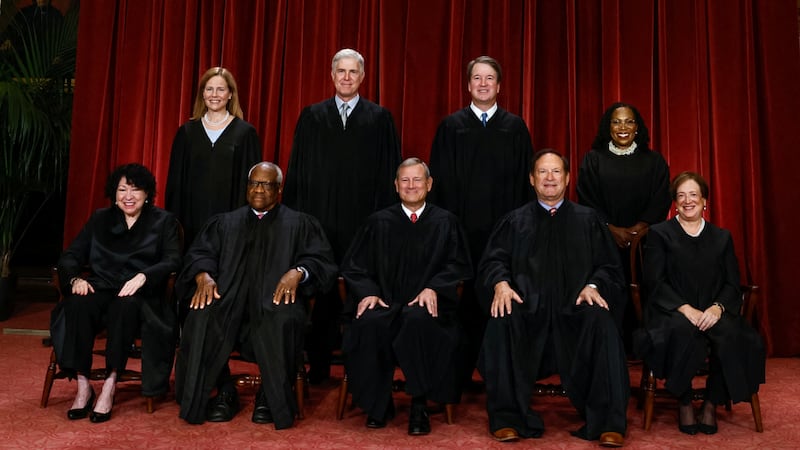
The biggest legal battle of all is a case before the Supreme Court, Louisiana v. Callais, challenging a key provision of the 1965 Voting Rights Act, Section 2, that prohibits voting practices or procedures that discriminate on the basis of race.
If Section 2 is struck down, Republicans could redraw districts mainly in southern states to pick up 19 seats nationwide, which would also crush minority representation in Congress, according to an analysis from Stacey Abrams’ Fair Fight Action voting group.
The court’s decision could come down anytime, and some red states are already redrawing their maps in advance to act quickly if the justices vote to gut the VRA, Politico reported in October.
The conservative justices agreed to hear the case on June 27. Two weeks later, on July 14, Trump kicked off the national gerrymandering battle by asking Texas for a “simple redraw” that would give Republicans five more House seats.
Oral arguments in the case were held in October, against the background of the president’s congressional power grab.
Many legal scholars expect the Supreme Court to rule at the end of the current term in June, which could prevent any redraws before the midterms.

But the decision could “radically reshape, not just congressional, but local and state maps for ’27 and ’28,” Loyola Law School professor Justin Levitt told Politico.
“A really, really big decision upends every map across the country,” he said.
But Levitt, who was a voting rights adviser to President Joe Biden, clarified that he doesn’t expect the ruling to be that sweeping.
“I think it’s entirely possible that the court here says, ‘You know what, never mind.’ It looks over the edge of the cliff and says, ‘Oh, that’s really scary,’” Levitt said.

Other major decisions are pending in Virginia, where Republicans have sued to block a statewide referendum in April that would ask voters to approve new maps that could help Democrats gain four seats.

Redistricting cases in Utah and New York could also help Democrats pick up two seats, while Missouri is looking to add a Republican district and Florida could help Republicans gain as many as five seats.
In the meantime, the primaries are fast approaching.