Surprising 2,500-Year-Old Shrine Offering Is Identified
Oxford scientists cracked a decades-old mystery, thanks to modern archaeological technology.
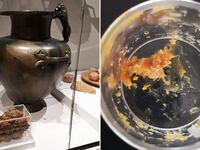
Luciana da Costa Carvalho/Journal of the American Chemical Society
Chemists at Oxford University found a sweet surprise in 2,500-year-old bronze jars, solving a 30-year archaeological riddle. Chemists have determined that the mysterious, sticky, orange-brown substance inside the jars, previously identified as animal fat, is actually honeycomb, the BBC reports. The jars, excavated in 1954 from an underground shrine in a former Greek settlement in Italy, about an hour and a half’s drive from Pompeii, date to the 6th Century B.C. The honey was likely left as an offering to the gods or for the deceased’s afterlife. The misidentified honey was reanalyzed using several modern analysis techniques, and the researchers hope that this discovery will prompt museums to reexamine their collections. “This research is a reminder that archaeological collections hold untapped scientific potential and how new information can be revealed when modern analytical techniques and multidisciplinary collaborations are combined,” said Luciana da Costa Carvalho, one of the research project leaders. The project was conducted through a partnership between the University of Oxford’s Ashmolean Museum and the Archaeological Park of Pompeii.
Register below to read this article for free or subscribe
to unlock unlimited access to The Daily Beast.
Monthly
$1
First month then $5.99/month
Annual
$35
First year then $59.99/year
Premium
$79
First year then $119.99/year
*Substack access provided by the next business day, using your subscription email. Choosing the Premium plan constitutes your permission to share your subscription email with Substack and your agreement to Substack’s Privacy Policy.
Already have an account? Sign In
Looks like you already have a subscription!
You're all set!
Thanks for subscribing.