Lawmakers at a secret Senate briefing have revealed what appears to be Donald Trump’s new foreign policy priority in the Middle East, potentially laying the ground for endless U.S. military engagements across the region.
Sen. Mark Warner, a Democrat who serves as vice chair of the Senate Intelligence Committee, attended the classified briefing Monday night—held by Defense Secretary Pete Hegseth, Secretary of State Marco Rubio, Chair of the Joint Chiefs of Staff Gen. Dan Caine, and CIA Director John Ratcliffe—on the president’s decision to launch an all-out war with Iran over the weekend.

Warner told reporters those officials had explained how, prior to those strikes, Israel had warned it was facing an imminent threat from Tehran. Israel’s plans to attack first, the officials apparently went on, had effectively forced the U.S. into a pre-emptive assault on Iranian targets, on the basis of protecting American military assets across the region from prospective retaliatory strikes by the Islamic regime.
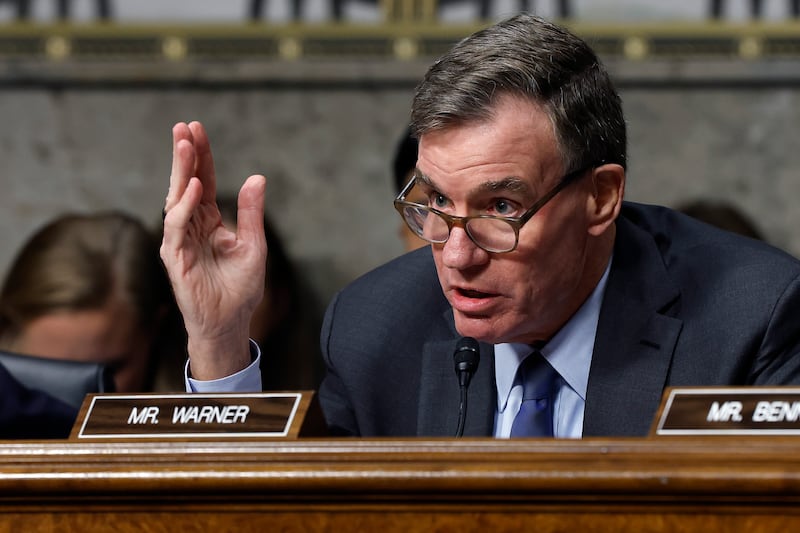
“This is still a war of choice that has been acknowledged by others, that was dictated by Israel’s goals and timeline,” the senator said. “There was no imminent threat to the United States by the Iranians. There was a threat to Israel. If we equate a threat to Israel as the equivalent of an imminent threat to the U.S., then we are in uncharted territory.”
Throughout its history, Israel has frequently engaged in direct or indirect conflict with actors across the Middle East—including wars with neighboring states like Egypt and Lebanon, repeated confrontations with terrorist groups such as Hamas and Hezbollah, and strikes aimed at curbing Iran’s regional influence.
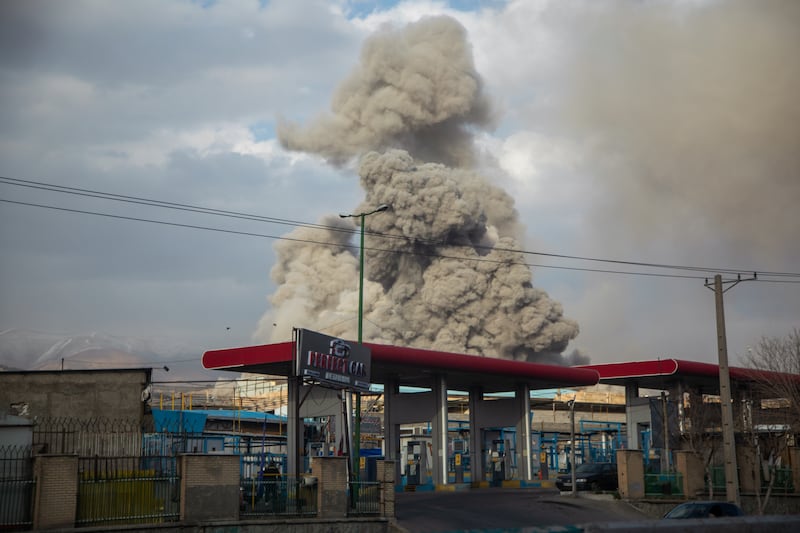
Warner’s comments about the White House treating threats to Israel as de facto threats against the U.S. raise the spectre of a future in which Washington could very well be drawn more quickly and more often into recurring conflicts across the Middle East, potentially committing U.S. forces whenever Israel’s security situation escalates.
The senator underscored the Trump administration’s unprecedented rationale for its strikes on Iran by stressing that his own support for Israel remains steadfast, but not unconditional. “I stand firmly with Israel,” he said. “But I believe at the end of the day, when we are talking about putting American soldiers in harm’s way and we have American casualties and expectations of more, there needs to be the proof of an imminent threat to American interests.”

“I still don’t think that standard has been met,” he added.
Trump himself has repeatedly struggled to stick to any given justification for launching the attacks against Iran, which have prompted retaliatory strikes from Iran and sent shockwaves through the global economy. At least six U.S. servicemembers have already been killed.
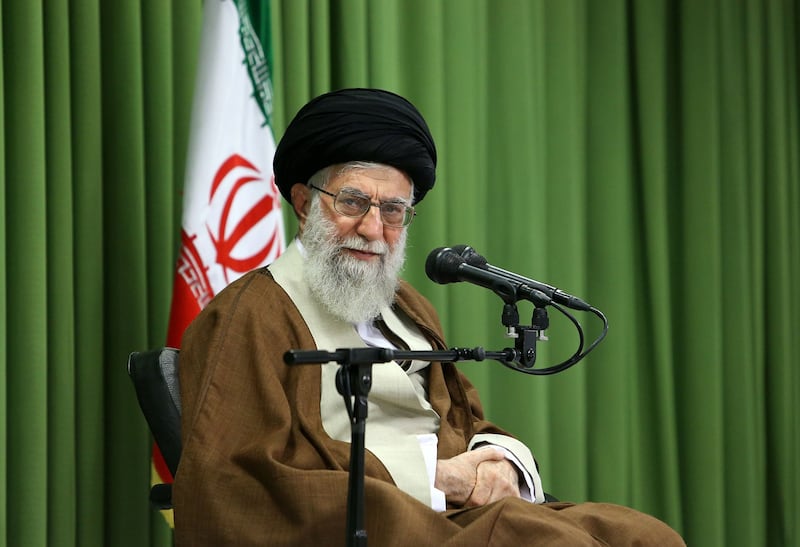
The president offered four different explanations for the conflict in just the two days after he started it. He said that “all I want is freedom for the people” of Iran, then that the campaign was designed to put an end to the regime’s nuclear program, then that its goals are a change of leadership, and then that it came in response to an imminent threat of attacks on U.S. bases.
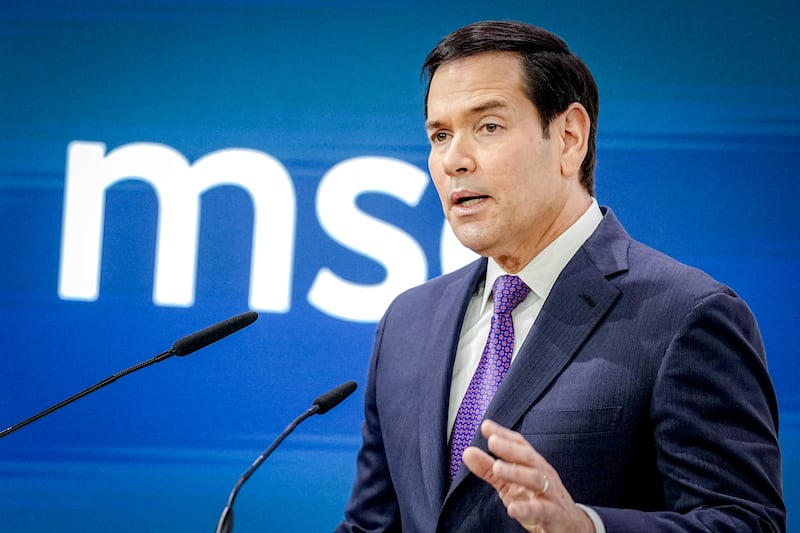
A somewhat circular variation of that last justification now appears to have stuck among top administration officials. “The president made [a] very wise decision,” Rubio told reporters Monday. “We knew that there was going to be an Israeli action, we knew that that would precipitate an attack against American forces, and we knew that if we didn’t preemptively go after them before they launched those attacks, we would suffer higher casualties.”
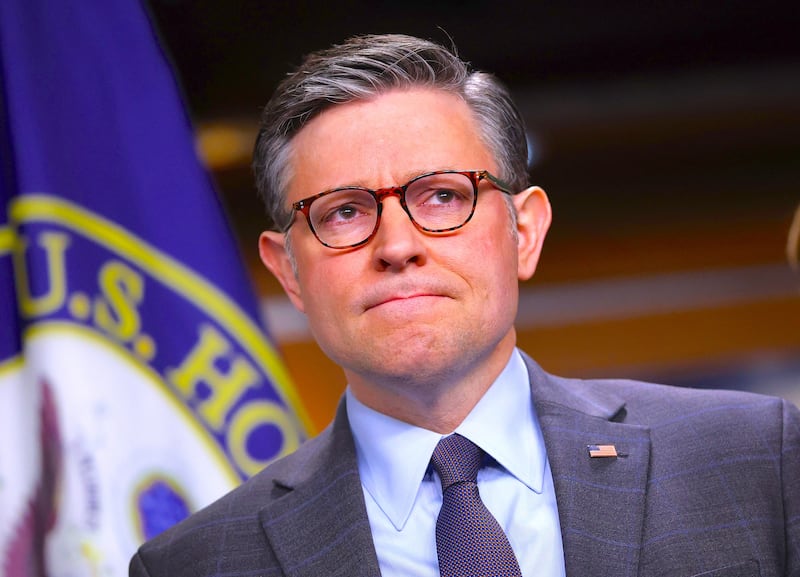
Johnson struck a similar tone after the Senate briefing. “Because Israel was determined to act with or without the U.S., our commander in chief and the administration and the officials had a very difficult decision to make,” he said. “If we had waited to respond before acting first, [our] losses would have been far greater than if we had done what we did.”
Speaking with Fox News later that night, Israeli Prime Minister Benjamin Netanyahu was quick to pour cold water on any suggestion he had forced Trump’s hand. Prefacing his comments with a chuckle, he said: “That’s ridiculous. Donald Trump is the strongest leader in the world. He does what he thinks is right for America.”
Trump’s war with Iran comes after he repeatedly promised voters on the 2024 campaign trail that if elected, he would dramatically reduce U.S. military engagements abroad. In his election night victory speech, he told supporters, “I’m not going to start a war; I’m going to end a war.” And since assuming office last January he has modelled himself as the “Peace President” in a bid to secure himself the Nobel Peace Prize.
After the Norwegian Nobel Committee scorned those efforts in November, the president has now said he no longer feels “obligated to think purely of peace.” He has since bombed Nigeria, invaded Venezuela, launched a rapidly escalating conflict in the Middle East, and threatened military action against allies like Mexico, Colombia, Panama, and Greenland, an autonomous territory of NATO ally Denmark.
Trump’s growing appetite for foreign intervention has severely tested more isolationist positions held by top members of his Cabinet. Vice President JD Vance, a steadfast critic of U.S. involvement in Ukraine, repeatedly assured voters in 2024 that Trump was the anti-war candidate, while Director of National Intelligence Tulsi Gabbard sold T-shirts with “NO WAR WITH IRAN” on them as part of her bid for the 2020 Republican presidential nomination.
The president’s actions in the Middle East have set off conflict along the same lines among the GOP and the wider MAGA orbit. Conservative pundit Tucker Carlson immediately slammed the weekend’s attacks as “absolutely disgusting and evil,” while rogue Republican congressman Thomas Massie was quick to blast the White House’s latest defense of the conflict.

“The administration admits [Israel] dragged us into the [Iran] war that’s already cost too many American lives and billions of dollars,” the Kentucky congressman posted on X. “Before it’s over, the price of gas, groceries, and virtually everything else is going to go up. The only winners in [the U.S.] are defense company shareholders.”
The Daily Beast has contacted the White House for comment on this story.