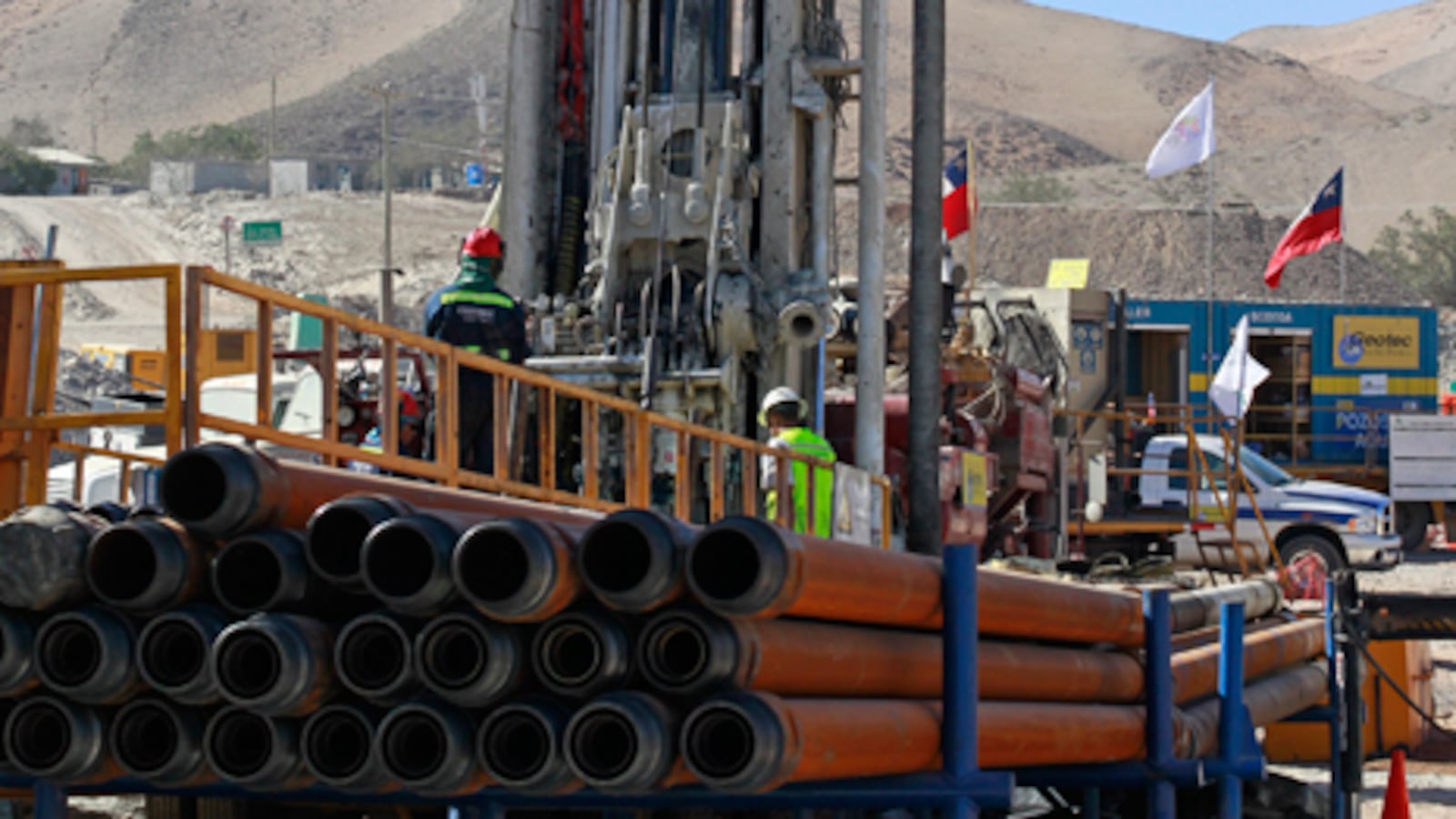
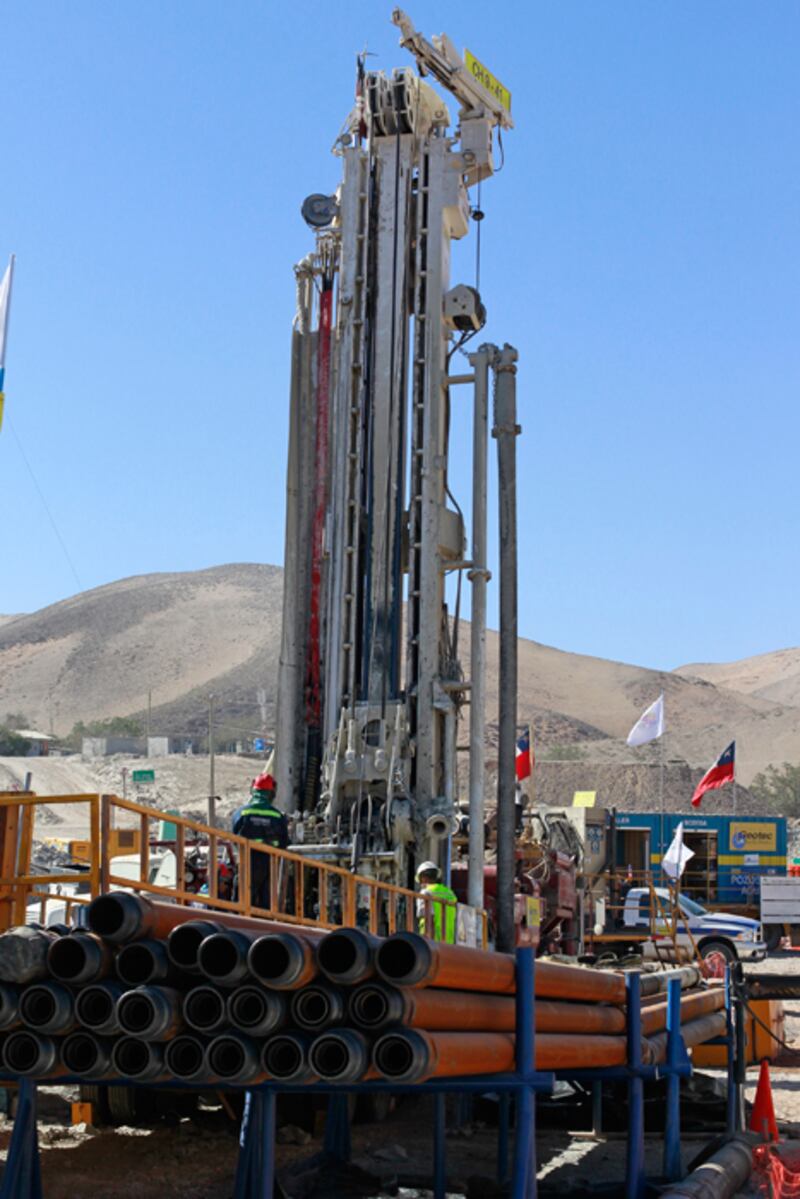
A private company based in Berlin, Pennsylvania and staffed with 74 employees, Center Rock Inc. manufactures the drilling system used to rescue the miners. Its innovative pneumatic-based drilling system uses four hammers instead of one and can drill through as much as 40 meters of rock per day. Center Rock’s CEO Brandon Fisher, who reached out to the Chileans to offer the drill, was assisting on-site during the drilling of the rescue shaft.The super-strength cable sitting atop the large drilling rig was manufactured in Germany.
Ivan Alvarado / AP Photo
According to rescuers, one of the most important innovations that kept the miners alive and well by maintaining morale was a fiber optics communication link. The cable, supplied by a Japanese manufacturer, was used by the miners for videoconferencing and as a phone line. One miner, 2,200 feet underground, was able to speak to one of his children, who was entrenched in an emergency of his/her own.
Roberto Candia / AP Photo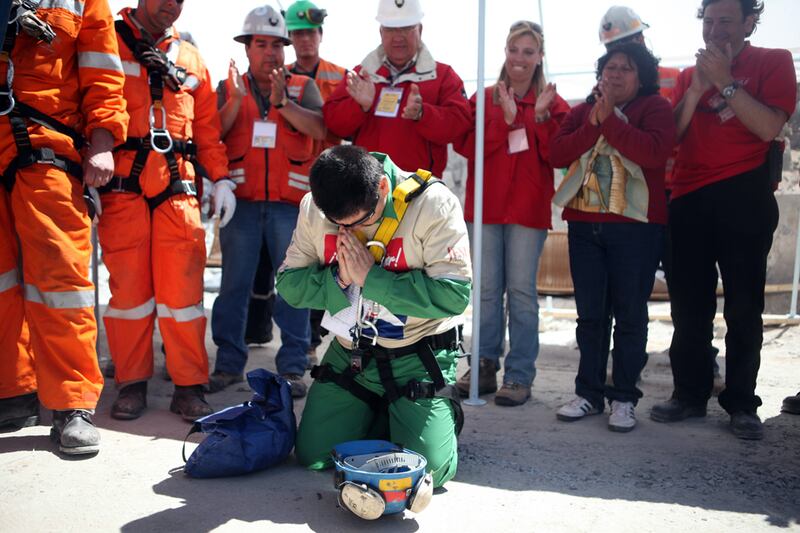
Manufactured by Cupron, Inc., which makes an entire line of copper-based clothing for medical use, the miners used copper-fiber socks to attack foot bacteria, thereby eliminating odor and infection.
Hugo Infante / AP Photo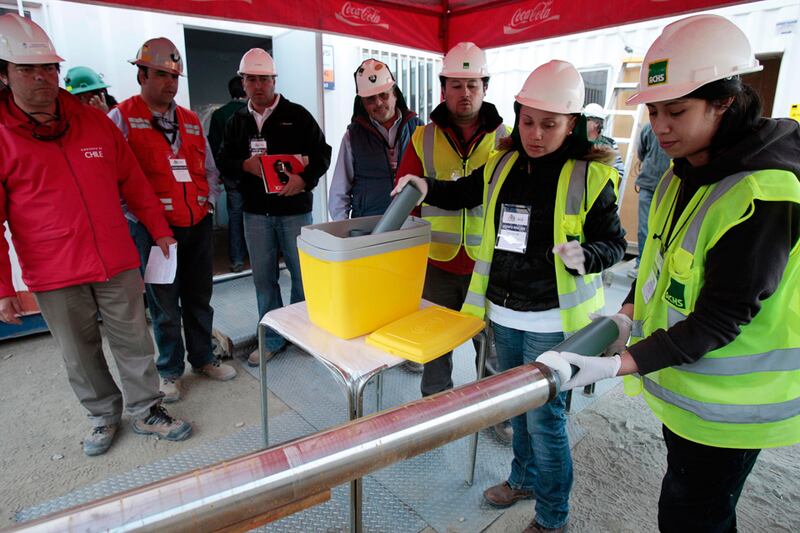
Paloma—meaning pigeon in Spanish— was the nickname given to the hollow cylinder used like a pneumatic tube to carry laundry and supplies in and out of the mine. Rescuers would fill the five-foot-long tube with provisions and supplies and lower it with a pulley through a narrow shaft.
Luis Hidalgo / Landov
Chilean miners were not given iPods, as psychologists felt the gadgets would isolate the miners from the rest of the team and could impair their awareness should an emergency occur. But they were given cellphones, including Samsung’s i7410, with built-in projectors so they could watch movies.
Reuters
The miners were able to watch movies via cellphone projectors, but were able to hear the films via Divoom Techonology’s iTour 70 speakers that stand nearly eight inches long and just two inches wide, thus able to fit through the narrow shaft.
Hector Retamal, AFP / Getty Images
Electrical connection to the miners was not immediate. While the miners were waiting, they received power via a teeny DC-AC power inverter that can convert the energy from a car battery into 220 volt AC power.
Martin Mejia / AP Photo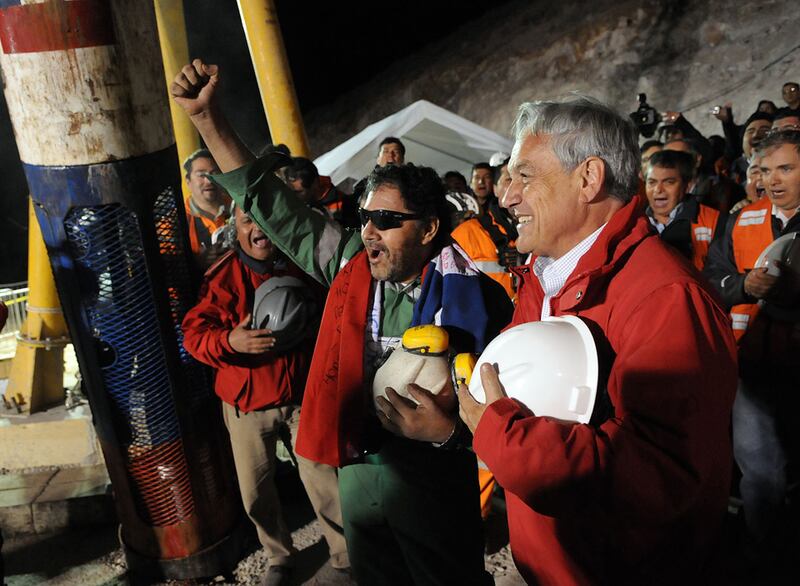
Of course, one of the most prominent technological innovations used in the Chilean miner rescue was the capsule which transported the miners triumphantly above ground, dubbed the “Phoenix.” It weighed more than 500 pounds and was outfitted with oxygen tanks and a mask, as well as a camera that faced the person in the capsule. Its base would be opened to release the miner inside in case it became stuck during one of the rescues.
Reuters