Tune into The Daily Beast Podcast on Sunday, Jan. 25 at 2 p.m. when Dr. Bruce Davidson joins host Joanna Coles for a stark examination of presidential health, medical secrecy, and what it means for the country when warning signs appear in plain sight.
Doctors are trained that, absent patient consent, the patient’s physician will not and should not disclose patient health information.
But physicians can use our training to support patients—and the public interest.
To the trained, careful observer, it is evident that President Donald Trump had a stroke, most likely at least six months ago.
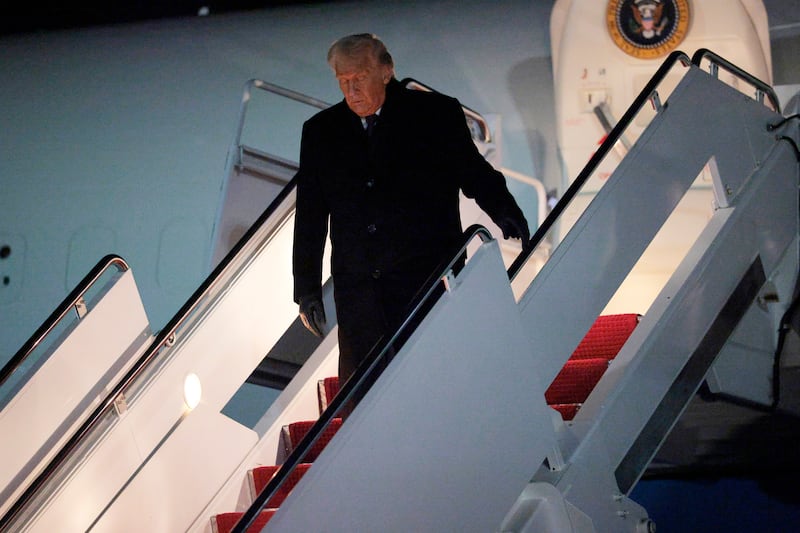
What we can see is that Trump, who is right-handed, has carefully descended the stairs on Air Force One, holding the banister with his left hand.
Earlier this year, he openly shuffled his feet.
He has used two hands to hold a drink.
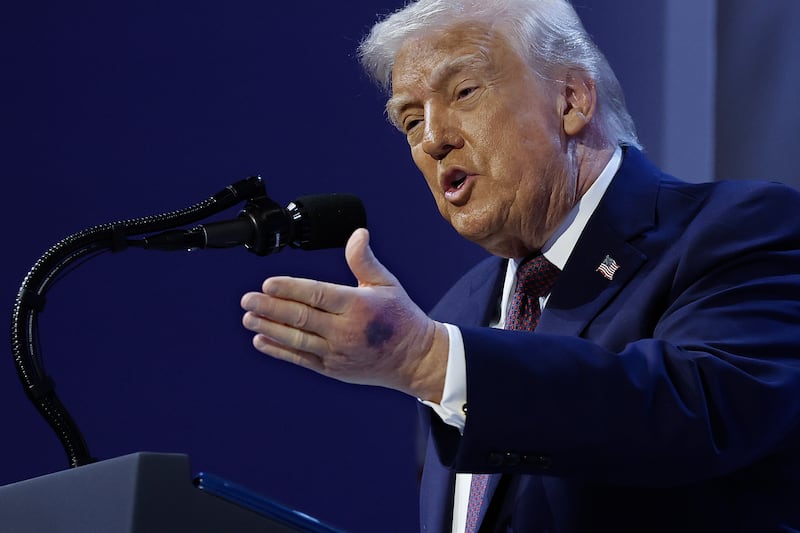
He sometimes cradles his right hand in his left. He has some right-sided weakness, paresis without paralysis.
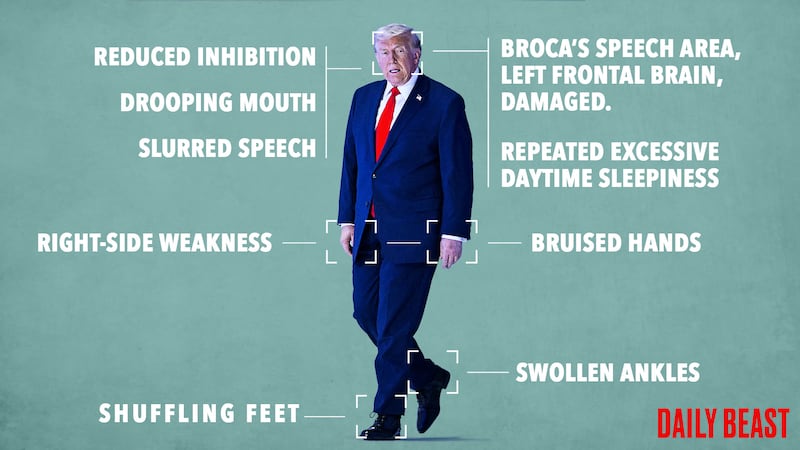
This suggests a stroke, and that the infarction was on his left side. He garbles his words a bit, and did so worse earlier, implicating Broca’s area, the left frontal brain region that’s critical to speech function, as damaged.
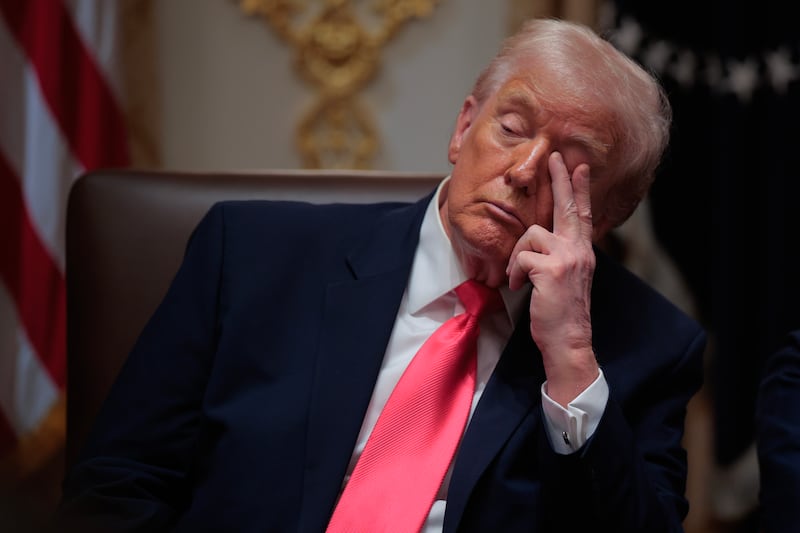
Trump has quite noticeable repeated excessive daytime sleepiness, likely from post-stroke sleep disturbance, a common residual effect of stroke.
Moreover, we know from Trump’s own words that he is swallowing a full aspirin pill, 325 mg, every day, to “thin his blood.”
Although a prominent physician has stated this is too much aspirin, that physician is wrong when it comes to stroke patients, and Trump is correct.
The American Heart Association’s 2021 stroke guidelines recommend a full 325 mg aspirin pill to prevent recurrent stroke, after a stroke. It is not recommended for primary stroke prevention, heart disease, peripheral arterial disease, venous insufficiency, or other venous disease—only for large intracranial vessel partial occlusion, after a stroke.
Regarding what the White House reports, Trump had an MRI, which was then changed to a CT scan of the chest and abdomen, which we’re told had fine results. But an MRI is not for examining the chest or abdomen; we use CT scans for that. MRIs are used for bony structures like the spine and joints, and particularly to provide detail of the brain.
People don’t mistake a noisy, 20-minute MRI in noise-suppressing earmuffs for a 6-minute CT of the chest and abdomen.
If the chest CT was truly “fine,” it means there was little calcium seen, implying minimal atherosclerosis in Trump’s aorta or heart arteries, so the full 325 mg aspirin tablet is not for the heart; we use multiple different drugs for that.
Trump does not appear demented. He takes questions, answers them, and can focus when he chooses to.
Having partially recovered from a stroke, a cerebral infarction, does not mean a person cannot do demanding work—it depends upon the residual disability and the patient’s coping mechanisms.
President Franklin D. Roosevelt was capable, with lower extremity paralysis from polio, but his brain appeared intact.
After a stroke, it is not rare for patients to lose some inhibitions, to “become more like themselves,” particularly in speaking, but also in their actions.
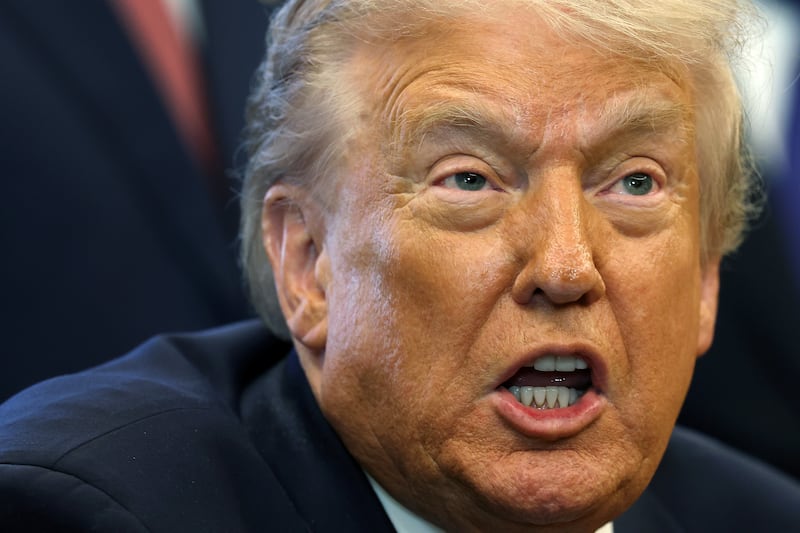
Trump was always brash, but now he is frankly unreservedly verbally insulting to people’s faces, calling them “Piggy,” “obnoxious,” and labeling long-time supporter Marjorie Taylor Greene a “traitor.”
Besides possible loss of brain inhibition of language and actions, brain damage after a stroke can leave the patient more dependent on others. It is natural for any person recovering from any injury, whether it be a fracture from sports, a serious heart attack, or a stroke, to desire to show they are “back in the game,” recovered enough to be a full participant again. Some people seek to do this with somewhat extreme demonstrations of prowess.
For ordinary individuals, loved ones support their judgment and efforts, apply restraint, and provide positive, supportive reinforcement. For President Joe Biden, frequent trips abroad were his way to demonstrate leadership as his mental powers ebbed, but he had cautious advisers.
Trump, however, has some bold and reckless advisers.
Stephen Miller deems the takeover of Greenland important. Pete Hegseth leads sorties against South American boats and regimes. Having lost from his stroke some of the restraint he previously possessed, Donald Trump can fall prey to embracing these projects as showpieces of his hoped-for retained capacity and to distract from the press commenting on his physical problems.
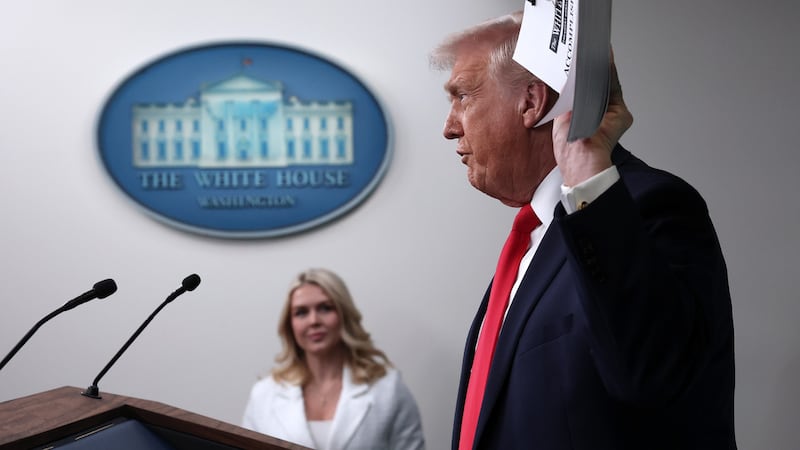
With these concerns, what should be done? Having a stroke per se should not be disqualifying, but being as impaired as President Woodrow Wilson was should be.
Our country and the president could use help. The press could help by asking Secretary of State and Interim National Security Adviser Marco Rubio whether he knows if President Trump has had a stroke.
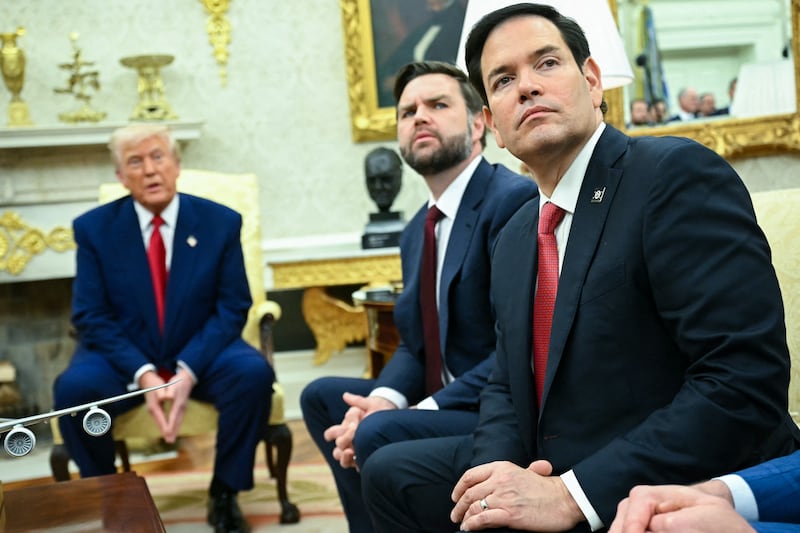
If Rubio answers, “No,” he should be asked, “Shouldn’t the Secretary of State and Interim National Security Adviser know that?” If Rubio answers “Trump has not had a stroke,” ask Rubio how he knows that. Has he seen results from Trump’s MRIs?
If Rubio says “Yes, Trump has,” then the rest of us will be advised. Brain MRI reports signed by genuine radiologists will provide answers.

But there is a better, more honest option.
President Trump and his physicians could explain his stroke, and recovery despite ongoing challenges, delivering an uplifting public health service benefiting America’s many stroke survivors who have faced discrimination after their strokes.
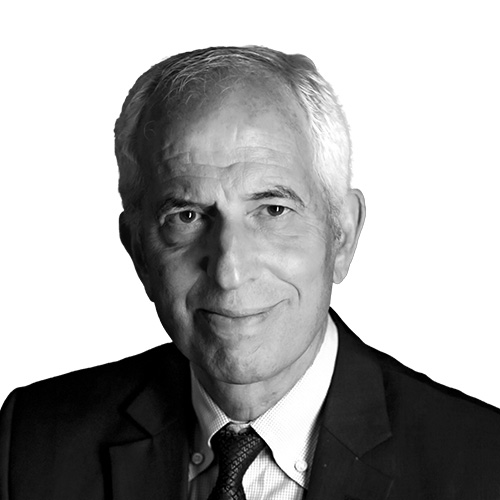
Dr. Bruce Davidson is a board-certified internal medicine and pulmonary physician. He has been a clinical professor for several colleges of medicine. He was educated at the University of Pennsylvania School of Medicine and Johns Hopkins University.