
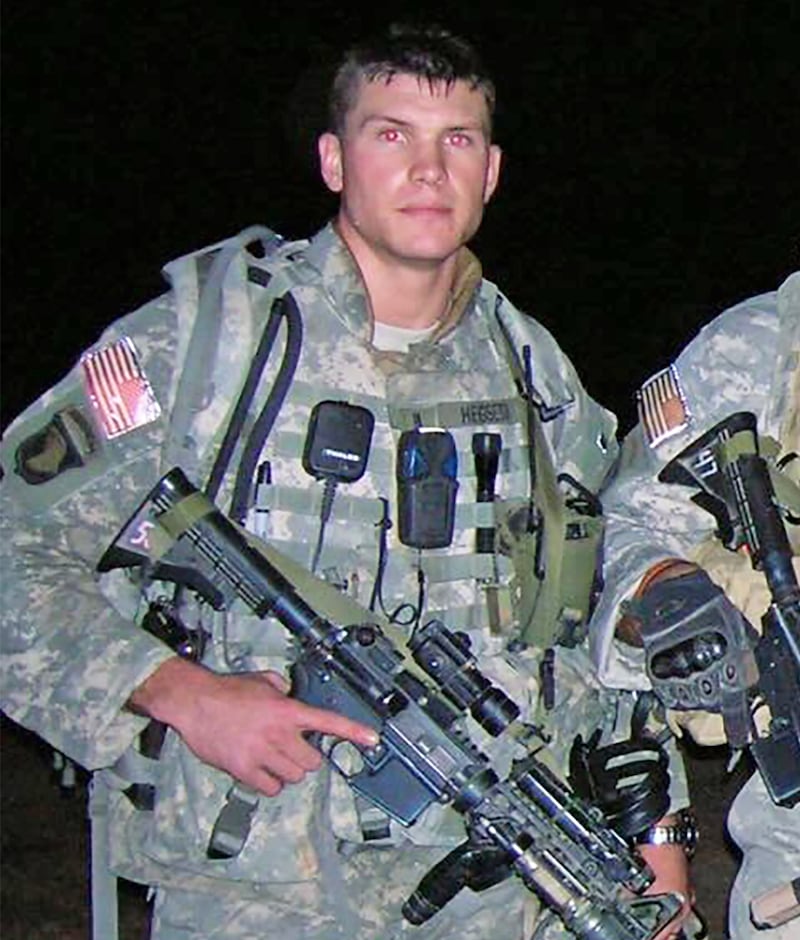
As he rhapsodizes in his Iran war briefings about maximum violent death and destruction “without mercy,” Secretary of Defense Pete Hegseth could be back in Iraq two decades ago, when he was a platoon leader attached to a unit nicknamed “Kill Company.”
Officially designated Company C, 3rd Battalion, 187th Infantry Regiment, 3rd Brigade Combat Team (the Rakkasans) of the 101st Airborne Division, the unit maintained a white Dry-Erase board dubbed “the kill board” that kept a running body count.
“Let the bodies hit the floor,” read a notation at the bottom.
The board was erased after somebody added to the tally by including a pregnant Iraqi woman fatally shot at a roadblock.
But Hegseth—who was a Minnesota National guard lieutenant attached to the company and by his own account was teasingly called “National Garbage” by a regular army sergeant—wrote approvingly of the kill, kill, kill approach to warfare in his subsequent book The War On Warriors.
And, when he insisted during the first briefing of the Iran war that there would be “no stupid rules of engagement,” he seemed unconcerned by what Iraq showed can happen in their absence.
Four soldiers from another platoon of “Kill Company” were convicted of criminal charges arising from the killing of three unarmed Iraq prisoners.
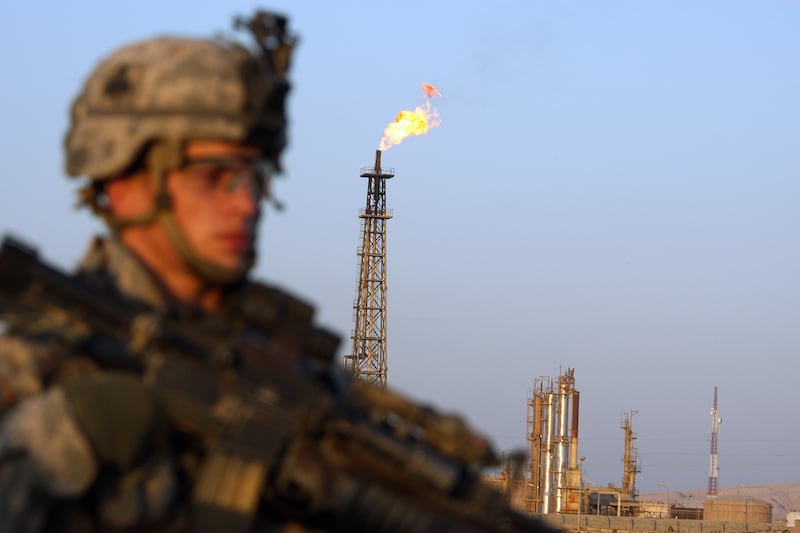
Two of the four were sentenced to 18 years on murder charges. One of them, Pvt. Corey Clagett, testified that, as they prepared for the sweep of a suspected al Qaeda-held area, they were told, “We’re going in to kill all military age males.”
An attorney for the accused sought to establish that the soldiers were only following the orders of Col. Michael Steele, the brigade commander at the time. Steele had led the 1993 raid in Somalia made famous by the book, and then the movie, Black Hawk Down.
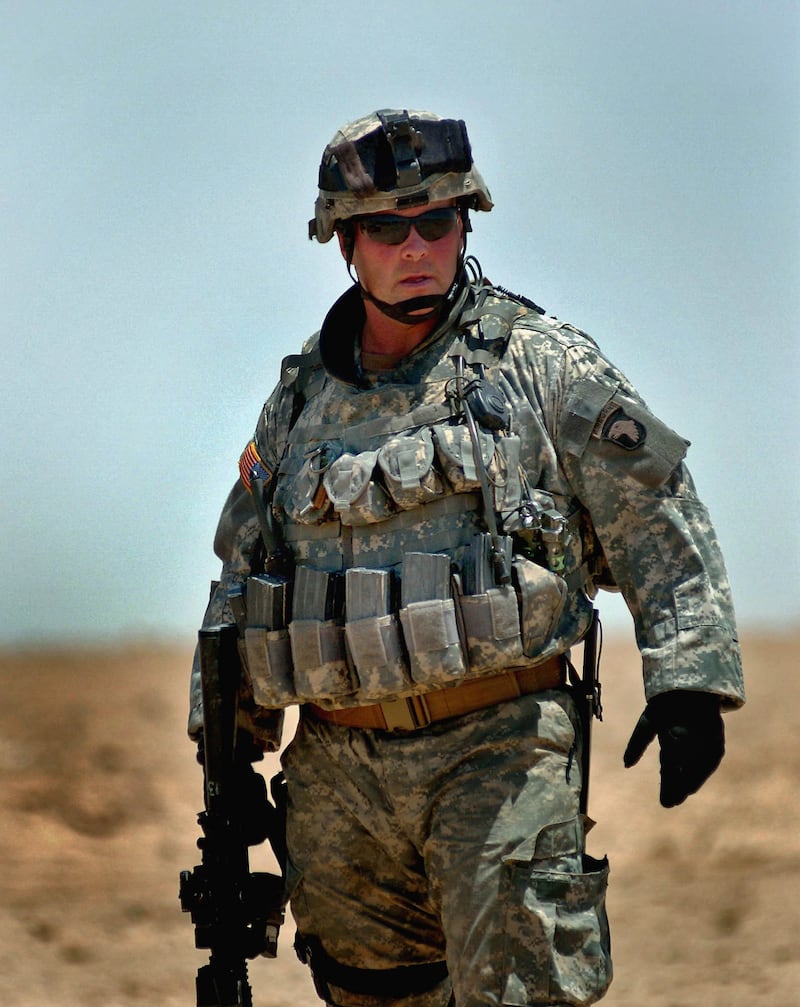
But Steele declined to take the stand about the 2006 raid in Iraq. He has reportedly denied issuing the order. He subsequently received an official reprimand, which remains confidential but is said to have ended his chances for promotion. He retired and is now running a private firm called One focus International Training Group. He had remained a Hegseth idol.
“He was a certified bad--s,” Hegeth later wrote of Steele in his book. “He suffered no fools. If you engaged the enemy and destroyed it under his command, you got a ‘kill coin.’”

In our new, latest war, Hegseth seems to continue channeling his former commander.
“We fight to win, and we don’t waste time or lives,” he declared on March 2, meaning American lives.
Hegseth has also embraced similar sentiments expressed by our current commander-in-chief. He issued a message to the Iranian regime’s “death cult” from both Trump and himself.
“If you kill Americans, if you threaten Americans anywhere on Earth, we will hunt you down without apology and without hesitation and we will kill you.”
At Tuesday’s war briefing, Hegseth read aloud President Trump’s threat on Truth Social regarding what Iran will face if its surviving regime seeks to stop shipping in the Strait of Hormuz.
“Death, fire and fury will rain upon them.”


As always, Hegseth himself strove to sound like a “warfighter” who ascribes to what he calls a “warrior ethos.” He did so while speaking the language of the Iranian regime’s death cult, serving as a counterparty in what the murderous mullahs view as an historic conflict with the Great Satan. The mullahs must almost welcome Hegseth’s cos-playing for keeps as a necessary role in the drama.
The U.S. Central Command even gave the attack a momentous name that a drowsy Trump approved from a list of possibles: Operation Epic Fury.
But the mullahs could not have been happy with the measured response from chairman of the joint chiefs of staff, Air Force Gen. Dan Caine, when a reporter asked at Tuesday’s briefing whether the Iranian military has proven more formidable than he anticipated.
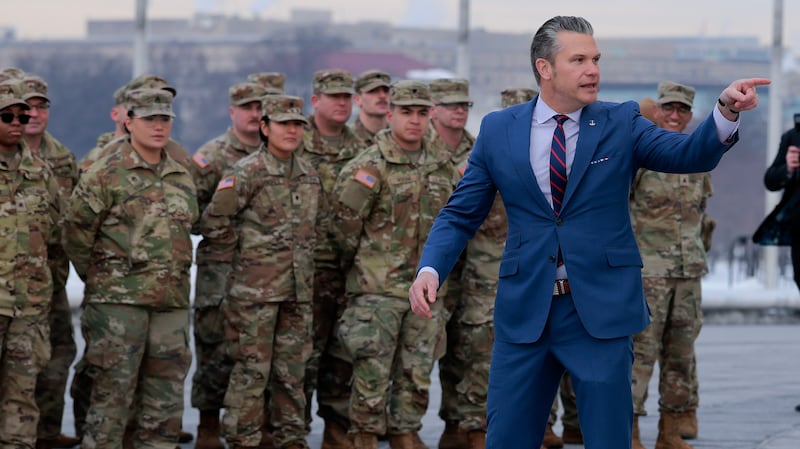
“I think they’re fighting, and I respect that, but I don’t think they’re more formidable than what we thought,” Caine said in the even tones of a former fighter pilot who is now leading a methodical campaign to degrade Iran’s ability to wage conventional modern warfare.
Caine would have been all the more effective if he had expressed some regret for what appears to have been an errant strike by a U.S. Tomahawk missile on a girl’s elementary school in Iran in the war’s first hours. Reports by Iranian media place the death toll as high as 175, many of them youngsters.
But Trump initially insisted that “Iran did it.” He has since allowed that he would be willing to accept the results of a full investigation into the strike.

“Whatever the report shows, I’m willing to live with,” Trump said.
Hegseth appears to be equally willing to live with the possibility of having killed kids. But he has instituted a new rule of engagement.
The Pentagon barred news photographers from Hegseth’s last two briefings. The Washington Post reported that his staff deemed photos of him to be “unflattering.”
If that is so, the images must have failed to capture his warfighter’s pumped-up glee over death and destruction without mercy, even if it leaves more dead kids than would fit on even a jumbo kill board.