Donald Trump has undercut his own claim that Iran’s navy has been “completely obliterated” with a new threat to blow up Iranian ships he fears could be used against America in the Gulf.
As the U.S. began blocking ships from entering or exiting Iranian ports in the Strait of Hormuz, Trump on Monday threatened to conduct lethal strikes against Iran if they intervene, using the same type of attacks he ordered against alleged drug boats in the Caribbean Sea.
“Iran’s Navy is laying at the bottom of the sea, completely obliterated—158 ships. What we have not hit are their small number of, what they call, “fast attack ships,” because we did not consider them much of a threat,” he wrote on Truth Social.
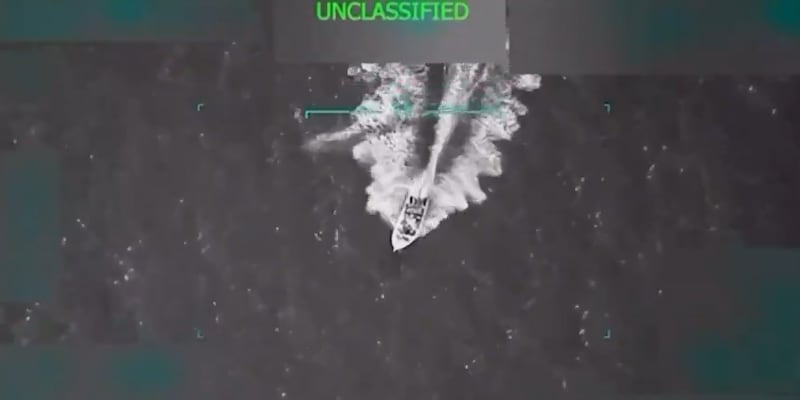
“Warning: If any of these ships come anywhere close to our BLOCKADE, they will be immediately ELIMINATED, using the same system of kill that we use against the drug dealers on boats at Sea. It is quick and brutal.
“P.S. 98.2% of Drugs coming into the U.S. by Ocean or Sea have STOPPED! Thank you for your attention to this matter.”
The post was another mixed message from the 79-year-old president because it undercut Trump’s longstanding claims that the Iranian navy has been decimated by U.S. forces.
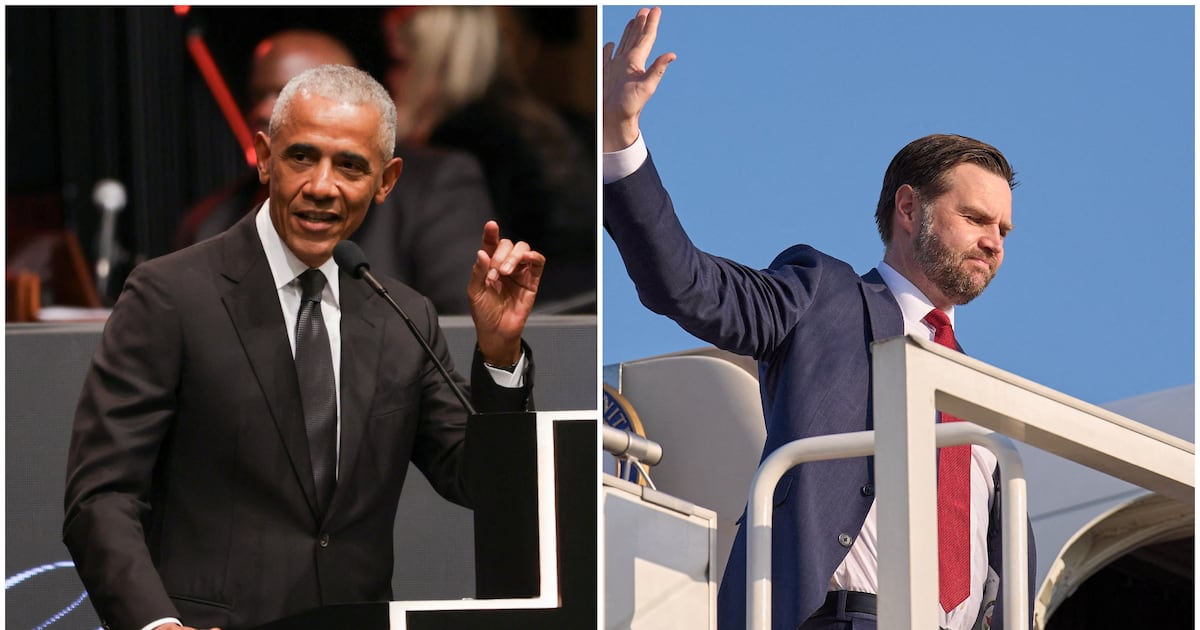
Trump announced the blockade on Sunday after diplomatic efforts to contain the crisis, led by anti-interventionist Vice President JD Vance, faltered over the weekend.
The blockade now means that U.S. Central Command will block ships from leaving the Strait if they are “to and from non-Iranian ports”.
Trump wants to prevent Iran from profiting from oil exports and force it to accept his conditions for ending more than a month of war.
About 20 percent of the world’s oil usually flows through the Strait of Hormuz, but the waterway has been at an effective standstill ever since Trump began his war on February 28, prompting a global oil crisis and more pain at the pump for consumers.
And even as the blockade began at 10 am on Monday, Brent crude, the global oil benchmark, rose 7% to $102 a barrel—a gain of 40% since the start of the war—while the average national gas price was $4.12 a gallon according to AAA Gas Prices.
“I think the more that the economic costs start to become apparent in a couple of weeks here in the United States, he really runs the risk… of not being able to have control over his own narrative,“ Narges Bajoghli, associate professor of anthropology and Middle East studies at Johns Hopkins University, said on a press call with the Daily Beast.
“I think that is something that is proving extremely difficult to him.”
But on Monday, Trump struck his usual confident tone, insisting that Iran had reached out to the United States about another round of negotiations. However, he declined to say whether the U.S. has agreed.

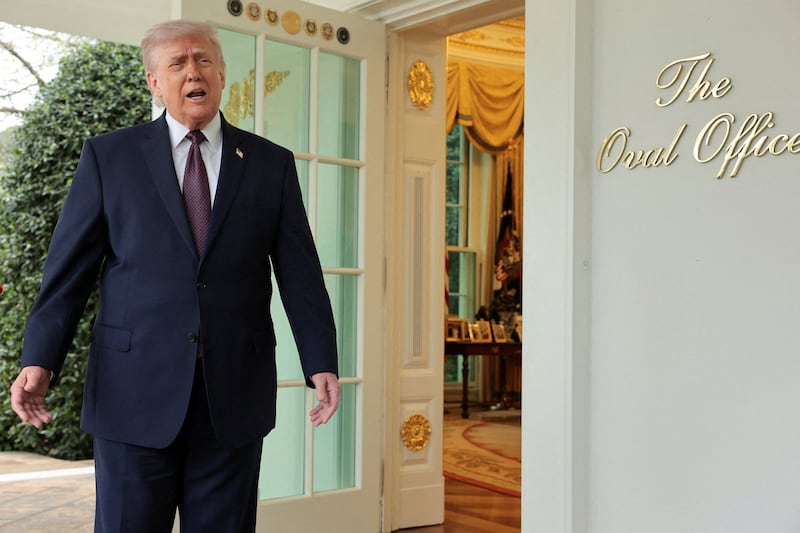
“We’ve been called by the other side,” he told reporters outside the Oval Office. “They’d like to make a deal very badly.”
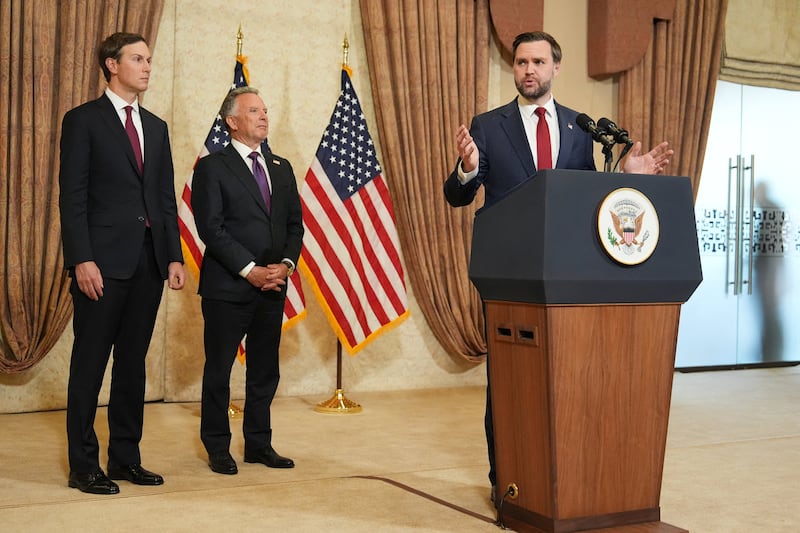
So far, there is no deal, despite a marathon session of talks in Islamabad led by Vance, Middle East envoy Steve Witkoff and Trump’s son-in-law Jared Kushner.
Officials from Pakistan—which had been quietly encouraged by Washington to act as an intermediary—acknowledged that while both sides signaled openness to de-escalation, deep mistrust and conflicting demands over Iran’s nuclear ambitions and maritime access in the Strait remain sticking points.
In another blow, shipping experts on Monday said they did not expect a large number of vessels to return quickly to the Strait of Hormuz despite America’s blockade.
This is because there is little detail about how vessels would be protected if they choose to pass.