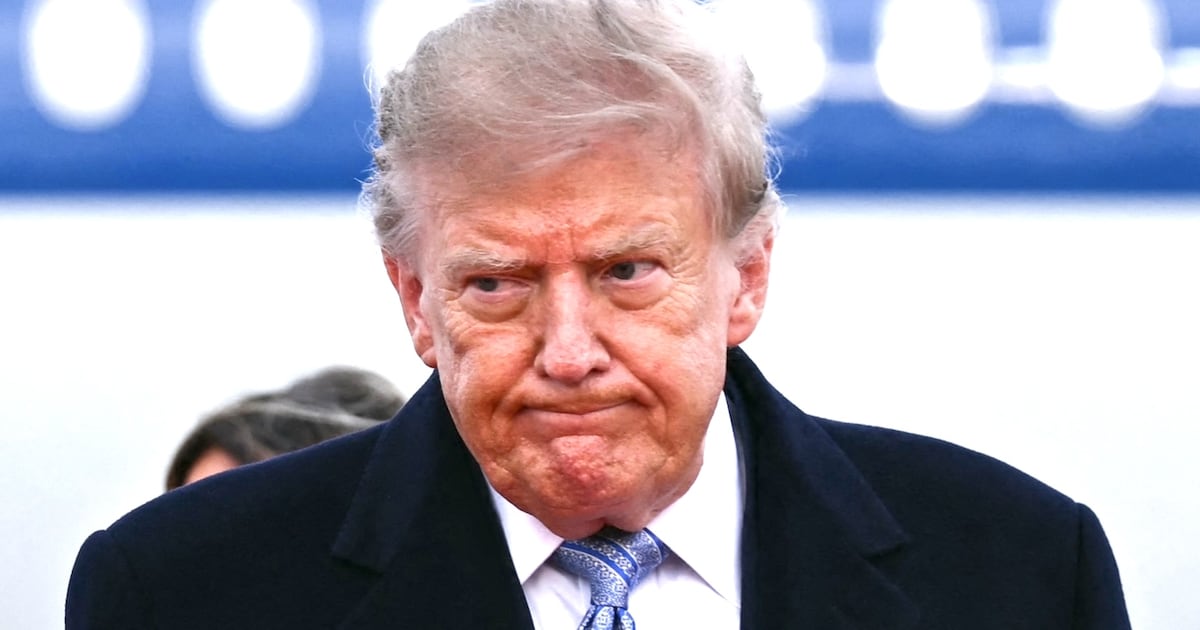

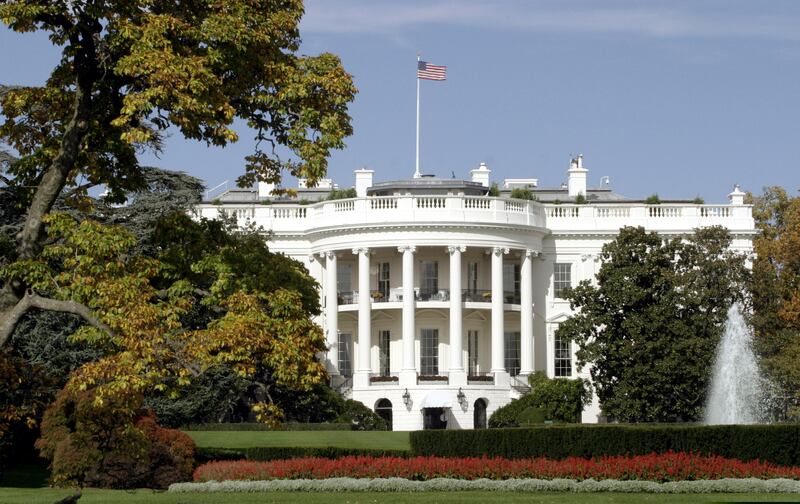
The halls of the White House are alive with aides’ whispers about President Donald Trump’s terrible polling.
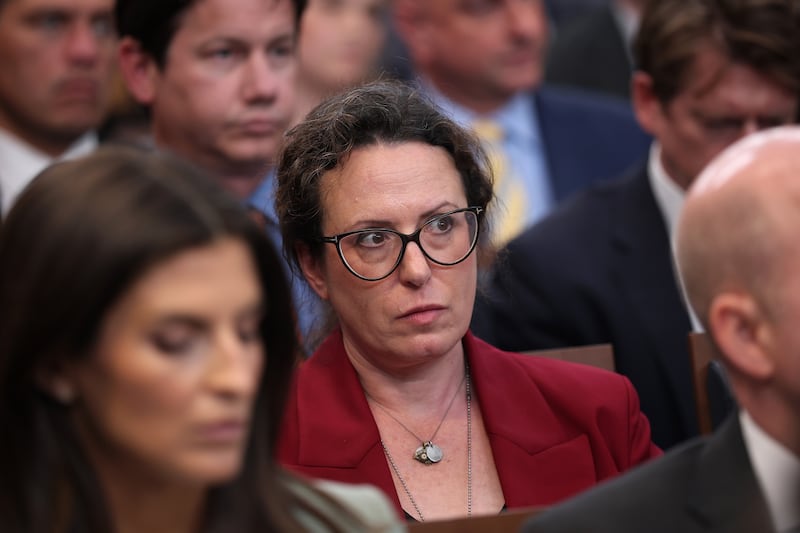
The revelation comes from New York Times journalist Jonathan Swan and Maggie Haberman’s new book, Regime Change: Inside the Imperial Presidency of Donald Trump, which draws on more than 1,000 interviews and three years of work to paint a picture of the first 14 months of Trump’s second term.

The two journalists write in the book about a change in the way the president has made decisions this time around in the White House, claiming he has become more impulsive, more trusting in his own gut, and less concerned about what the polls said about him.
Swan and Haberman said that change ruffled feathers among staffers, who briefed them anonymously about their concerns.
“Behind the scenes, some of his aides had told us they wished Trump was more anxious about the dangers he was courting, and about his plunging poll numbers.
“The discontent was palpable beyond the polling. In an internal memo circulated to roughly a dozen Trump advisors… the president’s pollster, Tony Fabrizio, summarized findings from two nights of focus groups conducted earlier in March… The results were bracing.”
But the bad polling news, Haberman and Swan wrote, was increasingly lost on the president. He seemed less concerned by them than he had in the past.
The latest Times/Siena poll puts Trump’s approval rating at around 39 percent, on a slow and steady downward spiral since his inauguration last year.
“To the extent he still cared about polling at all, he was seeing far fewer polls than during his first term,” Swan and Haberman wrote. “His advisors knew he was not receptive to being briefed on harsh realities.”
They continued: “In his second term, unlike his first, he was willing to take breathtaking risks, risks that could throw not only his presidency but the Republican Party and the entire world into chaos and carnage. More than ever before as President, he was operating on pure gut instinct.”
In an interview with MS NOW ahead of the book’s release, Swan and Haberman shed some light on the White House’s ability to keep a secret.
“The thing that was really notable about this White House, compared to the first one, is they keep talking about how they’re the most transparent White House in history,” Swan said. “It’s a canard. They’re actually incredibly good at keeping secrets.”
“Take the war, for example,” he continued, referring to the conflict with Iran. “You have a tiny group of people that are running this country, five or six people and Donald Trump.”
“The Treasury secretary of the United States, the energy secretary—the two people who would have to handle the biggest oil shock in world history—they weren’t in the room. They weren’t in the meetings,” he said.
Swan noted of former Director of National Intelligence Tulsi Gabbard: “Not in the room. You are talking about a tiny group of people.”
In the book they revealed the names of people who were in the room two days before the first bombs were dropped on Iran: Trump, Vice President JD Vance, chief of staff Susie Wiles, CIA Director John Ratcliffe, White House counsel David Warrington, White House communications director Steven Cheung, press secretary Karoline Leavitt, Defense Secretary Pete Hegseth, Secretary of State Marco Rubio, and Chairman of the Joint Chiefs of Staff Dan Caine.
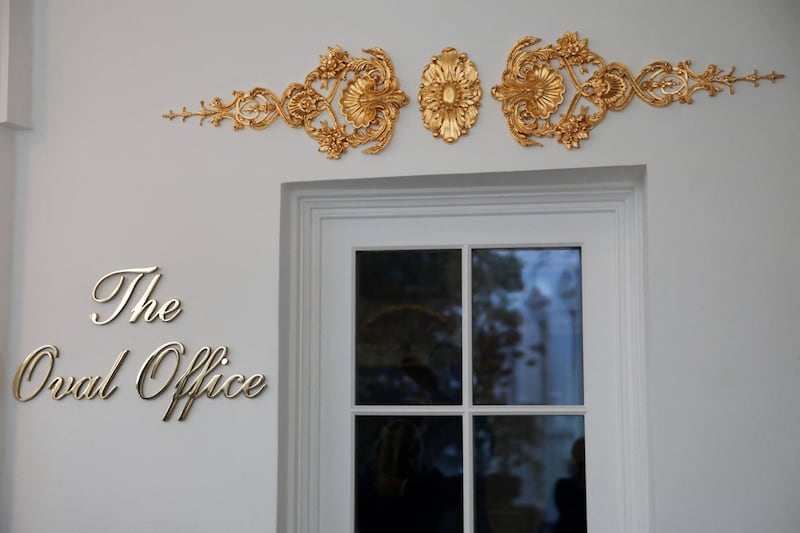
Elsewhere, Swan and Haberman also write that Trump superglued gold-colored appliqués to the walls of the Oval Office himself.
The Daily Beast has contacted the White House for comment.