President Donald J. Trump has claimed that he has the right to funnel as much taxpayer money into his own accounts as he likes.
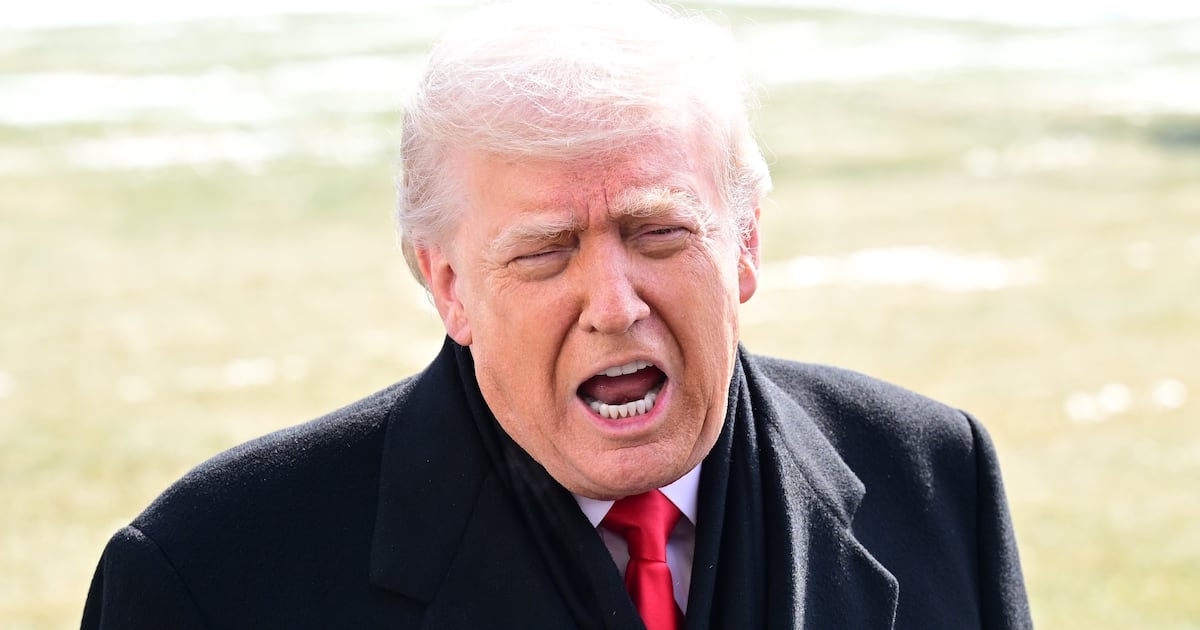
When asked by a reporter on Saturday evening what it was like to be on both sides of a lawsuit, Trump, 79, responded that “no one would care” if he awarded himself taxpayer funds for his own hand-selected “charities.”
As a private citizen and as president, Trump has launched multiple lawsuits against the U.S. government. He is now in charge of them and is seeking damages of more than $10 billion.
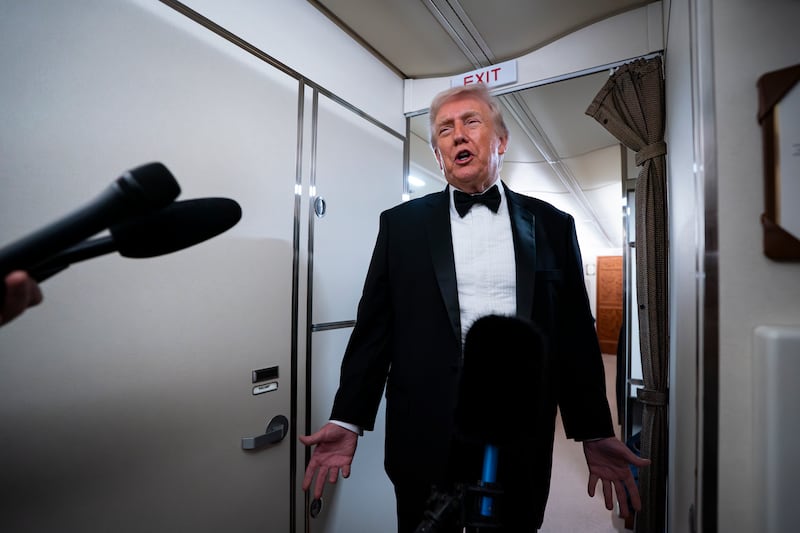
“I have to work out some kind of a settlement,” Trump told reporters on Air Force One. “I’m supposed to work out a settlement with myself.”
“I think what we’ll do is do something for charity. We’re thinking about doing something for charity, where I’ll give money to charity,” he continued.
“We can make it a sensational amount, and nobody would care because it’s going to go to numerous, very good charities,” the president said.
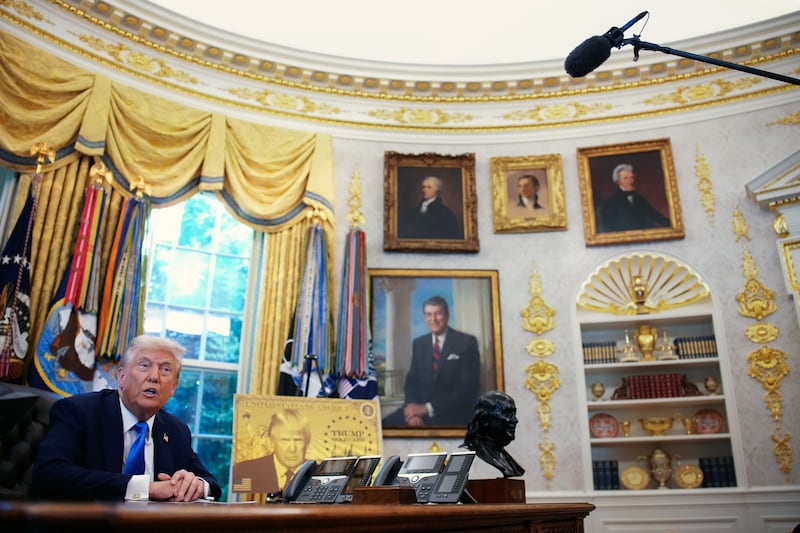
Trump launched legal action against the Department of Justice following the 2022 FBI search of Mar-a-Lago, in which illegally held, classified documents were seized.
He also sued the same department for investigating the links between his 2016 presidential campaign and Russia, something he has repeatedly called a “hoax.” A number of his team at the time, including Paul Manafort and Michael Cohen, went to jail.
In both cases, Trump is seeking $115 million in damages and legal costs each.


He claimed to have “won” the “Mar-a-Lago break-in suit,” which is still pending a decision, and said that this experience would inform the settlement of his newest legal action against the U.S. government: a $10 billion lawsuit against the Internal Revenue Service and the Treasury Department.
Filed in Miami federal court on Thursday, Trump and his sons Eric, Don Jr., and the Trump Organization have alleged the IRS failed to prevent the disclosure of Trump’s personal financial information after a rogue employee leaked his tax returns.
The Department of Justice, on behalf of the Treasury, has 60 days to decide whether to fight the demand or settle it. Trump said he has discussed the matter with Attorney General Pam Bondi, who, he claimed, agreed with the charity donation plan.
Trump won’t be able to donate to his own charitable foundation, the Donald J. Trump Foundation, as it ceased operations in 2018. Trump was ordered to pay a resulting $2 million legal bill for misuse of funds.
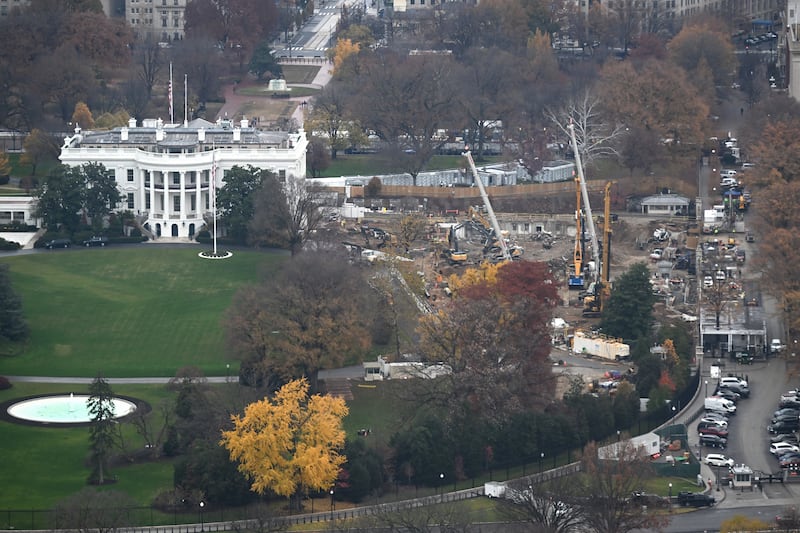
There are a number of organizations the president could potentially donate to. These include the Trump Accounts initiative or the White House Restoration Fund, which he is using to build the $400 million White House East Wing Ballroom.

The president has personally grown his net worth an estimated $3.9 billion during the first year of his second term. He could decide to make charitable donations from his own accounts before any settlement was reached.
The tax returns leaked by the IRS contractor Charles Littlejohn showed that Trump paid just $750 in federal income taxes in 2016 and 2017 and paid nothing in several other years.
Before entering electoral politics, Trump was a frequent donor to high-society charities, including the Clinton Foundation, to which he donated $100,000 in 2009. However, investigations have subsequently found that his boasts of being “one of the most charitable people” are largely inflated.