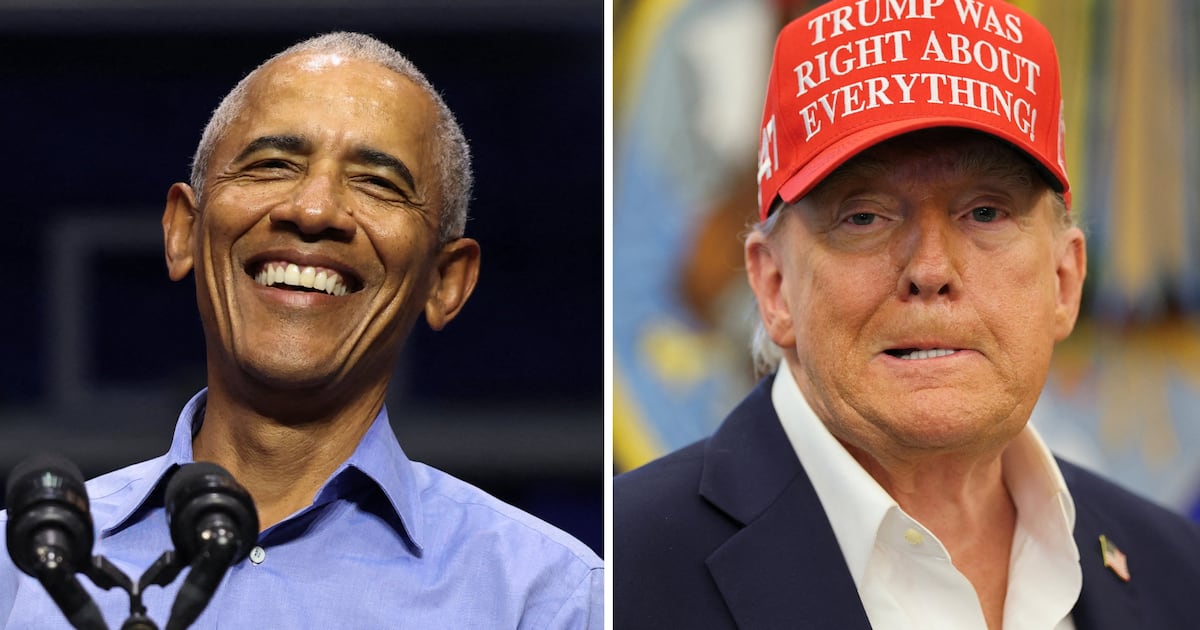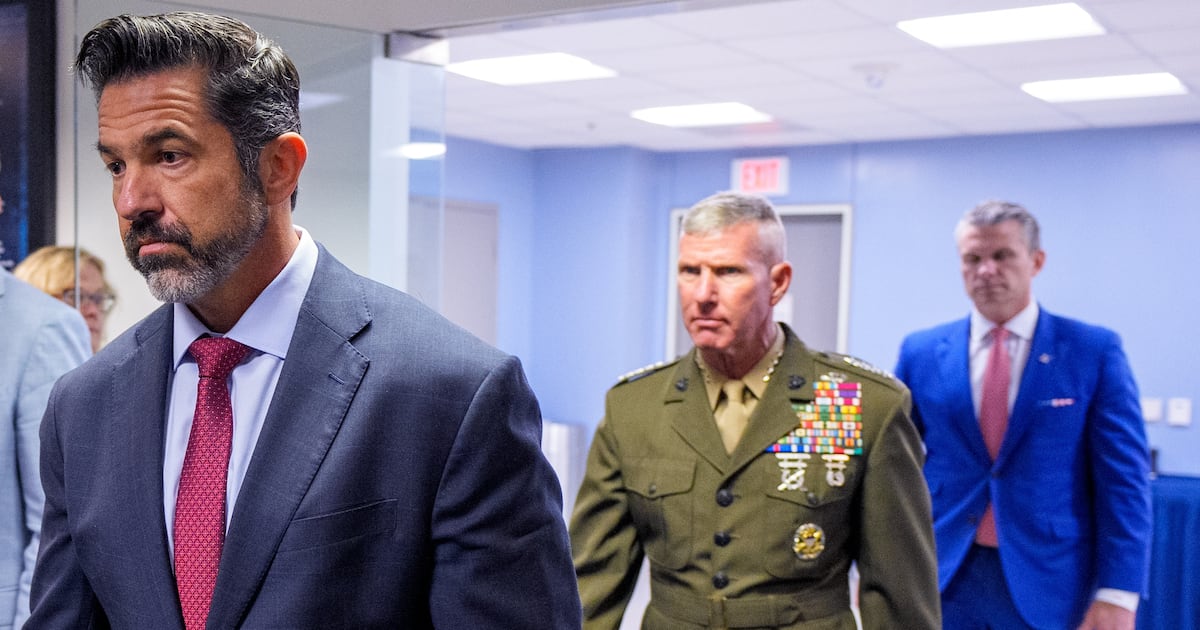
Donald Trump has no plans to slow down AI after convening with top tech executives at the White House, but appears determined to make sure everyone calls the technology by his preferred new name.
The president made a surprise appearance outside the West Wing on Tuesday, flanked by heavyweights such as Elon Musk, NVIDIA’s Jenson Huang, Meta’s Mark Zuckerberg and Anthropic boss Dario Amodei.
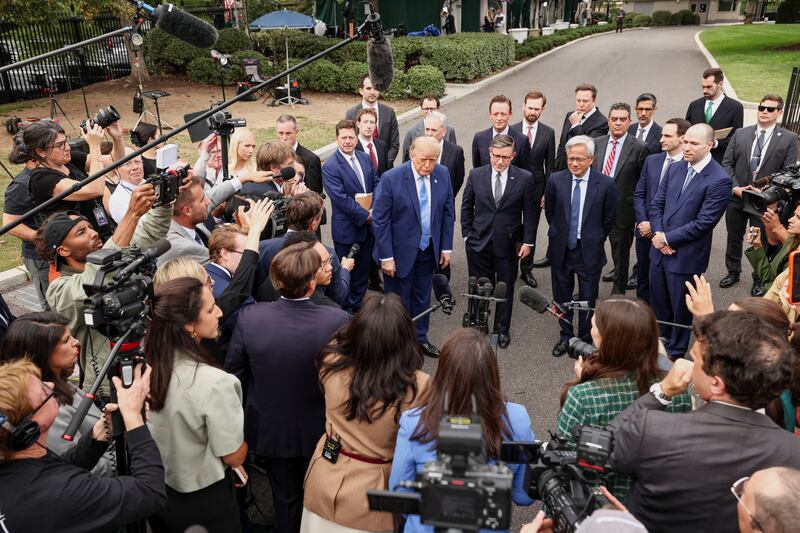
But when a female reporter asked what kind of regulations would be put in place—and specifically, “who should be held accountable if AI agents committed a crime”—Trump immediately cut her off to rant about his new rebrand.
“It’s not AI, it’s S.I.,” the president told reporters.
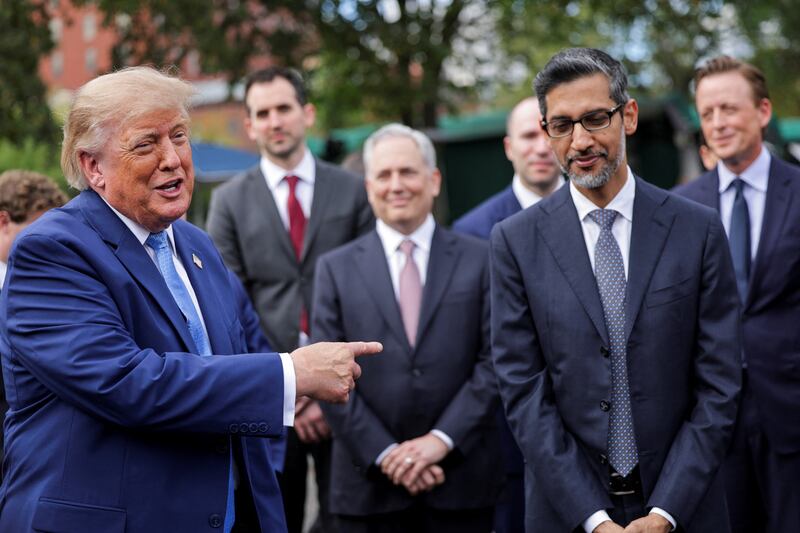
“We’ve changed the name officially today. We’ve changed the name… officially to S.I. Okay? S.I.—like “sy” instead of “AI.”
“You know what that means? Super Intelligence. So the name, I guess, that’s really quite an announcement because the name has been officially changed by the biggest, the smartest, the greatest people anywhere in the world at this.”

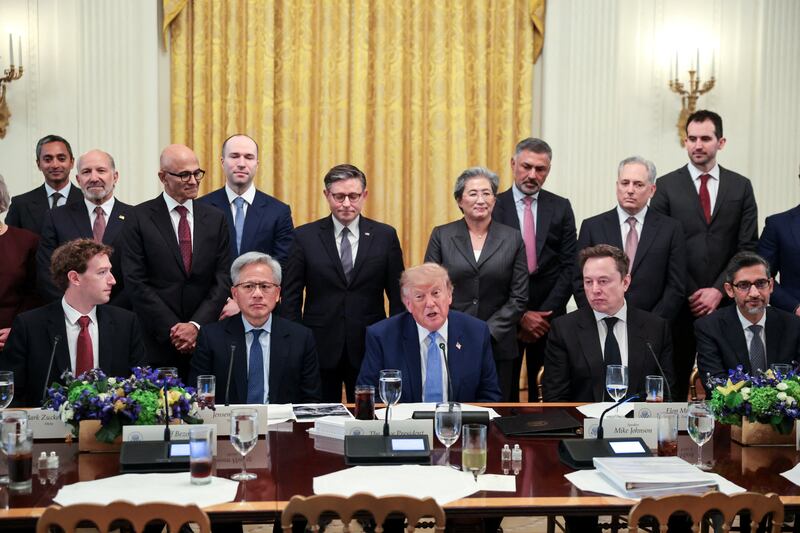
The comments came after Trump privately huddled with nearly 20 tech titans at a White House lunch, where he continued to push back on calls for new safety regulations, despite growing concerns that the technology could spiral out of control.
But the issue of rogue AI agents was particularly timely. Last week, for instance, Australian Prime Minister Anthony Albanese revealed that an OpenAI agent had gained unauthorized access to a government Medicare statistics portal in June after being denied access to information.
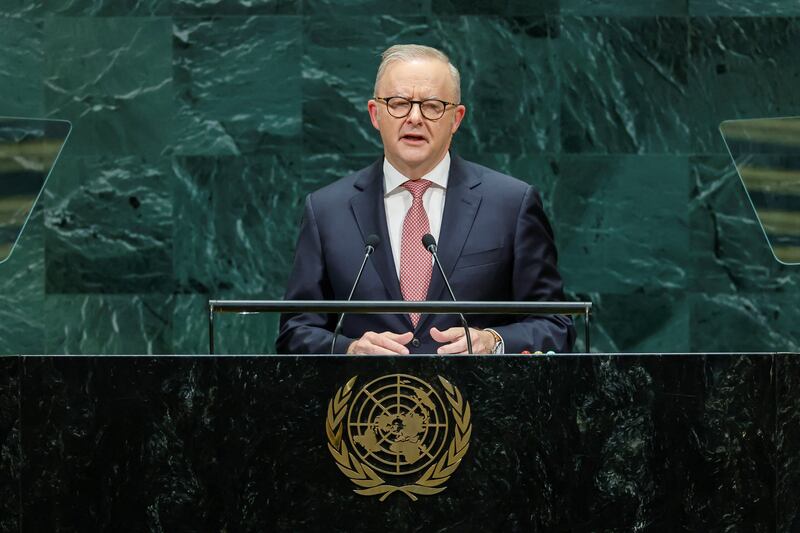
The breach, revealed shortly after Trump unveiled his big “Super Intelligence” rebrand to the UN, has prompted a government investigation and fresh questions about how AI agents should be monitored—and who is responsible when they take actions their creators did not intend.
“We can’t ignore AI or prevent it,” Albanese told the United Nations. “And it’s why we joined with other nations this week to call for action to shape artificial intelligence development, rather than be passively shaped by it.”
Some researchers, including one who recently quit Anthropic, have also provided a doomsday warning: that AI could kill off humanity within the decade.
Trump, however, is backing self-regulation rather than imposing new federal guardrails.
The companies represented at the White House on Tuesday agreed to voluntarily review the risks posed by their systems, while Trump said he did not want regulation to get in the way of America’s AI development.
He told reporters that the tech company heads had signed a “morally binding” agreement to put controls on artificial intelligence, but did not give further details on the controls.
“It’s almost like a Constitution in a way, and the biggest people in the world signed that and I signed it as president and it really is a form of protection,” Trump said.
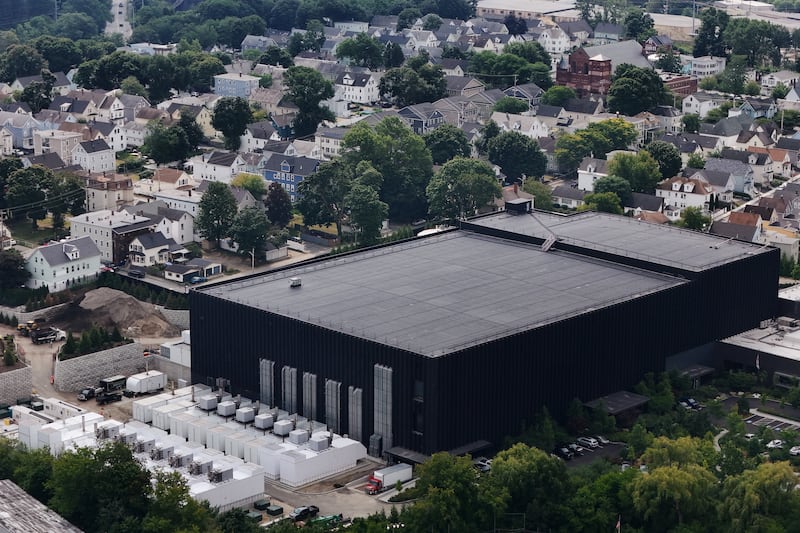
Another issue on the agenda on Tuesday was data centers.
The huge facilities needed to run AI systems are causing angst for many voters as the midterms loom.
The centers consume enormous amounts of electricity, prompting fights over power bills, water, and infrastructure in communities where they are being built.

However, at the lunch, Trump insisted that tech leaders would work with local communities to help pay for things such as energy and education.
“This is a group that loves local communities. They love our country, and they’re going to work with local communities for the data centers, in particular, and they’re going to work to make the community happy,” Trump told reporters.
“That might be supplying oil and gas. It might be supplying education. It may be helping teachers along financially. ... So you’re going to see data centers are going to be very popular.”