As dreaded, Trump used the NATO summit to insult America’s closest allies. NATO countries do tend to ghost on their bills, but Trump still has no idea how the alliance works or how to improve it.
Welcome to Rabbit Hole. Let’s break down the grievances one by one.

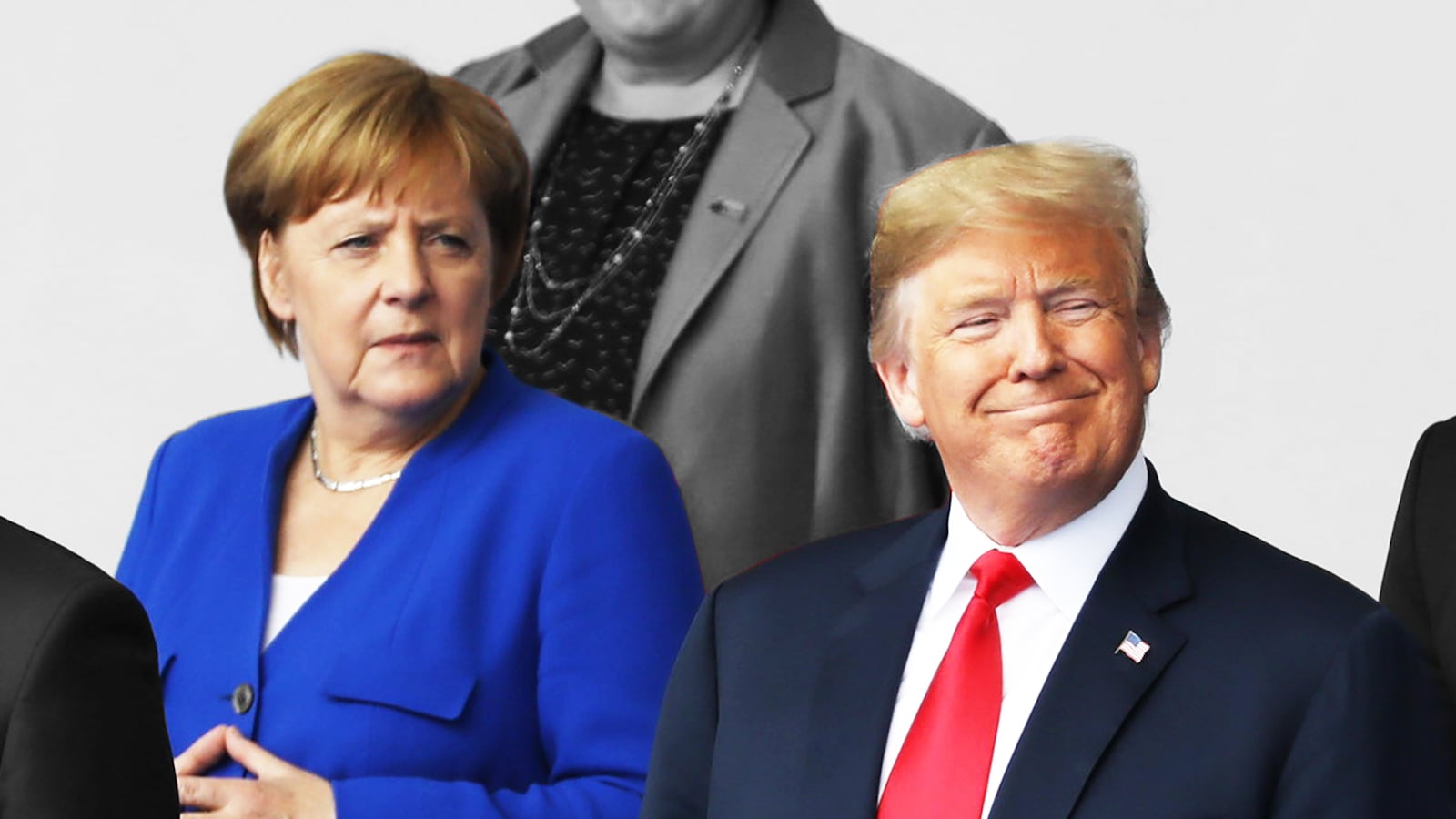
Why we can’t have nice things: The most explosive moment came during a meeting between Trump, NATO Secretary General Jens Stoltenberg, and German Chancellor Angela Merkel. Trump lit into Germany for its joint-gas pipeline with Russia (his math was wrong, naturally).
Just as Stoltenberg was trying to smooth things over by pivoting the conversation back to a shared unity around “our core task, to protect and defend each other,” Trump signaled he was not so big on it. “Germany, as far as I am concerned, is captive to Russia. Because it is getting so much of its energy from Russia. So we are supposed to protect Germany but they are getting their energy from Russia,” he blurted out.
Pay up: Money is at the core of Trump’s grievances with a number of allies and NATO is no exception. A skeptic of U.S. alliances and security guarantees, he’s grumbled that NATO countries don’t pay their fair share towards the alliance ever since the campaign. All 29 NATO members have committed to spend two percent of their GDP on defense but few have actually gotten there. NATO Secretary General Jens Stoltenberg expects only eight countries to meet that goal by the end of the year—a welcome uptick from the five who currently do but far short of the whole group.
That’s not how it works: Nearly two years into his presidency, Trump still does not seem to understand how NATO works. He appears to believe that NATO defense spending targets are some kind of fee paid to the U.S. Treasury. “Many countries in NATO, which we are expected to defend, are not only short of their current commitment of 2% (which is low), but are also delinquent for many years in payments that have not been made. Will they reimburse the U.S.?” he tweeted the day before the summit.
Contrary to Trump’s apparent thinking, NATO is not a rent-a-bully scheme where European countries pay the U.S. to defend them from neighborhood toughs. The only time its mutual defense clause has been invoked was after 9/11, when the U.S. needed help to defend itself in Afghanistan. Nor are spending targets earmarked for America’s pockets. In fact, there’s not much by way of requirements about what countries should spend on as long as it’s for defense. Nor is the welching on targets costing the U.S. any money. If tomorrow every NATO member hit its two percent target, the Trump administration hasn’t signaled that it would cut the U.S. defense budget by a dime.
Bright side: There is a bit of a silver lining to the story of alliance burden sharing in that the trend lines for member spending on defense are moving up. How much that has to do with Trump’s pestering is debatable. NATO countries started spending more starting in 2014 after Russia invaded Ukraine and annexed Crimea. It’s no accident that among the eight countries Stoltenberg expects to meet their spending targets this year, five—Estonia, Lithuania, Latvia, Poland, Romania—used to be part of the Soviet Union and Warsaw Pact, and fear an involuntary return.
Burn the village to save the village: You could make a case that Trump’s expressions of contempt for NATO, hesitancy to commit to the defense of NATO members in the event of Russian aggression, and budding bromance with Vladimir Putin have shocked alliance members into spending more on the belief that self-reliance is a better alternative than American commitments. But undermining the Atlantic Alliance as a way to keep its members fiscally honest is something on the order of a left-handed compliment.
Keep dreaming: Not content with haranguing NATO allies to pay up on their two percent commitments, Trump floated the possibility that they set their targets for defense budgets at four percent of GDP, according to White House spokeswoman Sarah Sanders. That hasn’t happened since the 1960s and it’s definitely not going to happen now. The U.S. doesn’t currently spend four percent of its GDP on defense (the last time we cracked four percent was in 2012).
History: Even during the peak anxiety years of the Cold War, spending four percent on defense was a rarity. The big NATO defense powers like France, Germany, and the U.K. spent over four percent on defense in the 1960s but since the 1970s, median defense spending as a percentage of GDP has never again hit that mark. Most of the countries that do spend that big on guns today are in the Middle East (and tend to be either U.S.-subsidized or rich in oil wealth). According to the World Bank, Algeria, Bahrain, Congo, Israel, Jordan, Kuwait, Lebanon, Oman, Russia, and Saudi Arabia all spend four percent or more.
Your Turn: Have thoughts of your own about Trump, NATO, and today’s summit? Don’t forget that Beast Inside members have access to Your Turn. You can submit your ideas, perspectives, and rants—with an opportunity to be published on The Daily Beast homepage.