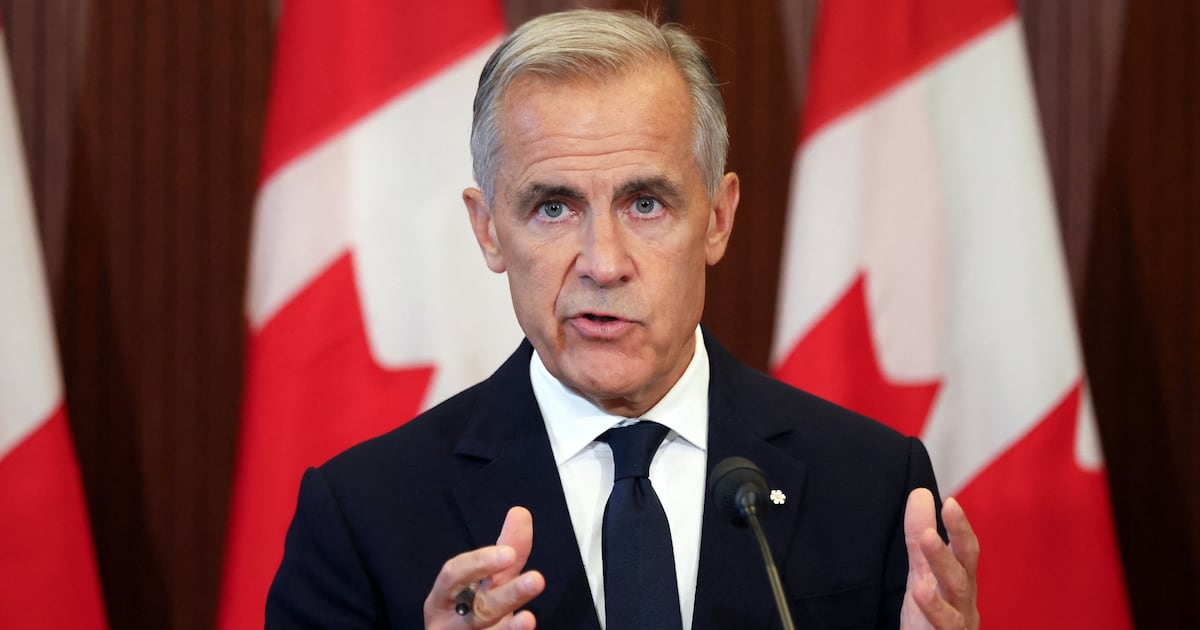
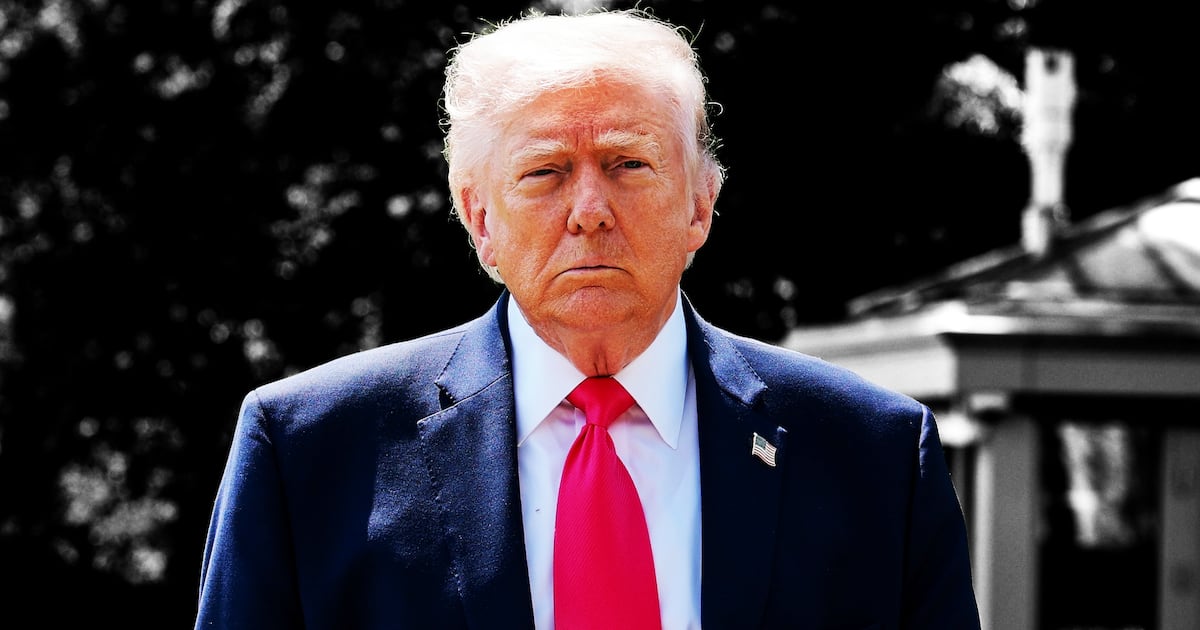
Acting Attorney General Todd Blanche has been forced to admit that the $1.8 billion slush fund for Donald Trump allies may not be quite as “dead” as he and other top officials have repeatedly claimed.
The president’s one-time personal criminal attorney turned acting attorney general appeared before the Senate Judiciary Committee for his confirmation hearing to become the permanent attorney general, where he was cornered over the fund by Republican Sen. John Cornyn.
The plan to create the $1.776 billion “Anti-Weaponization Fund” was revealed earlier this year as part of a deal reached between Trump and the IRS after he sued the agency in January for $10 billion over the leak of his tax documents in 2020.
In response to bipartisan outrage over money from the fund potentially going to rioters who violently attacked the police on Jan. 6, however, the Justice Department insisted the fund would not move forward, even though Blanche has avoided putting it in writing.
Cornyn called the settlement “unusual” while grilling Blanche, pointing out that the president had waited years to file the lawsuit once he was back in office. He then cornered Blanche over whether the fund was truly dead.
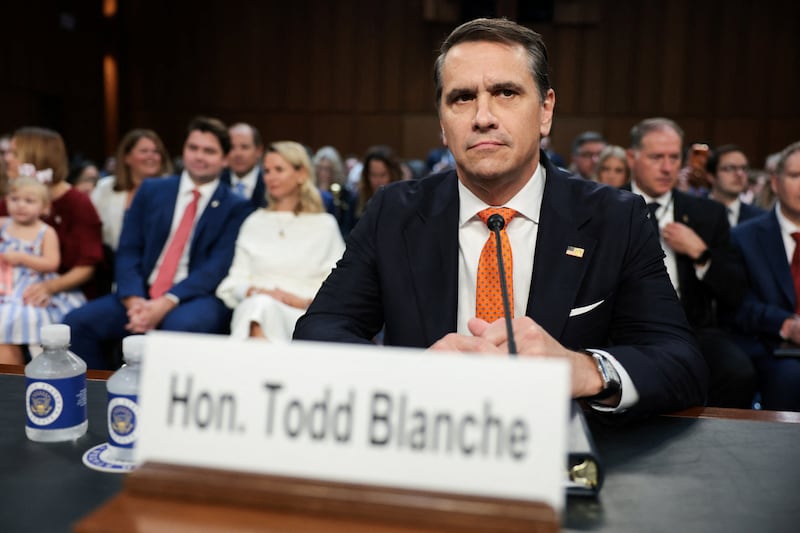
“There is no weaponization fund. The weaponization fund is dead. It’s not moving forward,” Blanche claimed.
That’s when Cornyn pulled up the actual terms of the settlement directly and called Blanche out.
“On page four, this settlement agreement can be modified—may be modified—only upon the written agreement of the parties. Has there been a written agreement of the parties to modify the settlement fund?" Cornyn asked.
“No, the settlement fund is just not moving forward,” Blanche said. “There’s no modification. It’s just- it never started. No money went from the Treasury to any other account. There’s no commissioners. It’s not moving forward.”
“So the settlement agreement remains as it was originally, but I hear what you’re saying,” Cornyn noted. “Is the settlement agreement enforceable as a contract by both parties?”
“Well, yes, it’s an enforceable document,” Blanche admitted. “So I suppose if President Trump’s counsel sought to enforce it, that they potentially could.”
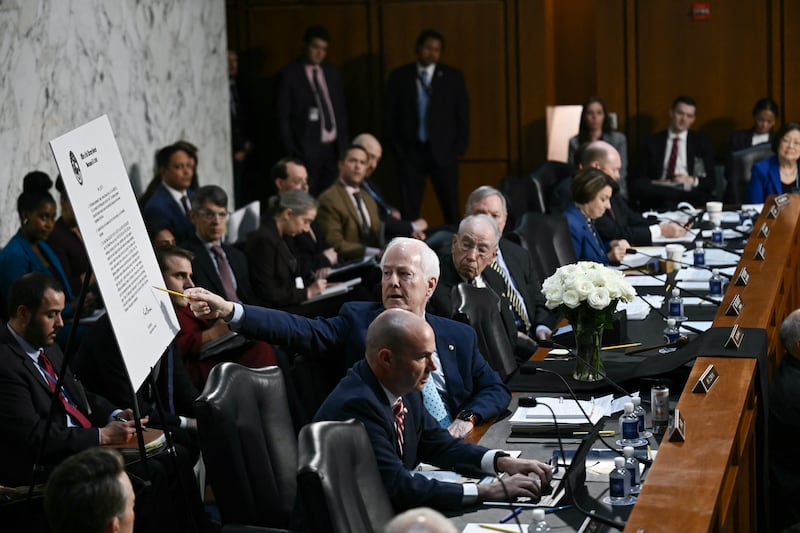
He went on to claim that Trump’s attorneys cannot force the Justice Department to move forward with the fund, but admitted that they could “potentially” say there was a breach of contract by not moving forward.
“They have not done that, and I’m not aware that they’re planning on doing that,” Blanche said.
The acting attorney general indicated that Congress could codify in law that there is no weaponization fund.
Cornyn, who is leaving Congress at the end of his term after being ousted in the GOP primary, did not appear to be satisfied with the answer.
“Just to be clear, the president of the United States, who is the plaintiff in this lawsuit, has not agreed in writing to delete the weaponization fund, and there’s no guarantee that he or one of the other plaintiffs might raise that issue by way of a lawsuit, a breach-of-contract lawsuit in the future,” Cornyn said.
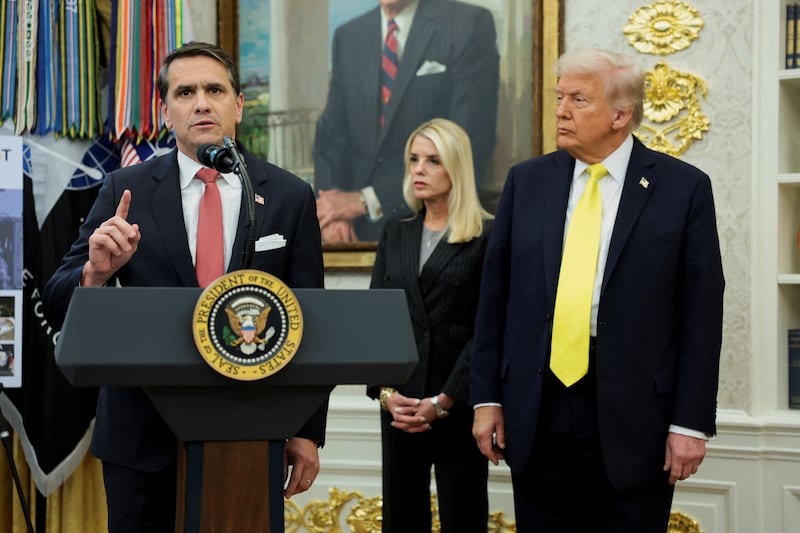
Blanche insisted that the “plaintiffs have no power over the fund.”
“I suppose they could bring a lawsuit, and then we would litigate it, but even if we were litigating it, there’s no fund, so the results of such litigation, whatever it would be, wouldn’t be a revival of the fund,” Blanche claimed.
While Blanche has argued the fund would not move forward, Trump has repeatedly defended the fund, claiming “lives have been destroyed.” He also called it a “great idea” and urged congressional Republicans to approve it.
Later in the hearing, when pressed further on the issue, Blanche insisted that the fact that the fund was dead had been put in writing in court filings. He claimed he would not submit a declaration to that effect “because there’s long-standing precedent” that judges cannot ask Cabinet secretaries to put a declaration in.
But a federal judge on Tuesday slammed the settlement and accused the president’s lawyers and the Justice Department of collusion.
District Judge Kathleen Williams wrote that there was effectively never any “settlement” in the case because the “facts before this Court demonstrate there was never adverseness between the Parties; there was never a case or controversy; and there was never a question as to who would prevail.” In a 56-page filing, Williams said the case was “brought to manipulate the judicial process.”
Williams sanctioned Trump’s attorneys in the case and suggested Blanche should also be disciplined.

The deal reached between Trump and the IRS, which he now leads as president, also gave Trump and his family and businesses sweeping tax amnesty. That part of the deal remains fully in place.
Blanche defended the provision he signed off on in the hearing on Wednesday when it was raised by Sen. Dick Durbin.
“You signed a document forever discharging them from any legal responsibility,” Durbin said. “How often do you think that’s been done in the history of the United States?”
“Involving the president of the United States, I’m not sure it’s ever been done, but this type of settlement is done regularly,” Blanche claimed.