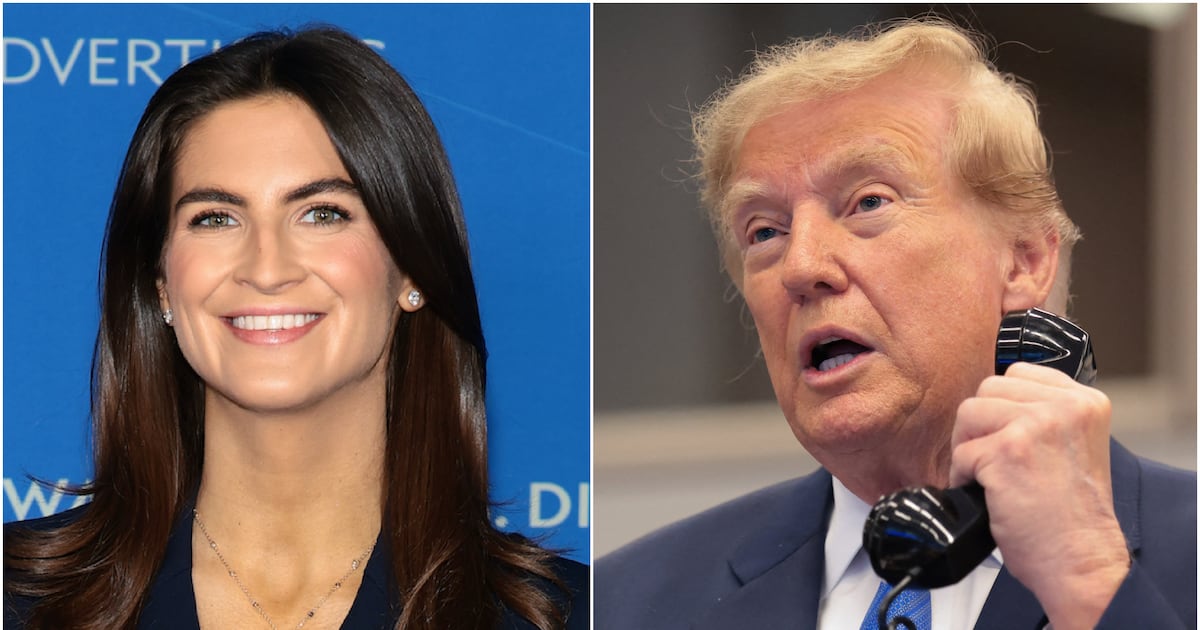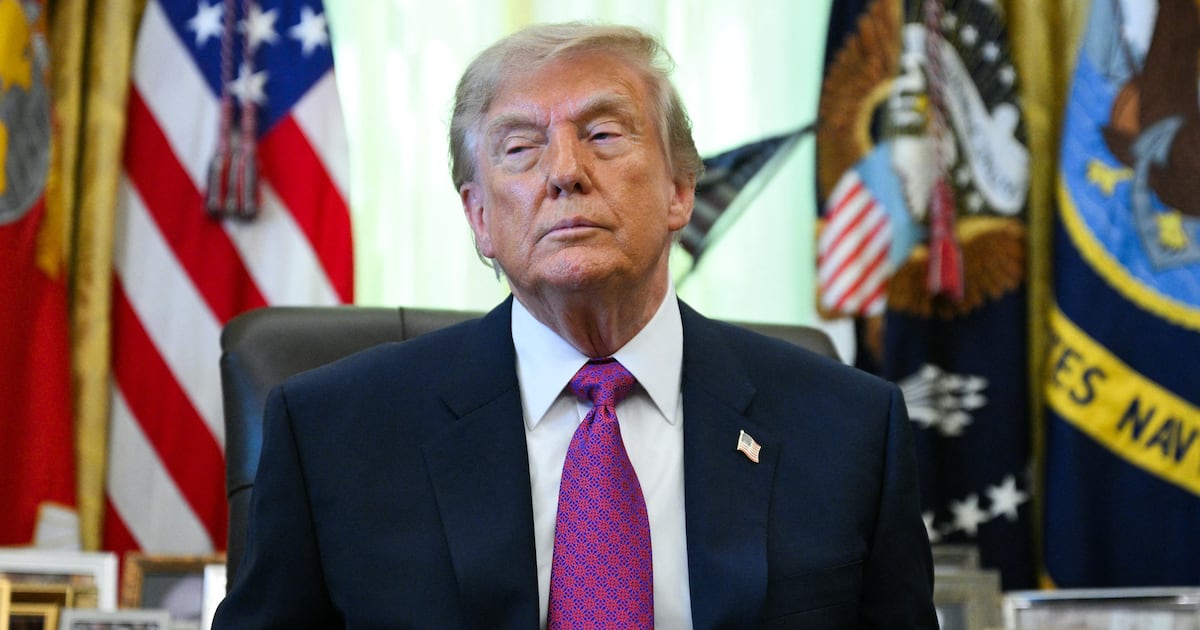

President Donald Trump’s top law enforcement officer is using a shooting outside the White House over the weekend as an excuse to claim that Trump “cannot safely conduct the business of the United States” without his proposed $1 billion ballroom.

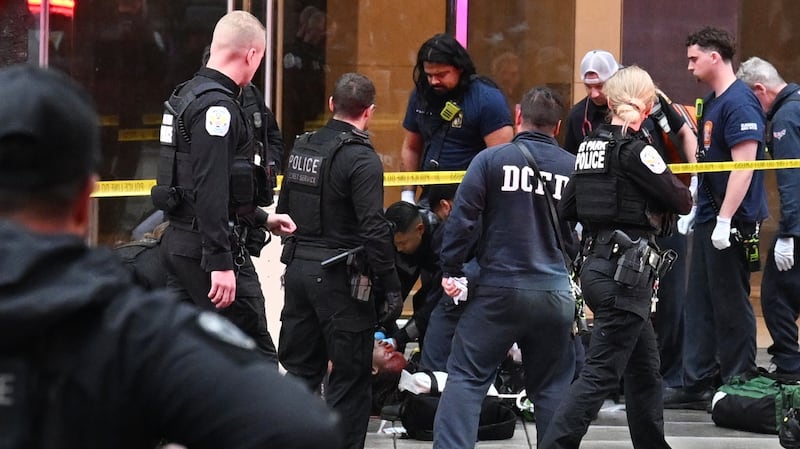
Officials said a suspect approached a Secret Service checkpoint at about 6 p.m. on Saturday, pulled a gun from a bag, and began firing at officers, who returned fire, fatally killing the shooter.
Trump was inside the White House at the time and was not injured in the shooting.
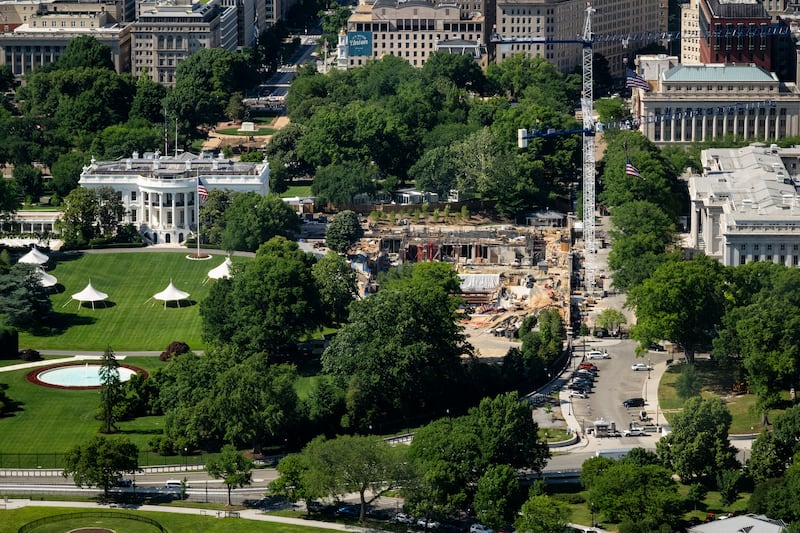
Within 24 hours, Acting Attorney General Todd Blanche, who previously served as the president’s personal attorney, argued in a court filing that a federal court should dismiss a lawsuit challenging the ballroom’s construction.
The shooting “underscores the critical need for top level, state of the art security at the White House, including the Ballroom, a knitted, unified, cohesive part of the East Wing Project, which is vital for National Security,” Blanche wrote in the filing.
The filing was later shared on Truth Social by Trump.
In a lawsuit brought by the National Trust for Historic Preservation, a federal judge ruled last month that the 90,000-square-foot ballroom project could not continue without congressional approval, though he said actions necessary for the “safety and security” of the White House were an exception.
A federal appeals court, however, has allowed construction to continue while the case makes its way through the courts.
Last week, the 79-year-old president stunned reporters during a walkthrough of the ballroom’s construction site when he revealed that the event space was actually a “shield” for a massive, multi-level subterranean bunker being built below.
Blanche’s filing argued the ballroom would provide a “SAFE HAVEN” from would-be attackers such as Saturday’s shooter, identified as 21-year-old Nasire Best, and Cole Tomas Allen, who allegedly opened fire outside the White House Correspondents’ Association dinner on April 25.
Without it, Trump and his visitors—including Britain’s King Charles and President Xi Jinping of China—will be at the mercy of would-be gunmen with high-caliber weapons, with nothing but “vulnerable tents… made of plastic or canvas, which has no ability to stop a bullet” to protect them, the filing claimed.
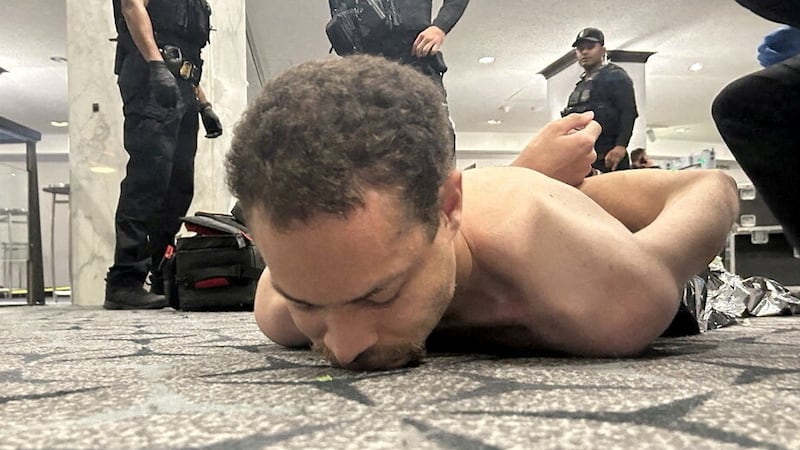
The Justice Department made a similar argument in April after Allen rushed a security checkpoint outside the Washington Hilton ballroom, where the WHCA dinner is held, before being tackled by law enforcement.
At the time, government attorneys sent the NTHP a letter demanding they drop the suit, saying it was “incorrect and irresponsible,” and put the president’s life at risk.
Thanks to the new ballroom, Trump and his successors would “no longer need to venture beyond the safety of the White House perimeter,” the letter claimed.
NTHP President and CEO Carol Quillen responded in a statement that the lawsuit “endangers no one” and “respectfully asks the Administration to follow the law.”
“We have always acknowledged the utility of a larger meeting space at the White House,” she added. “Building it lawfully requires the approval of Congress, which the Administration could seek at any time.”
Critics also accused the DOJ of making specious arguments.
“The argument is an absurdity. No one would expect the president to be locked in a bunker for all events,” Lisa Gilbert, co-president of Public Citizen, a consumer advocacy group that sued for release of the ballroom funding agreement, told NBC News in April.
Sunday’s filing included several Trumpian turns of phrase, including the president’s oft-repeated claim that the ballroom is “on time and under budget.”
The president originally said the Mar-a-Lago-style event space would cost $100 million and would be entirely funded by private donors.

The price tag has since increased tenfold, first to $200 million, then $300 million, $400 million, and finally $1 billion, with Trump’s allies in Congress now demanding that taxpayers foot the bill.
Blanche’s filing also claimed that the military and Secret Service were “not happy” that the ballroom’s “Top Secret features,” including a drone port and sniper facilities on the ballroom’s roof, had been revealed through the lawsuit.
Trump himself shared those details with reporters last week.