Donald Trump’s hand-picked EPA administrator oversaw a process that let chemical giant Bayer choose its own regulatory framework for a controversial weedkiller.
Newly released internal EPA documents show that Bayer was offered a choice from a menu of regulation options for their twice-banned weedkiller dicamba.
The documents, from May and June of 2025, show that the EPA asked Bayer what they wanted, got a response, and then used that to draft the regulations.
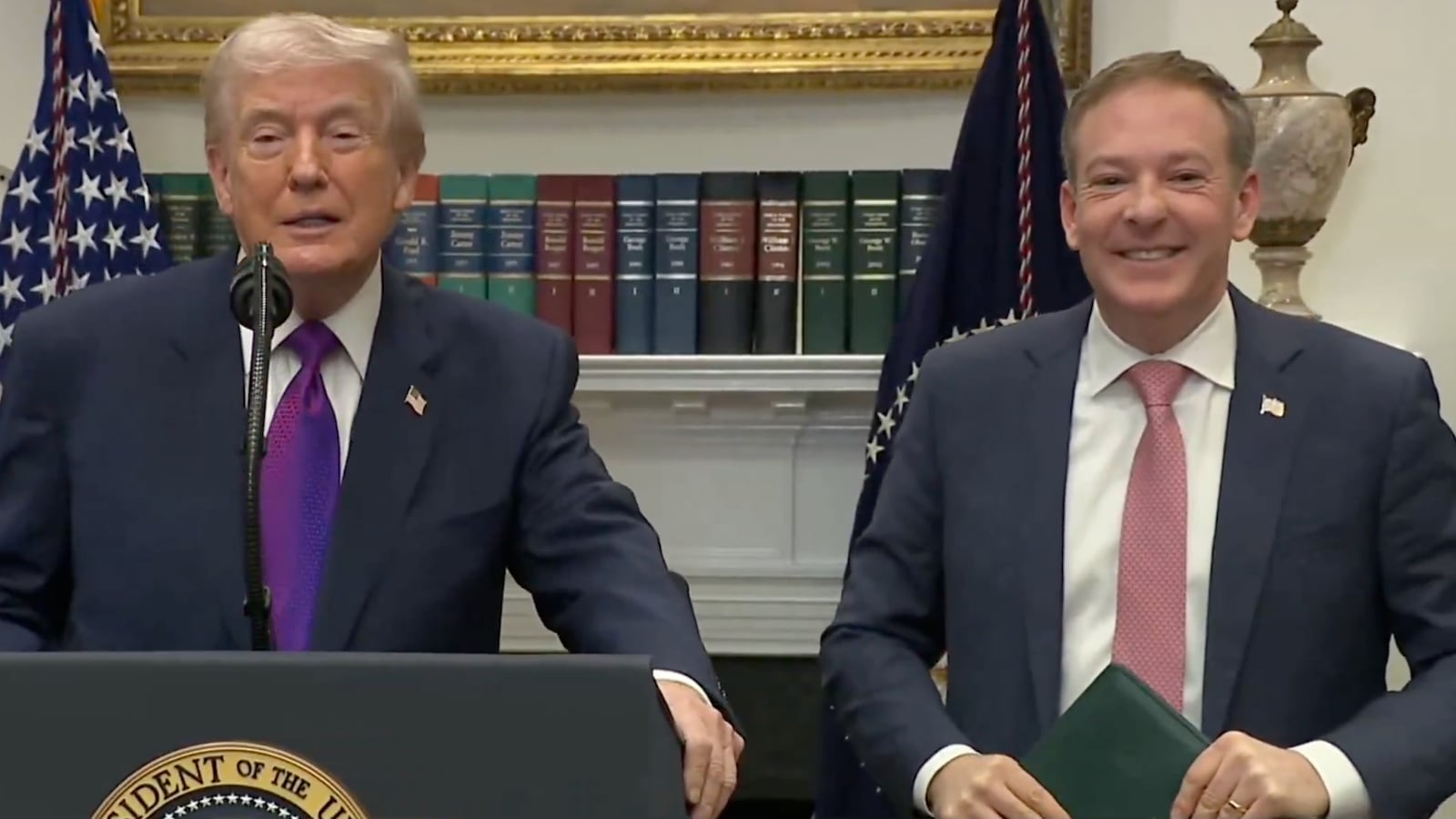
Lee Zeldin was nominated by Trump to head the agency in January 2025. He took up the post on Jan. 29.
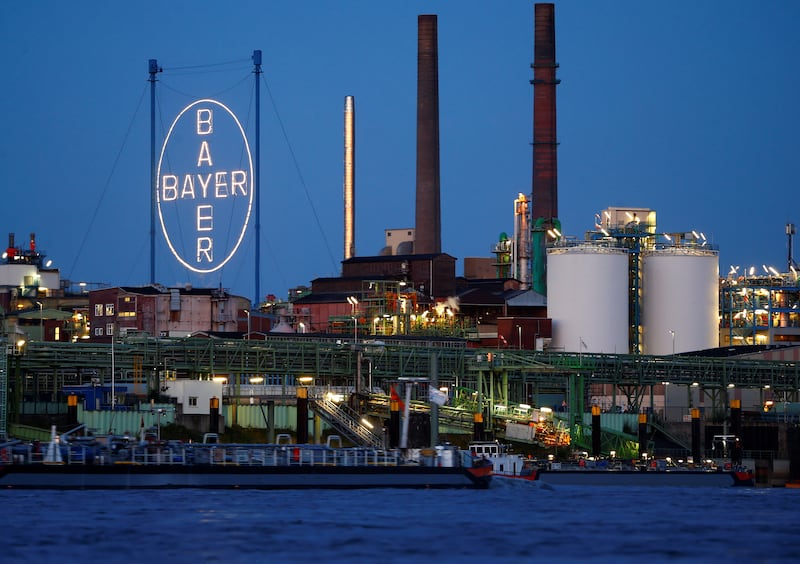
Dicamba has twice been banned by the courts, once in 2020 and again in 2023. Bayer filed a new registration request to allow them to manufacture and sell the toxic chemical again in late 2024.
The chemical is linked to liver cancer and Non-Hodgkin lymphoma and is prone to drift, killing vegetation and wildlife in areas around where it is sprayed.
In choosing their own regulatory framework, Bayer opted for the least protective choice for one regulation, and the middle level of protection for another regulation.
“The EPA is allowing Bayer to choose its preferred measures to limit dicamba’s damage as if it was ordering up a late-night dinner à la carte from Chili’s,” Nathan Donley, environmental health science director with the Center for Biological Diversity, told The Guardian.
“It becomes troublesome when the EPA allows them to regulate themselves by choosing the mitigations,” he added. The Center for Biological Diversity and the Center for Food Safety have brought a lawsuit over the issue.
Dicamba drift damage was found by experts to be the worst of any herbicide in the history of U.S. agriculture. But the current approval provides fewer protections against dicamba drift than the past two approvals, the lawsuit alleges.
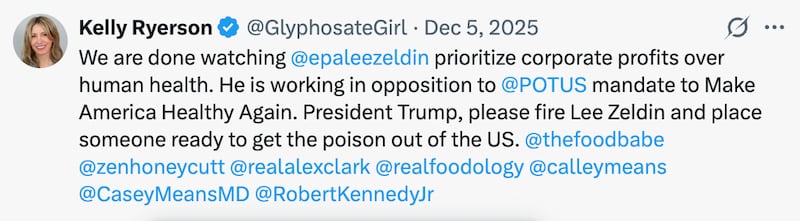
The news of the soft-ball regulations drew ire from Make America Healthy Again campaigner Kelly Ryerson, who slammed the process.
“It is now undeniable that the EPA remains fully captured by a crooked collection of pesticide company players who so enthusiastically ignore the substantial losses of farmers and the federal courts who mandated a halt to dicamba use,” she said.
Ryerson has previous called for Zeldin to resign over the EPA’s handling of toxic chemical regulation and oversight.
In his quest to reshape the EPA in his image, Trump moved swiftly to appoint his people to key roles in the agency.
Among them are Nancy Beck, who worked for the American Chemistry Council, a chemical industry trade and lobbying group, and was a controversial figure at the EPA during the first Trump administration.
Lynn Dekleva, who was at chemical giant DuPont for 30 years, was also an early appointment. DuPont is known for producing PFAS—or forever—chemicals.
Chad McIntosh, a former Ford executive, and Alexander Dominguez, who worked for the American Petroleum Institute, also joined the EPA at the start of the 2025.
The EPA told The Guardian the process for deciding the Bayer regulations was “the regulatory system working exactly as intended.”
On Monday, the Trump administration gutted regulations that limited planet-warming emissions from coal- and gas-fired power plants, and the president has repeatedly called climate change a hoax.
The EPA, the White House, and Bayer did not immediately respond to a request for comment.