
Polls show an unprecedented backlash against President Donald Trump’s war in Iran.
While Americans’ initial support for past interventions has ranged from 76 percent for the Iraq war in 2008 to 92 percent for the Afghanistan war in 2001, polls have shown that Americans do not back Trump’s military action in the Islamic Republic.
The latest Reuters/Ipsos poll showed that just 29 percent of Americans back the airstrikes, and an NBC poll found that 52 percent of registered voters said the U.S. should not have taken military action.
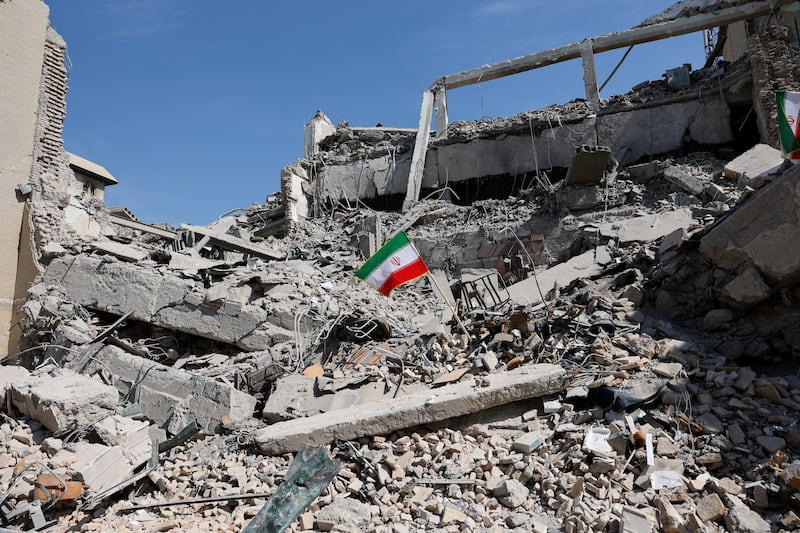
Some polls have even shown that an unusual number of Republicans are questioning why America is plunging into another Middle East conflict.

Despite those polls, the White House has claimed there is public backing for the strikes, which killed the country’s supreme leader, Ayatollah Ali Khamenei, and has resulted in the deaths of at least seven U.S. service members in retaliatory strikes.
“A majority of Americans support President Trump’s decisive action against a terrorist regime that has killed and maimed thousands of Americans for nearly 50 years under the evil hand of the Ayatollah,” a White House spokesperson previously told the Daily Beast.
“The President has always been clear that Iran, the world’s number one sponsor of terror, can never obtain a nuclear weapon, and his actions now will make America—and the world—a safer place.”
But public backing for Trump’s airstrikes is far weaker than historical precedents for U.S. military interventions.

By comparison, Gallup polling shows that in the days following the attack on Pearl Harbor in 1941, 97 percent of Americans supported declaring war on Japan.
And when President George W. Bush deployed troops to Afghanistan in 2001, 92 percent of Americans approved.
Even the vastly unpopular Iraq war initially had 76 percent support on the first day of combat.
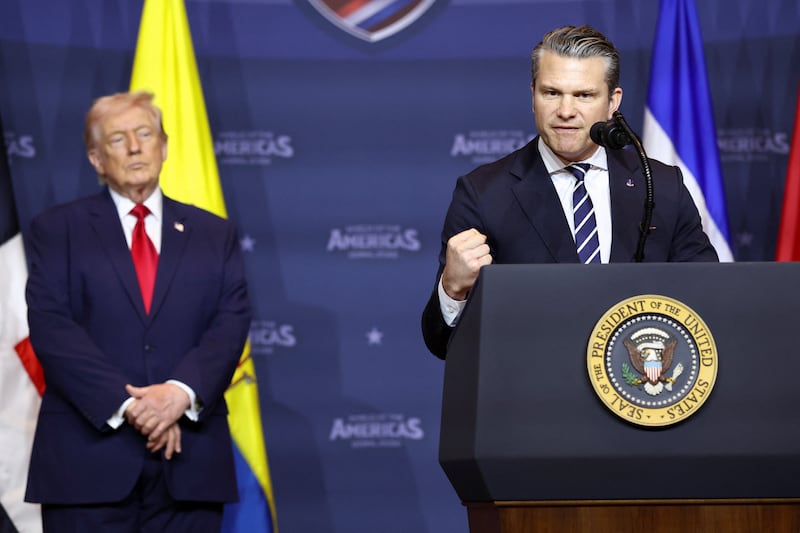
In contrast, Trump’s strikes are facing significantly lower approval.
And that is also true among Republicans. YouGov polling published on Feb. 28, the day of the first strikes on Iran, showed that 69 percent of Republicans backed the strikes.
That is far lower than the 93 percent who supported Bush’s Iraq war in 2003 or the 96 percent who backed the Afghanistan invasion in 2001.
The numbers reveal a widening split among Republicans over Trump’s military escalation in Iran. Trump campaigned in 2024 on a pledge to avoid foreign entanglements and “no new wars,” a message that resonated with many supporters who were weary of long-running conflicts.

Since taking office, however, his actions have diverged sharply from that stance. The February strikes on Iran marked the second major use of force against Tehran in less than a year, following punitive air attacks on nuclear sites in June 2025.
Trump also conducted a high-profile operation to capture Venezuela’s president in early January and has hinted at further engagements in the region.
Those moves have drawn unusual criticism from figures within the MAGA coalition, including Andrew Tate, Nick Fuentes, Tucker Carlson, and Marjorie Taylor Greene.
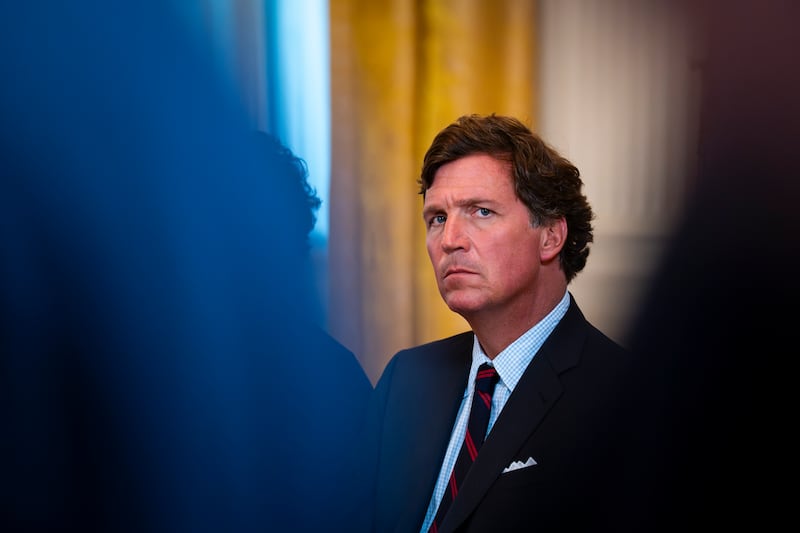
Trump has also been under pressure to define his endgame in Iran. He has so far failed to provide a clear timeline for when the conflict will end, and has given several different explanations for for why he started the war.
Initial announcements presented the strikes as targeting Iran’s nuclear program and possibly prompting a change in leadership. As the operation progressed, however, the messaging shifted. By Monday, Trump was framing the action as a defensive measure designed to protect the United States and its allies from potential Iranian aggression.
“An Iranian regime armed with long-range missiles and nuclear weapons would be an intolerable threat to the Middle East, but also to the American people,” Trump said.
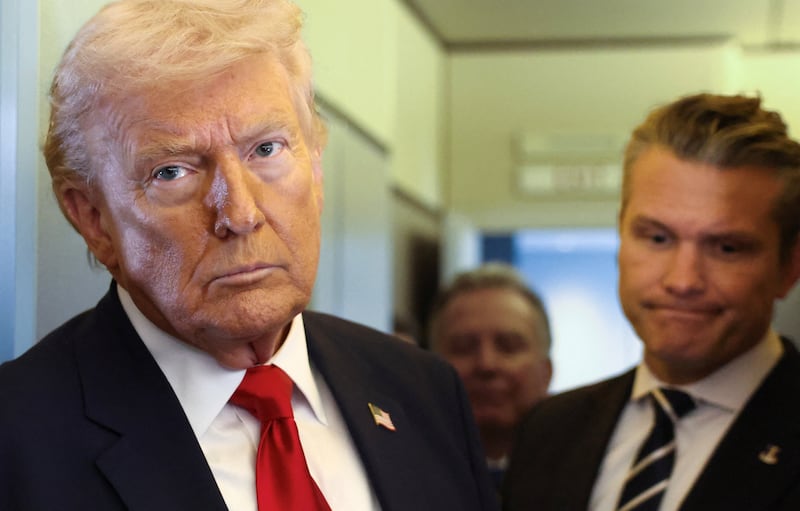
The Reuters/Ipsos poll shows that 64 percent of Americans think Trump has failed to clearly spell out the objectives of the U.S. military campaign, while 60 percent of Americans expect U.S. military involvement in Iran will “go on for an extended period of time.”
And as the war drags on with no end in sight, Americans are increasingly uneasy about the financial fallout from the war.
The Reuters/Ipsos poll showed that nearly half of voters—49 percent—say the conflict will hurt their personal finances, including a third of Republicans and two-thirds of Democrats. Concerns over rising fuel costs are even more widespread: Sixty-seven percent expect gas prices to climb over the next year, a view shared by 44 percent of Republicans and 85 percent of Democrats.
The numbers are a warning sign for Trump and the GOP ahead of the 2026 midterm elections, as Democrats aim to make the cost of living a central campaign issue.
Since returning to the White House pledging to curb inflation and end “forever wars,” Trump’s airstrikes on Iran have pushed oil above $100 a barrel for the first time since 2022, with gas prices jumping roughly 50 cents per gallon.
Analysts warn prices could remain high for weeks or months, even if the conflict ends quickly.
The president has brushed off concerns about the spike, arguing the surge “doesn’t really affect us.”
Still, YouGov polling shows that the public is split over who to trust on defense: Thirty-three percent of Americans say they trust Democrats more on national security, while 38 percent trust Republicans. Among Republicans, 88 percent favor their party, compared with 75 percent of Democrats backing their own. Independents are nearly evenly split, with 24 percent trusting Democrats and 25 percent trusting Republicans.