Donald Trump has launched a furious tirade against the Supreme Court as he braces for a potential blow over his bid to end birthright citizenship for millions of Americans.
The court is expected to rule soon on whether Trump lacks the authority to override the citizenship protections guaranteed under the 14th Amendment, which states that all persons born or naturalized in the United States “are citizens of the United States.”
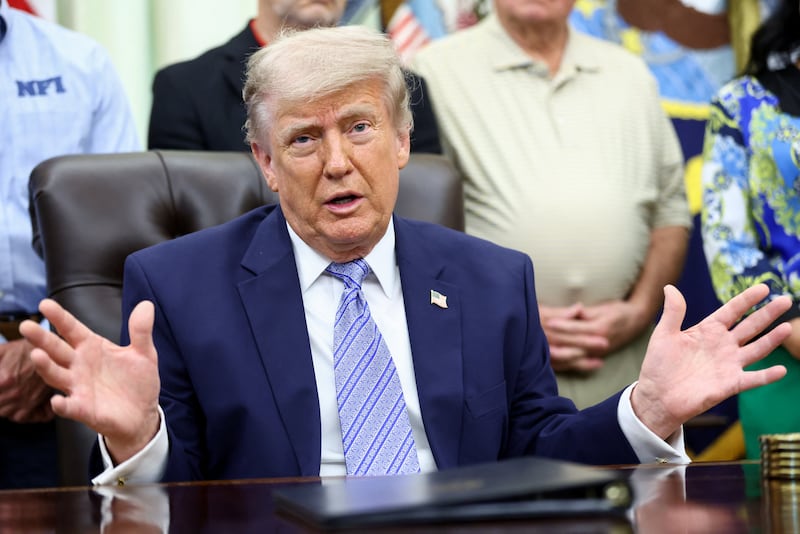
But sitting in the Oval Office on Thursday, Trump lashed out at the conservative-dominated court, declaring that it would be a “disgrace” if it didn’t do what he wanted.
“Birthright citizen is done by no other country, no other country in the world the way we’re doing it—we’re a laughing stock,” Trump said, ignoring the fact that dozens of countries confer citizenship at birth with no conditions.
“And if the Supreme Court approves that decision, they have done a great disservice to the United States of America.”
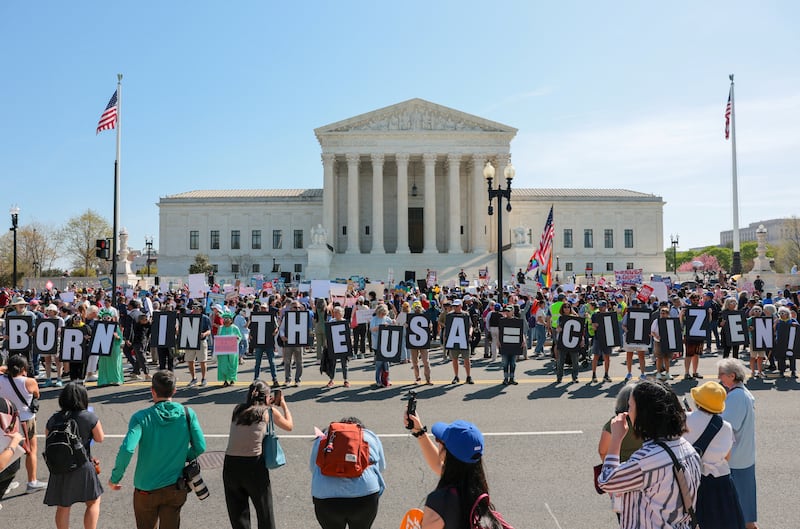
If the court rules against Trump, it would represent yet another significant judicial setback for the president, who is still fuming over the decision to strike down his tariffs earlier this year.
“What damage they’ve done!” he told reporters.
“$149 billion we have to pay back... The Supreme Court could have saved us $149 billion with half a sentence, but they chose not to do that. Now they have a ruling which is a much bigger ruling—birthright citizenship.”
“Forgetting about the fact that it’s wrong, the cost of birthright citizenship is barely not affordable by our country,” he claimed.
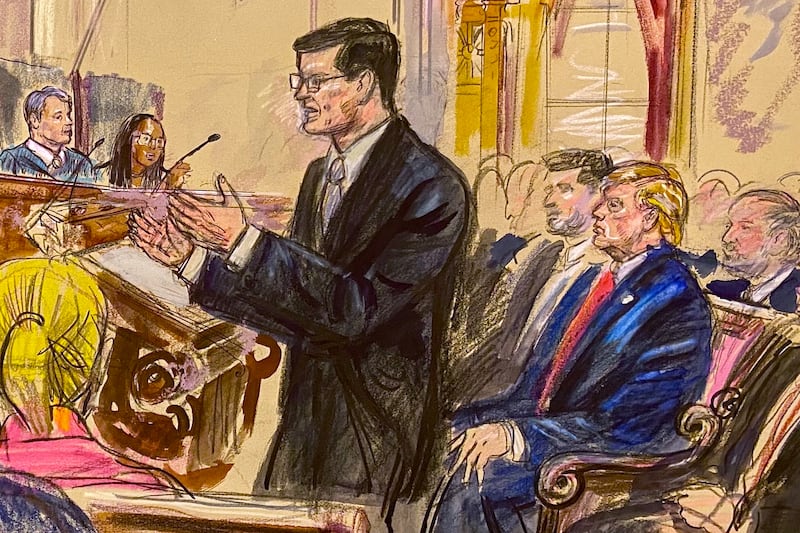
In a sign of how much is at stake, Trump made the unprecedented decision to sit in on oral arguments during the birthright citizenship case in April, staring down the court’s nine justices as they quizzed his Solicitor General D. John Sauer.
However, the president left the hearing abruptly after less than 90 minutes of watching several of his own handpicked justices tear Sauer’s arguments apart.
One of the skeptical voices in court was Trump appointee Amy Coney Barrett, who spoke about the historical understanding of the 14th Amendment, which was adopted in 1868 after the Civil War.
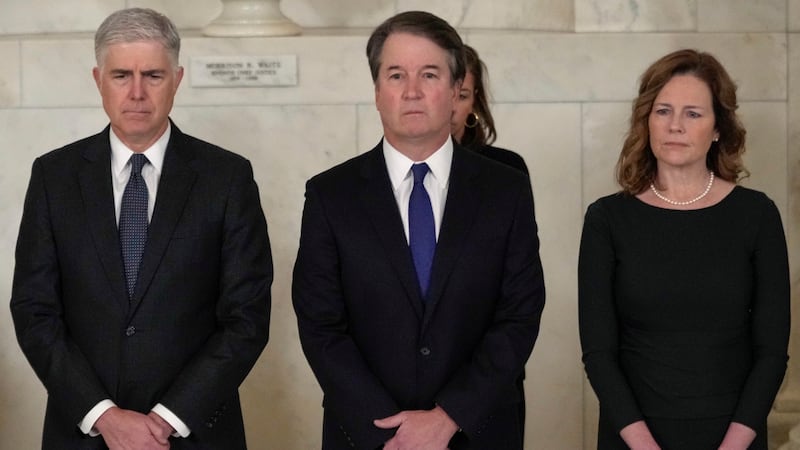
Justice Neil Gorsuch, who was also appointed by Trump, added to the pressure Sauer faced, asking the seasoned solicitor general: “Do you think Native Americans are birthright citizens under your test?”
“Ah, I think... so,” he replied, somewhat unconvincingly. “I’ll have to think that through.”

And Chief Justice John Roberts, another conservative on the bench, also had something of a mic-drop moment when Sauer tried to make the point that “we’re in a new world where eight billion people are one plane ride away from having a child who’s a U.S citizen.”
“It’s a new world. It’s the same Constitution,” Roberts replied.
A ruling on birthright citizenship will bookmark a years-long legal and political battle over a right that has been recognized since the Supreme Court’s landmark 1898 decision in United States v. Wong Kim Ark.
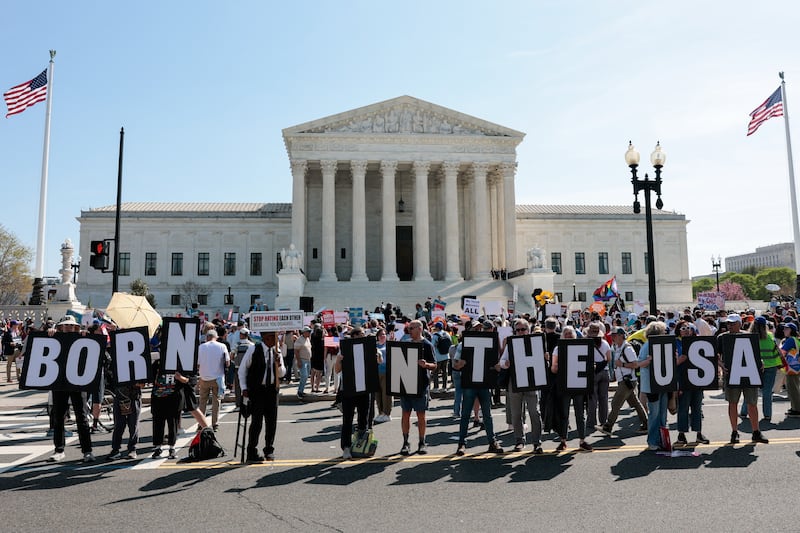
At the center of the case is Trump’s 2025 executive order directing federal agencies to deny citizenship to children born in the United States unless at least one parent is a citizen or lawful permanent resident.
The executive order upended the traditional understanding of the provision of the 14th Amendment known as the citizenship clause, which states, “all persons born or naturalized in the United States, and subject to the jurisdiction thereof, are citizens of the United States.

The phrase “subject to the jurisdiction thereof” is now being questioned, with the Trump administration arguing that the 14th Amendment only applied to former slaves.
“This decision by the Supreme Court is a very big one,” Trump said on Thursday.
“They’ll probably rule against me because they seem to like doing that. You know, frankly, I’m not happy with some of their decisions.”