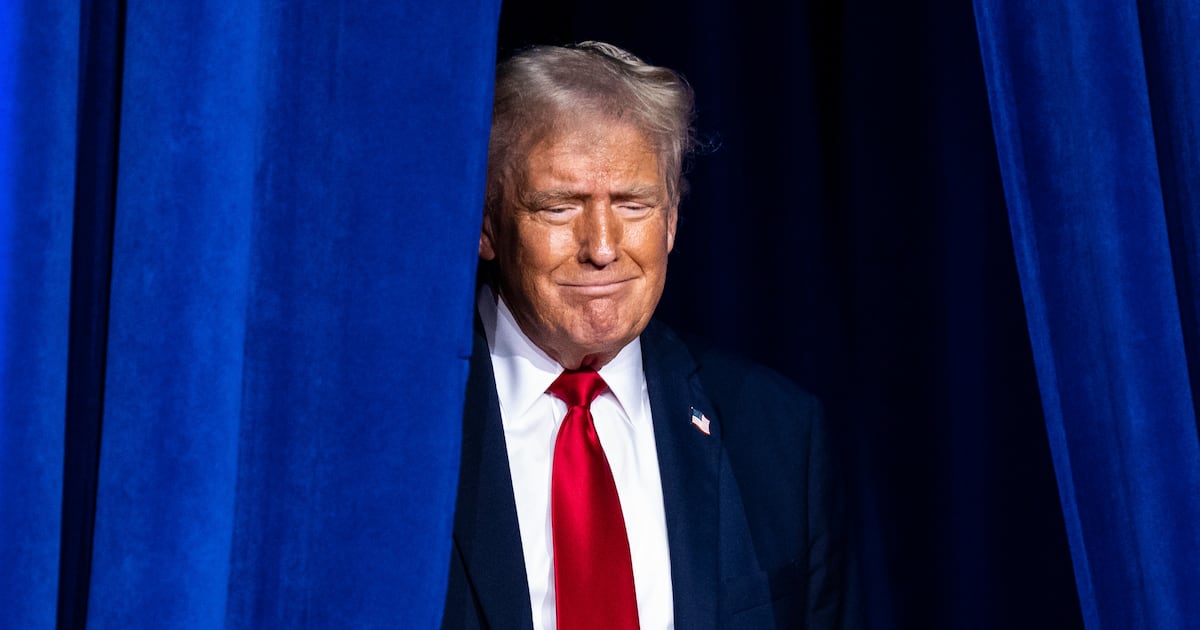
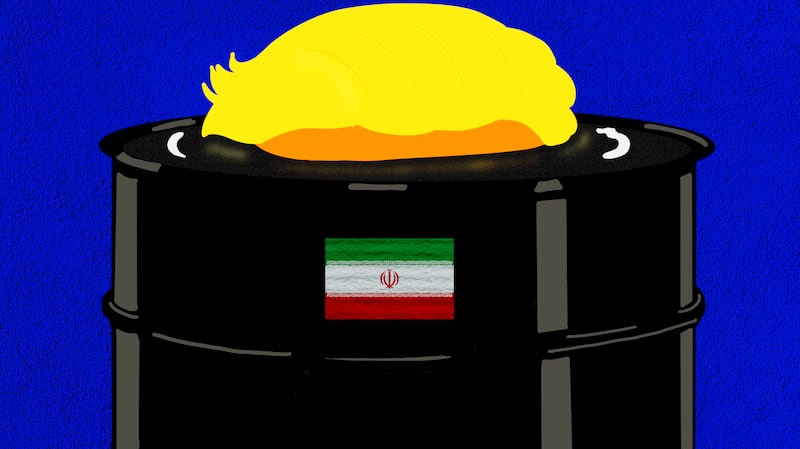
President Donald Trump has U-turned on his Iran oil sanctions, potentially handing Tehran a huge financial windfall from the very war Washington started.
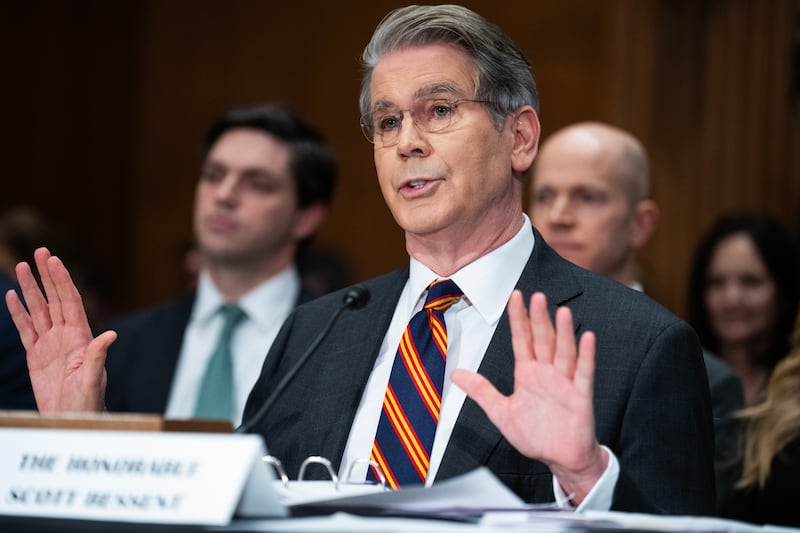
Treasury Secretary Scott Bessent revealed Thursday that the administration is preparing to lift sanctions on approximately 140 million barrels of Iranian crude currently stranded on tankers.
“In the coming days, we may unsanction the Iranian oil that’s on the water,” he told Fox Business Network. “So, depending on how you count it, that’s 10 days to two weeks of supply.”

The move could put real money in Tehran’s pocket—though how much is hard to say. Iran has spent years selling sanctioned crude covertly, mainly to China, at steep discounts. Lifting the sanctions could allow those same barrels to trade openly at full market rate, meaning more revenue per barrel than Tehran would otherwise see. Either way, unsanctioning an adversary mid-war is a striking reversal.
U.S. sanctions on Iranian oil have been built up over decades, with the explicit goal of cutting off Tehran’s primary source of income entirely. At their peak—reimposed by Trump himself during his first term after he pulled out of the 2015 nuclear deal—the measures banned any foreign company or government from buying, selling, or transporting Iranian crude, on pain of losing access to the U.S. financial system.
As recently as February 2026, weeks before Operation Epic Fury launched, the Trump administration was still adding new sanctions targeting Iran’s shadow oil fleet.
It is also the second emergency unsanctioning in seven days. On March 12, Treasury temporarily lifted sanctions on Russian oil at sea, allowing it to reach global buyers until April 11—handing Vladimir Putin an optical victory, a bargaining chip, and a windfall simultaneously. Bessent framed that move as adding hundreds of millions of barrels to global markets to cool spiraling prices.
Both moves are a direct consequence of the energy chaos unleashed by Operation Epic Fury, Trump’s bombing campaign against Iran launched on February 28.
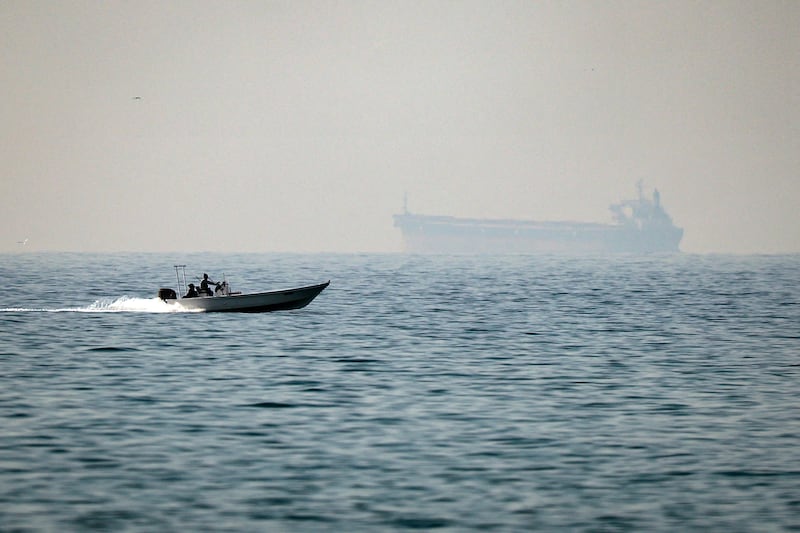
Tehran responded by closing the Strait of Hormuz—the narrow shipping lane through which a significant share of the world’s oil flows—and attacking tankers in the Gulf. Prices have sat above $100 per barrel for much of the past two weeks, surging to $111.23 after Israel struck key Iranian gas fields on Wednesday.
The deficit is severe. The Strait’s closure has created a shortfall of between 10 million and 14 million barrels per day. The administration is also planning a unilateral release from the Strategic Petroleum Reserve, on top of last week’s coordinated G7 release of 400 million barrels.
Bessent was explicit that futures markets are off limits. “So, to be clear, we’re not intervening in the financial markets. We are supplying the physical markets,” he said.
China has compounded the crisis, having stopped exporting jet fuel and other refined products to Asian markets—what Bessent called “unreliable” behavior.
On the diplomatic front, Trump met Japanese Prime Minister Sanae Takaichi at the White House on Thursday to discuss the Japanese Navy potentially helping secure safe passage through the Strait of Hormuz, through which Japan sources most of its oil.
Takaichi may also release additional oil from Japan’s strategic reserve beyond its G7 commitment. “She’s very pro-U.S.,” Bessent said. “I think we’re going to have a very good discussion today.”