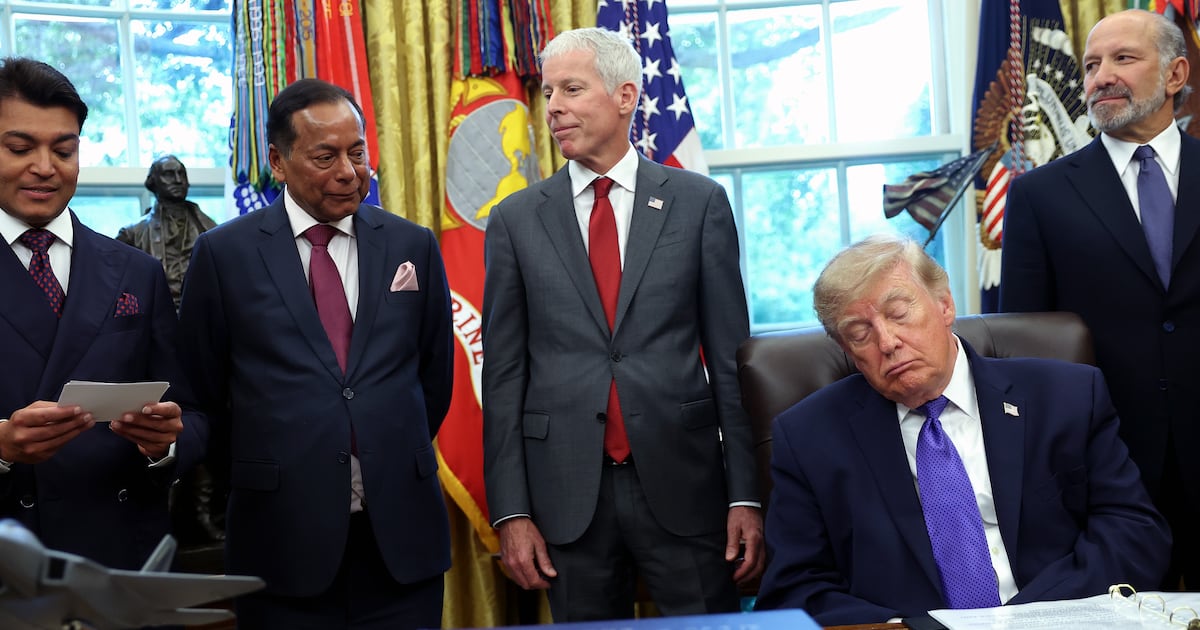

Donald Trump has asked the U.S. Supreme Court to let him keep building the White House ballroom—and is citing his wild catering truck escape in Turkey as part of the reason.
One week after a federal judge blocked above-ground construction on his pet vanity project, the president’s lawyers lodged an emergency application on Friday arguing that the ballroom was a national security necessity and that any delay risked his safety due to the various threats on his life.
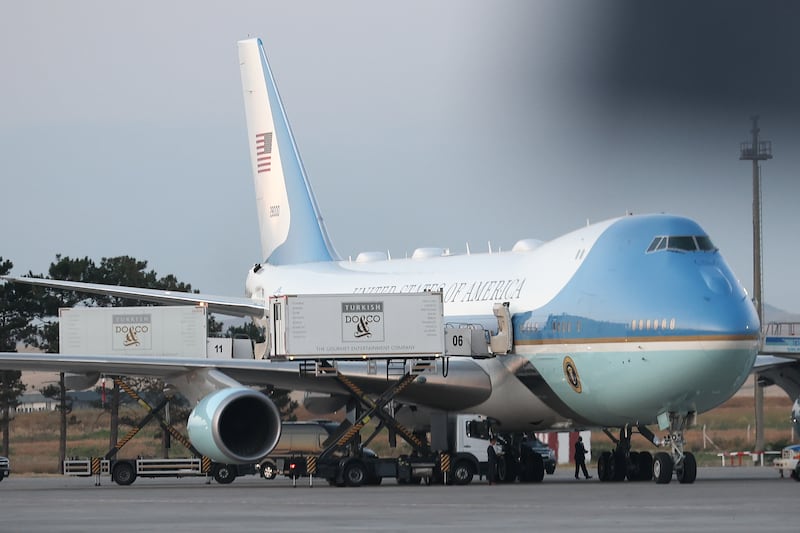
As part of his filing, the president used one of the most bizarre episodes of his term to make the case: the Iranian plot to target Air Force One with a missile.
The plot involved Trump escaping in a catering truck to a safer plane with selected aides, including his regular companion Natalie Harp, while top officials such as Secretary of State Marco Rubio, White House aide Stephen Miller and Press Secretary Karoline Leavitt were left with members of the press on Air Force One.
The extraordinary event was cited along with other attempts on Trump’s life, such as the White House correspondents’ dinner shooting and the assassination attempt in Butler, Pennsylvania, to argue that the ballroom and its underground military complex was “absolutely required.”
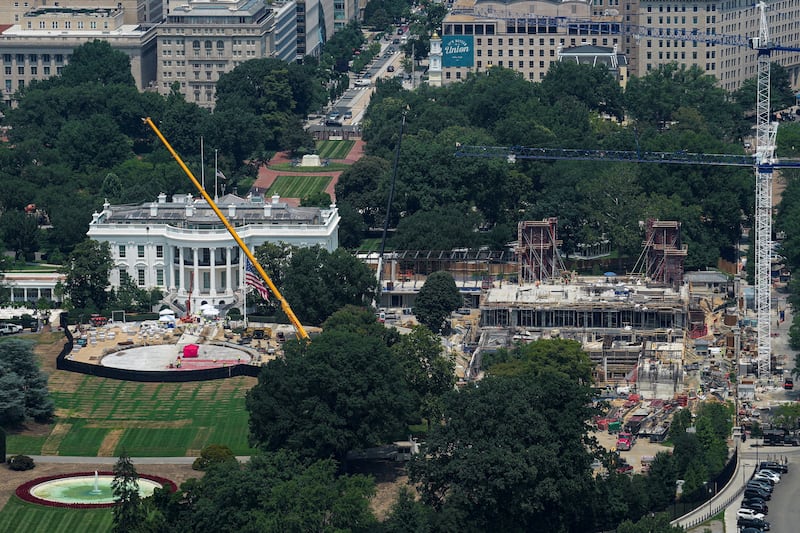
The move comes one week after an appeals court in Washington ruled that Trump could not unilaterally demolish parts of the White House or reshape federal property without approval and funding from Congress.
But Solicitor General D. John Sauer rejected this.
“If allowed to go into effect, the injunction would wrongfully install a single district judge as sole arbiter of what further construction is ‘strictly necessary’ to protect the safety of the President, his family, staff members, and visitors to the White House, including foreign dignitaries, and presidents and prime ministers of other countries,” he warned.
The move marks another escalation in the legal battle over the ballroom, which has morphed from its original pitch as an event space for hosting White House events to what Sauer described on Friday as “an integrated military complex.”

It also began with an estimated price tag of about $200 million, paid for by private donors such as Palantir, Lockheed Martin and Amazon, all of whom have benefited from government contracts or regulatory reforms.
But the cost is now estimated to be about $400 million. According to records reviewed by The Washington Post this week, the ballroom will also form part of at least $900 million worth of construction projects on the White House grounds—a significantly larger price tag than has been previously reported and one that would be covered primarily by taxpayers.

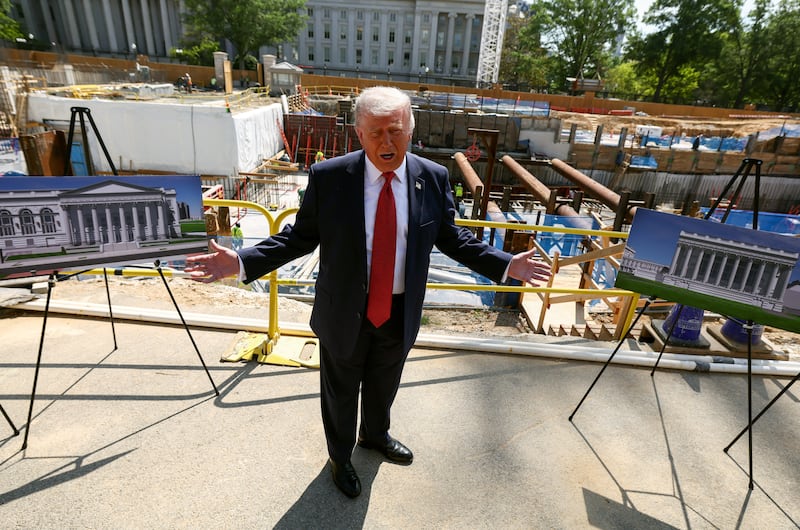
The jaw-dropping truth about the project was laid bare in May, when Trump took reporters on a tour of the construction site and admitted that the ballroom was really just a “shield” for a massive multi-level subterranean bunker he was quietly building below.
Once built, it would include a military hospital, classified meeting rooms, and top-secret research facilities, while the ballroom itself would also feature bulletproof glass and a drone-proof roof.
“We went down six stories. It’s actually far more complex,” Trump said at the time.
“They’re building a hospital—it’s a military hospital—they’re building all sorts of research facilities, they’re building meeting rooms. The ballroom is really a shield protecting all of the things that are being built here.”
Last week’s appeals court injunction has yet to go into effect, meaning construction continues on the ballroom while the Supreme Court decides the next steps.
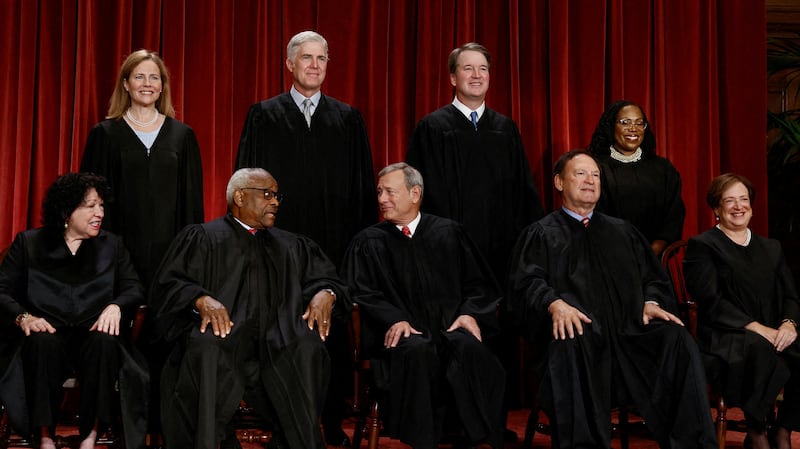
The nine justices of the court, including Trump appointees Amy Coney Barrett, Neil Gorsuch and Brett Kavanaugh, have until Aug. 21 to rule.
But Sauer asked the court to act immediately, insisting that any delay would threaten Trump’s safety after recent domestic and international assassination plots against him.
He also argued that it was far too late for any court to halt construction on the project.
“That line has long since been crossed,” he said.
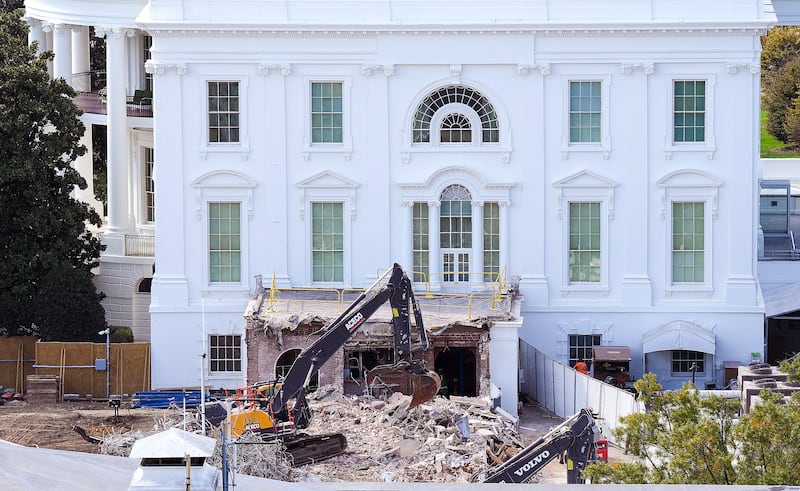
The National Trust, which brought the lawsuit against the ballroom, said multiple courts had ruled against the ballroom but the administration refused to listen and was “now actively attempting to outrun the courts by accelerating construction of the Ballroom.
“The Administration’s audacious Supreme Court filing today announced it would be installing another one million pounds of rebar and pouring another 3,000 cubic yards of concrete in just the next week alone, before the Appeals Court’s stay of the injunction expires next Friday,” the group said in a statement.
“The Administration’s transparent efforts to evade the rule of law, frustrate judicial review, and limit the availability of meaningful relief in the courts must stop here. The Supreme Court should deny the Administration’s demand that it be allowed to continue Ballroom construction while it appeals.”