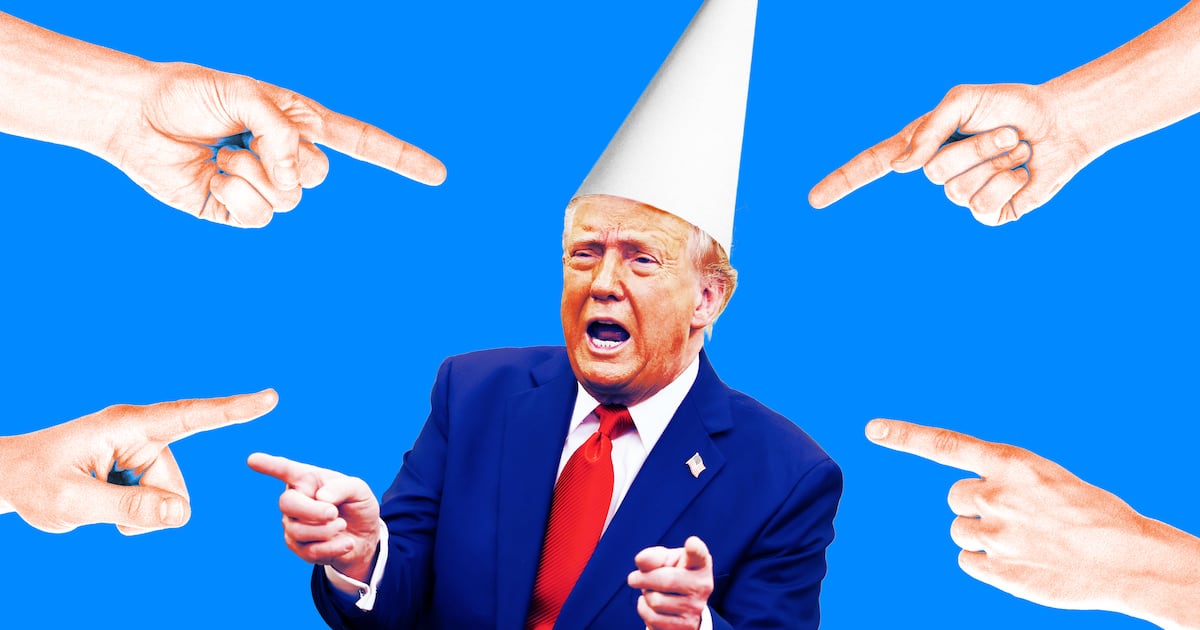
Donald Trump has threatened to jail journalists who first reported that a second U.S. airman was missing after Iran shot down a fighter jet last week, claiming it almost jeopardized the rescue mission.
In the latest clash between Trump and the media, the president condemned what he described as a “leak” of information to an unnamed journalist, vowing he would pursue the media organization that published the details unless they turned over the name of their source.
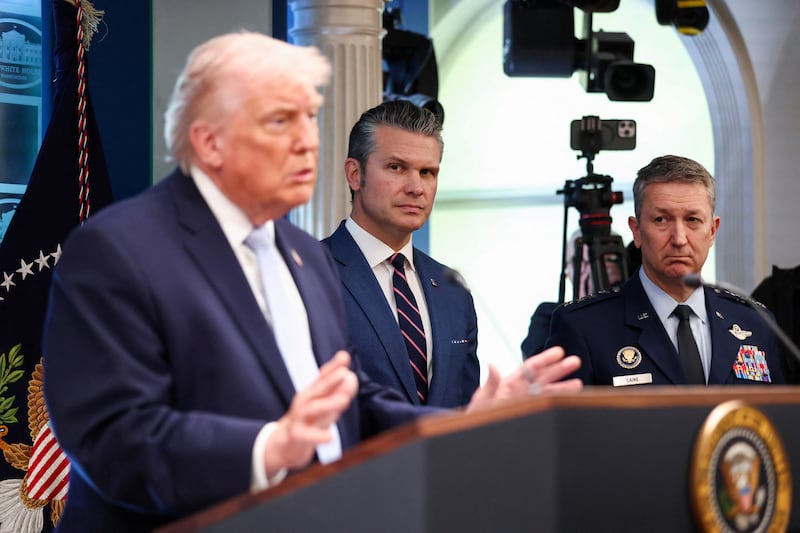
“We think we’ll be able to find it out,” Trump said, “because we’re going to go to the media company that released it, and we’re going to say, ‘National security. Give it up or go to jail.’”
“When they did that (published the information) then suddenly all of Iran knew that there was a pilot somewhere on their land,” he added.
It is not clear who was responsible for the leak, with Trump describing them only as “a sick person.” Nor is it known which media outlet is now being pressured to give up its sources. The White House has refused to provide any additional information for fear of tipping off the subject.

Some have suggested that Fox News correspondent Peter Doocy was among the first to report on the matter, while Israeli journalist Amit Segal suggested on his Telegram channel that he had the scoop.
Meanwhile, Grok, an AI chatbot used on Elon Musk’s X platform, believes that MAGA-coded CBS was the outlet that broke the information on April 3.
The episode is nonetheless the latest escalation between Trump and the media over coverage of the war.
During his press conference, the president also hit out at a New York Times reporter who asked if he was concerned that his threat to bomb power plants and bridges constituted war crimes.
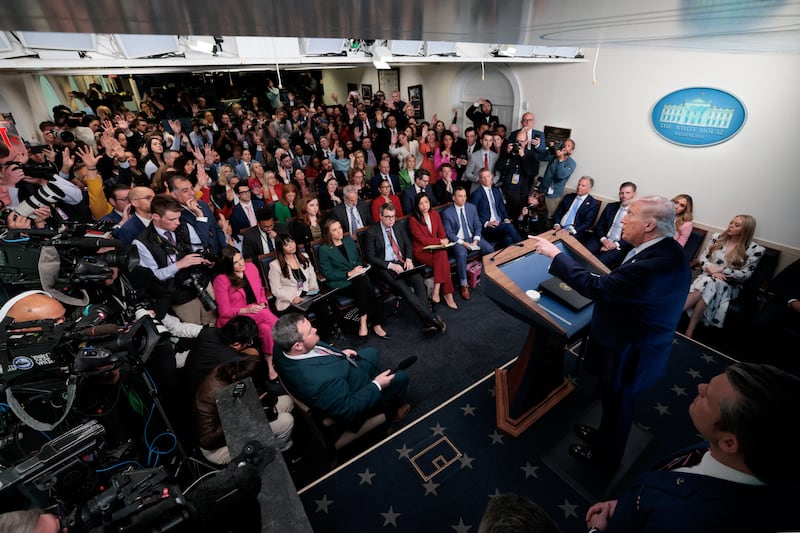
“You no longer have credibility at the New York Times. Because the New York Times said, ‘Oh, Trump won’t win the election,’ and I won in a landslide. I won every swing state,” he said.
The New York Times later labeled the comments as “derisive” and “the latest example of his pattern of answering fair questions with inaccurate attacks” in a statement.
“Contrary to the president’s false claims, our extensive reporting and polling during the 2024 presidential campaign captured the race in full, including his advantages,” the statement continued. “Mr. Trump himself celebrated this polling and reporting numerous times.”
Pentagon chief Pete Hegseth has also railed against the media during televised cabinet meetings, or as part of his war briefings, which are now stacked with MAGA-friendly reporters.
“Mr. President, you are acting now to ensure future generations do not have to live under the threat of a nuclear-armed Iran,” Hegseth told Trump during a fawning cabinet meeting last month.
“However, you wouldn’t know it if you listen to the dishonest hate-Trump media as you referenced.”
The U.S. military operation over the weekend recovered both crew members of an F-15E fighter jet shot down by Iranian forces.

One pilot was rescued within hours, but the second “back seater” evaded capture for more than 24 hours while injured and hiding in mountainous terrain before being extracted by U.S. forces.
Hegseth compared the rescued officer to Jesus, outlining how he was shot down on Good Friday, hid in a cave on Saturday, and was then rescued on Sunday.
“Flown out of Iran as the sun was rising on Easter Sunday—a pilot reborn,“ the Christian Nationalist declared.
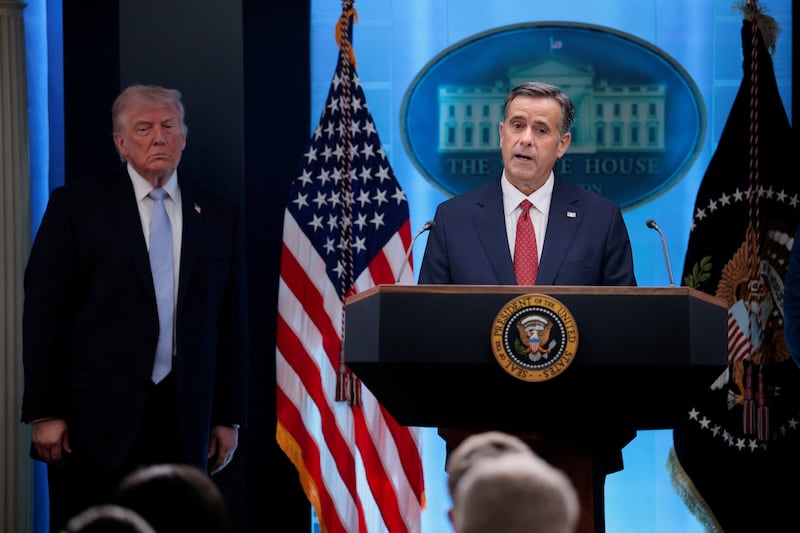
The administration described the operation as one of the most challenging combat search and rescue missions in history.
According to the President, it involved 155 aircraft, including four bombers, 64 fighters and 48 refueling tankers. The CIA also helped deploy a campaign of misdirection to confuse Iranians over the airman’s location and condition after a bounty was placed on his head.
“We deployed both human assets and exquisite technologies that no other intelligence service in the world possesses,” said CIA director John Ratcliffe. He described the mission as “comparable to hunting for a single grain of sand in the middle of the desert.”
But Trump told reporters on Monday the government had hoped to keep the details of the second airman a secret in order to prevent him from being captured or killed by Iran.
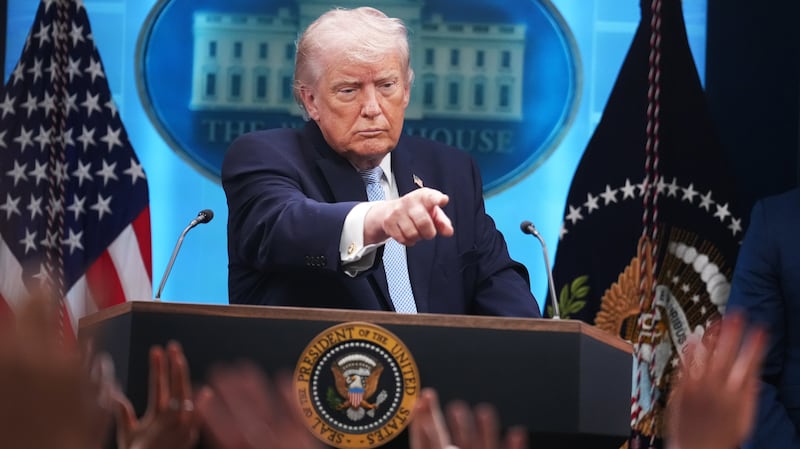
“I think anybody would understand that they put that [rescue] mission in great risk,” he said in reference to the leaker and media involved.
But the president’s latest threat also drew swift criticism from press freedom advocates, who warned it could have a chilling effect on national security reporting.
While many states and Washington have “shield laws” in place to protect journalistic sources, no federal protections exist.

During his presidency and subsequent political career, Trump has also repeatedly labeled major outlets “enemies of the people,” sought to revoke press credentials, and publicly floated expanding libel laws to make it easier to sue journalists.
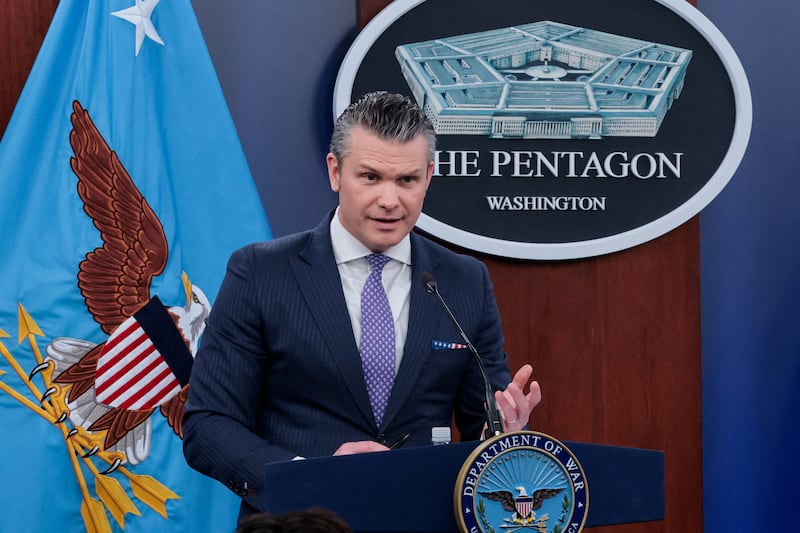
More recently, Hegseth has sought to curb press access at the Pentagon by requiring all journalists with Pentagon credentials to sign a pledge not to request information they aren’t authorized to disclose.
Reporters for most news organizations refused to sign, saying this would interfere with their daily reporting and risk relaying only the Trump administration’s official line.