Self-professed master negotiator Donald Trump has left China with not much more than the promise of a bag of seeds.
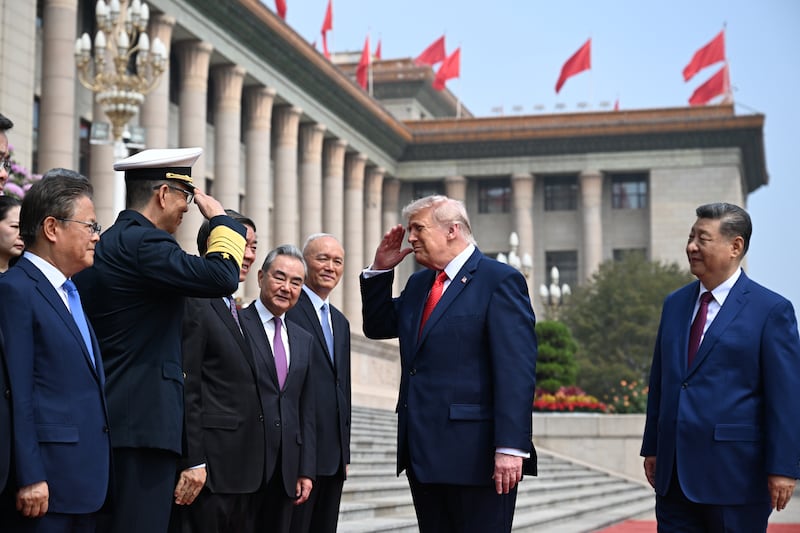
After a tour of Beijing’s sacred Zhongnanhai temple on Friday, where Chinese leader Xi Jinping vowed to send Trump the seeds of flowers the 79-year-old had admired at the compound, the president described his three-day trip as “incredible.”
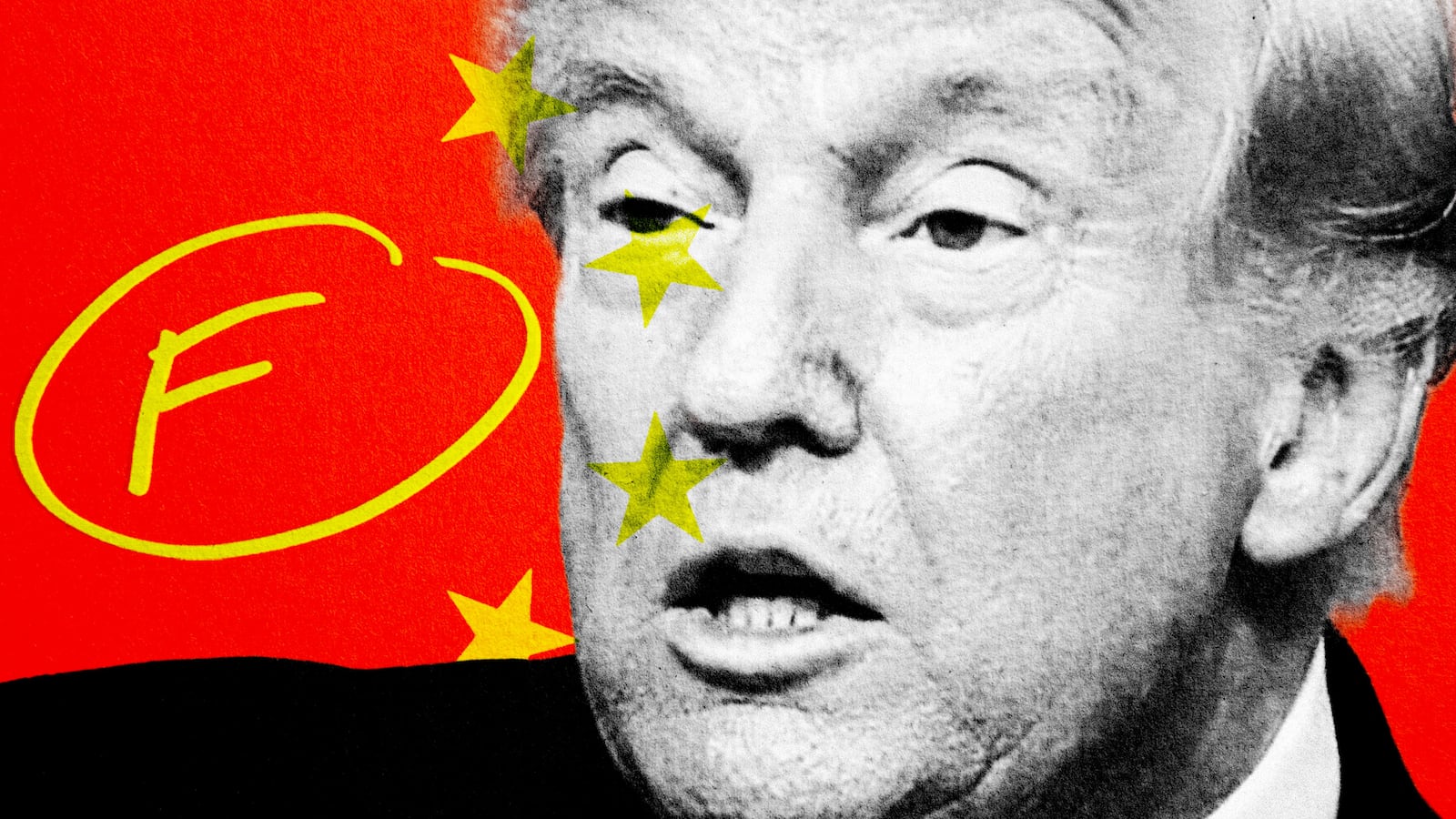
But, in reality, Trump has left with zero tangible progress or diplomatic achievements. He failed to stand up to China on Taiwan or rare earth minerals, sold out American farmers, and secured only one deal, which fell short of expectations and tanked Boeing’s stock price.
The trip was designed to broker agreements on everything from tech to tariff relief to peace in the Middle East. Trump did not deliver.

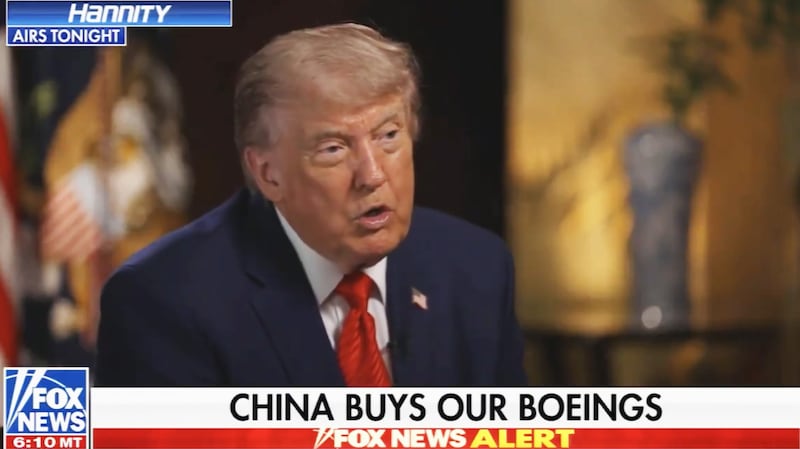
The president told Fox News host Sean Hannity in an interview aired hours before the Zhongnanhai stroll that Xi had pledged not to provide Iran with military weapons. However, it appears that no tangible agreement has been signed on that front, and Trump even caveated this comment. “But at the same time, he said they buy a lot of their oil there, and they’d like to keep doing that,” he added. “He’d like to see Hormuz Strait open.”
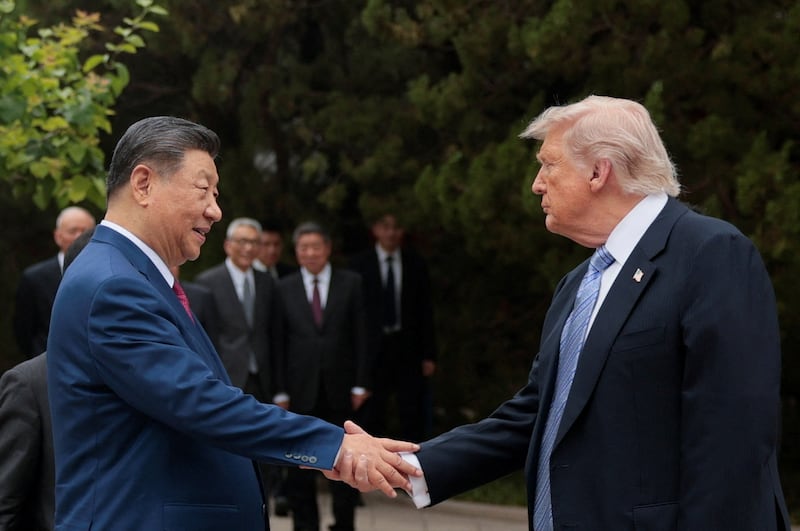
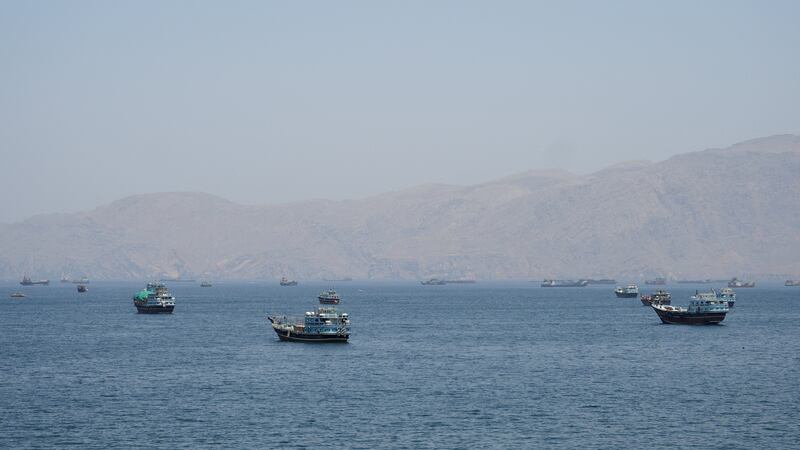
The Strait of Hormuz remains blocked, choking the oil supply reaching China and the rest of the world. China has skin in the game, since it is Iran’s biggest customer when it comes to oil, and it is Tehran’s largest trade partner.
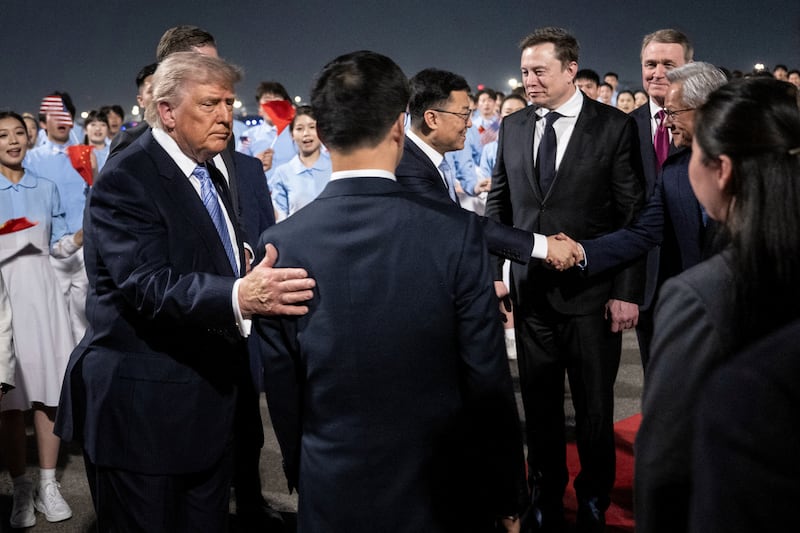
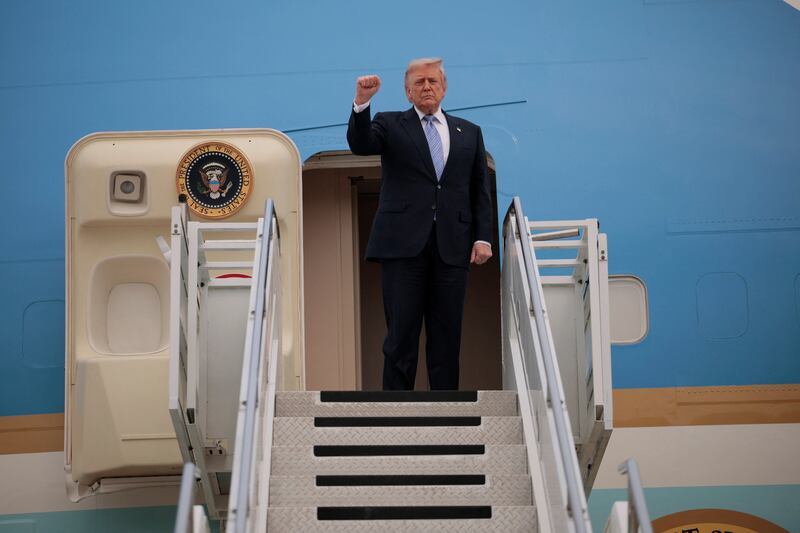
Trump left the U.S. earlier this week with Tesla and SpaceX CEO Elon Musk and Nvidia boss Jensen Huang on Air Force One with him. Other tech industry leaders, like outgoing Apple CEO Tim Cook, joined him in China. He said the corporate cabal was in toe to “make deals” and “bring back jobs.”
However, the trip appeared more symbolic, as no major trade deals or structural agreements were struck. In December, Huang, who was born and raised in Taiwan, found himself at the center of a critical stand-off between Washington, D.C., and Beijing.
Trump authorized his company, Nvidia, the world’s dominant chipmaker, to sell its high-powered H200 AI chip to China. But even after this week’s visit, Beijing has yet to approve any purchases, and no H200 chips have been sold since then, with the Chinese government favoring homegrown products from makers like Huawei.
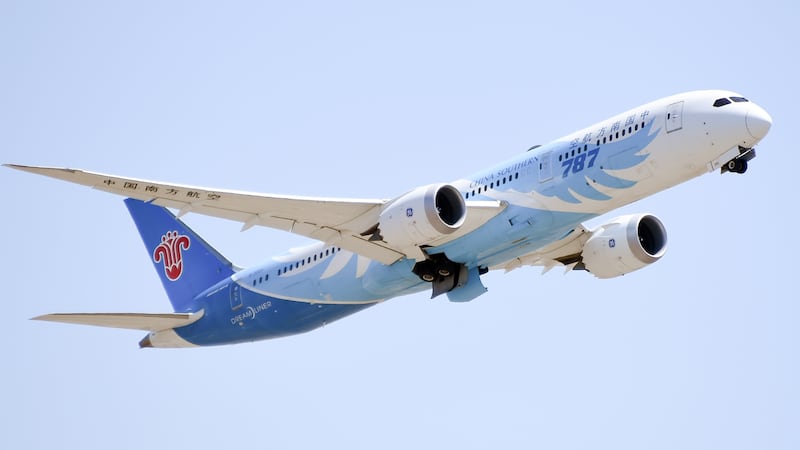
However, in the pre-recorded Fox News interview, Trump did say that Beijing had pledged to buy 200 Boeing planes. “One thing he agreed to today, he’s going to order 200 jets... 200 big ones,” he said of Xi. “Boeing wanted 150, we got 200,” the president added. China, however, has not publicly confirmed the proposed order as of Friday afternoon local time.
The quantity was also lower than expected, and Boeing’s share price tumbled by 4.1 percent as a result. Sources told Reuters in the lead-up to Thursday’s summit that the purchase of 500 jets was on the table. Beijing has also held negotiations for a similar-sized deal with European corporation Airbus, Reuters reported.
Aviation sales to China have flopped in recent years, owing to increased political tensions.
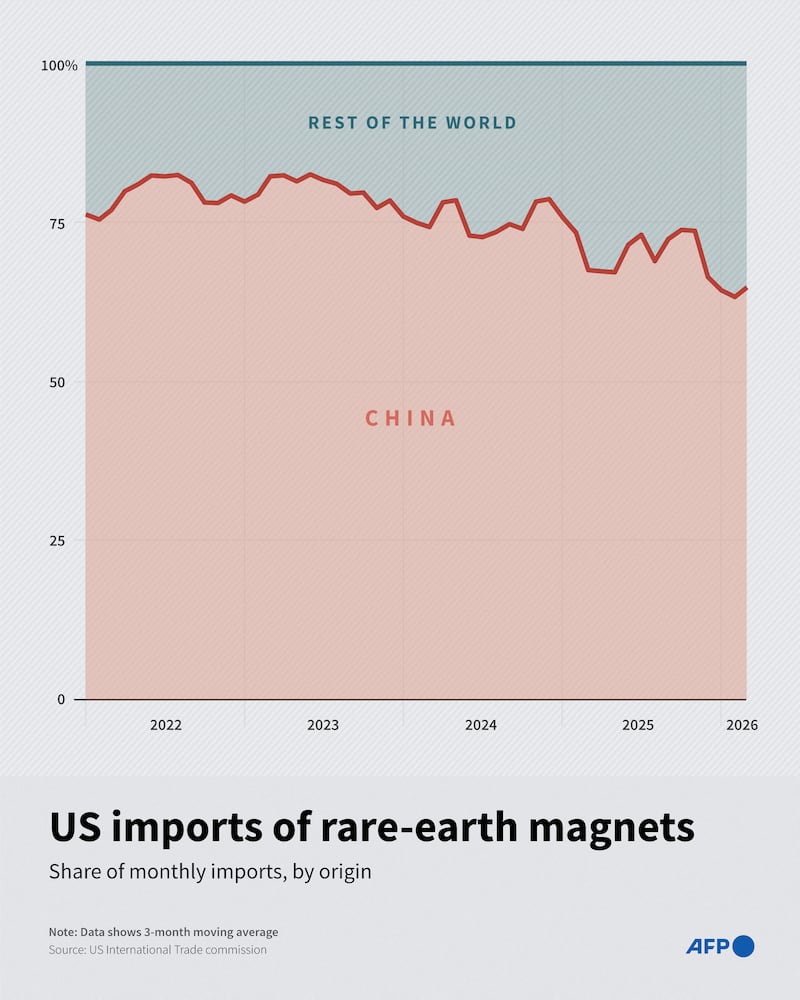
Trump also left Beijing without securing a clear win on one of the most important economic issues in U.S.-China relations: Beijing’s control over rare earth minerals.
Rare earths are crucial for making electric vehicles, military hardware, semiconductors, magnets, batteries, and advanced electronics, but China dominates global production and processing, which gives Beijing leverage in trade disputes.
However, there was no announced agreement, no rollback of Chinese export controls, and no public commitment from China to avoid tightening restrictions. China may also twist the knife further by moving ahead with planned tougher export restrictions in November.
Jamieson Greer, the president’s trade representative, told Bloomberg News in an interview on Friday that there had been some progress on this front in recent months, but did not sound convinced by his own spin. “I would give them a passing grade on this—we’ve certainly seen the rare earths come back up to better levels. Sometimes it’s slow,” he said.
Greer also announced that the countries planned to establish a “board of trade” to oversee tariff cuts on around $30 billion of goods. He also talked up an as-yet unsigned trade deal in the “double-digit billions” concerning agricultural products.
Treasury secretary Scott Bessent said on Thursday that the two nations would also discuss AI safety, but details were scant. “The two AI superpowers are going to start talking,” Bessent said.
Trump, meanwhile, struggled to spin the lack of tangible success from the trip. “We’ve settled a lot of different problems that other people wouldn’t have been able to settle, and the relationship is a very strong one,” he said at the start of bilateral discussions in Beijing on Friday, without specifying what issues had been resolved.
He was then pressed by Hannity about what Xi wanted from the U.S. Trump appeared unable to provide specifics. “A lot of things,” he eventually spluttered. “We talked about a lot of things. Too many things to discuss. We had a very good meeting.”
The Hannity interview was telling in other regards, too. Trump also appeared unable to offer a definitive answer about whether his Chinese counterpart agreed with the U.S. position that Iran should never obtain a nuclear weapon.
“I said you don’t need them having a nuclear weapon,” he said. Asked whether he believed Xi agreed, Trump told Hannity: “I think he did.”
Xi was much more forthright on the issue of Taiwan, the democratically governed island that Beijing claims as part of China. Xi said in a statement in a stunning opening salvo on Thursday that the “Taiwan question is the most important issue in China-U.S. relations” and that any disagreements on the thorny issue could result in war. “If it is handled properly, the bilateral relationship will enjoy overall stability. Otherwise, the two countries will have clashes and even conflicts, putting the entire relationship in great jeopardy,” Xi said.
Trump said on Air Force One on the way home that Xi had asked him whether he would defend Taiwan, and Trump said he had declined to answer.
For decades, the U.S. has supported Taiwan’s defense without establishing formal diplomatic ties, as part of efforts to deter Beijing from invading the island. China, on the other hand, asserts that the island has been part of Chinese territory since ancient times.
Beijing also exerts control over Hong Kong, where pro-democracy campaigner Jimmy Lai is jailed. Human rights activists, lawmakers, and family members had called on Trump to secure his release, but Beijing’s stance appears to remain the same. After one of Trump’s meetings ended, Guo Jiakun, a Chinese foreign ministry spokesman, described Lai as an “instigator” and said China agrees with his 20-year sentence.
The trip, seemed to inspire the real estate man in Trump, rather than the diplomat. Barely an hour after Air Force One left Beijing, he was posting on social media about beautifying Washington, D.C. à la communist China. “China has a Ballroom, and so should the U.S.A.!” he said as well as pushing for his Eastern Bloc style garden of heroes.
Despite the lack of clear wins on the trip, Trump could be playing the long game. He has invited Xi to the White House in September. “You’re gonna walk away hopefully very impressed, like I’m very impressed with China,” he said on Friday, after his tour ended.
The White House has been approached for comment.