

President Donald Trump’s administration has been accused of not acting fast enough to combat the spread of a flesh-eating parasitic fly that could cost the U.S. cattle industry billions of dollars.

The larvae of the New World screwworm are laid in open wounds and then feast on healthy livestock flesh, causing pain, infection, sepsis, and death. The best way to stop their spread is to introduce sterile male flies that halt the insect’s ability to breed.
The pest, which is endemic to South America, crossed into Central America in 2022 and was detected in Mexico in 2024, at which point the Biden administration approved $265 million in emergency funding to boost surveillance and build facilities to produce sterile flies, Politico reported.
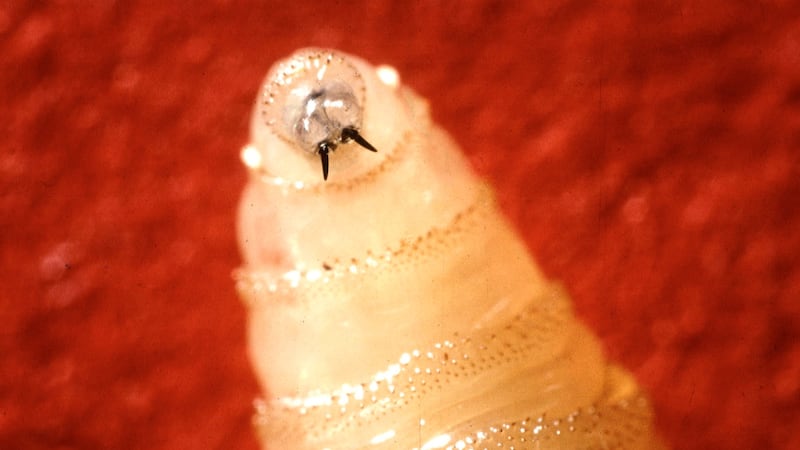
Joe Biden’s Department of Agriculture left the Trump administration with a plan to produce sterile screwworm flies at a fruit fly facility in Mexico, only for the incoming administration to stall for months while Trump tried to shrink the federal government, former USDA officials told Politico.
A $100 million research initiative and plans for a second sterile fly facility at a Texas air base were also delayed as the administration launched spending reviews and gutted the federal workforce, leading to the departure of dozens of experienced USDA staff.
“That sense of urgency wasn’t there,” a former official said. “Even though screwworm was given a high priority, it did not help us get things done faster.”
Agriculture Secretary Brooke Rollins has nevertheless tried to blame the Biden administration’s “open borders policy” for somehow allowing the pest to spread into Mexico.
On June 3, the first case in the U.S. since 1966 was detected in a calf in south Texas.
Since then, an additional 11 cases involving cattle, goats, sheep, and a dog have been reported in Texas and New Mexico, with the outbreak spreading beyond the initial contamination zones, The Guardian reported.
The Trump administration’s delays allowed the pest to move “a lot farther north a lot faster than it should have,” a former USDA official told Politico.
Just one facility in North America is producing about 100 million sterile flies per week, a fraction of the hundreds of millions of flies needed to eradicate the infestation.

The Mexico sterile fly facility is finally scheduled to come online next week, and will produce 100 million sterile male flies by the fall.
A new facility at More Air Base in Texas broke ground in April, but it will be almost a year and a half before it too begins producing another 100 million sterile flies weekly, according to Politico.
A USDA spokesperson told Politico in a statement that the USDA had “moved at lightning speed to obtain any and all necessary funding and approvals to fight New World screwworm.”
“We have aggressively moved dollars and project timelines at a pace unprecedented for [the] U.S. government, as expected of us by President Trump,” spokesperson Michael Abboud added.
The Daily Beast has also reached out for comment.
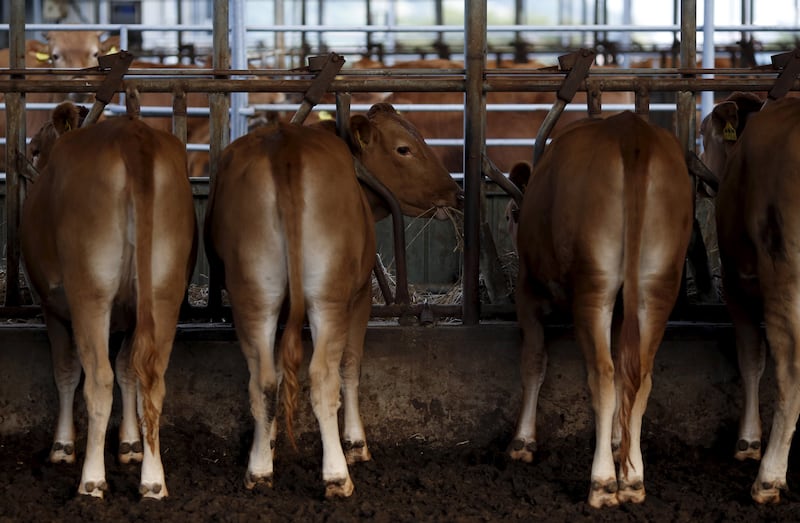
The USDA estimates that if it spreads, the New World screwworm could cause billions of dollars in damage to the Republican-heavy cattle industry.

Some ranchers could be pushed into bankruptcy as they struggle to afford prevention and treatment.
The outbreak has also raised fears that already-high beef prices could be driven up even further.