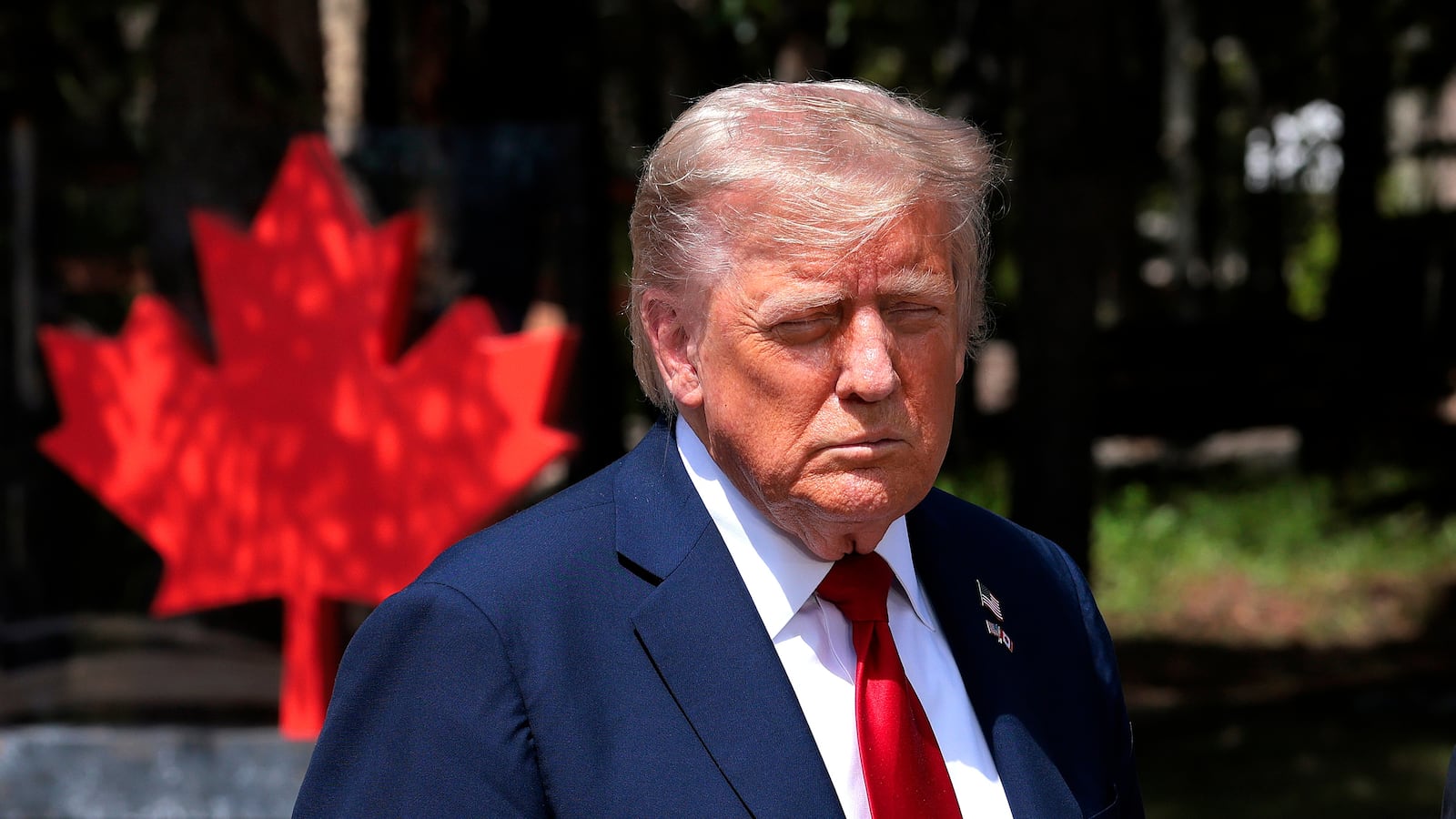
President Donald Trump threatened to drop a diplomatic bomb on Canada at the height of his crazed “51st state” ramblings, according to insiders.
Trump began publicly flirting with the idea of absorbing Canada into the U.S. in late 2024, and it soon became a hallmark of his second term. He would refer to then-Prime Minister Justin Trudeau as the “governor” and said he would use “economic force” to achieve his imperialist fever dream.

Towards the end of his tenure, Trudeau, who was replaced as PM by Mark Carney in March last year, faced sinister threats from Trump in private phone calls, according to two people familiar with the matter who spoke to the Wall Street Journal.
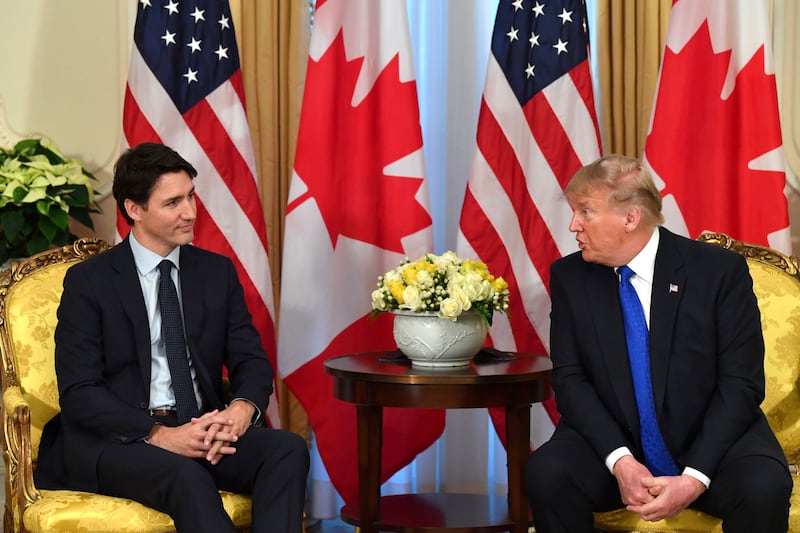
In one call, Trump reportedly straight-up threatened to nix a 118-year-old agreement that helped pin down and officially mark parts of the U.S.-Canada border on maps and on the ground.
In April 1908, the Boundary Convention was signed by the United States and the United Kingdom, which at the time handled Canada’s foreign affairs because Canada was a self-governing British Dominion.
Trump didn’t care for its history, reportedly telling Trudeau, “I tear that up, and your whole country unravels.”
It is unclear whether Trump understands the convention, however, as it didn’t create the U.S.-Canada border—it simply clarified and marked parts of it. Even if the U.S. tried to withdraw from it, the border would still exist because it is primarily established by earlier treaties, including the 1818 and 1846 agreements.
However, the act would have triggered a diplomatic crisis with tension already high because of Trump’s economic warfare and endless rambling about taking over Canada.
Trudeau’s envoys were tasked with dissuading Trump from enacting this approach in any tangible way. At one Mar-a-Lago dinner, it was pointed out to him that Canada, as a mega-state of the U.S., would lean Democrat.
Trump reportedly replied that it could be split into two states, one red and one blue.
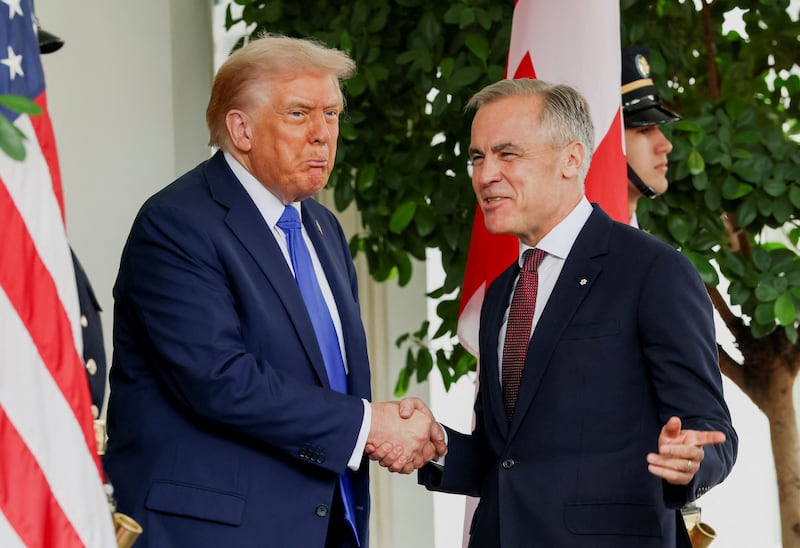
When Carney replaced Trudeau, he set about strengthening ties with European partners and China in a bid to reduce reliance on the U.S.
The White House has been contacted for comment.