Jared Kushner has been helping broker an end to the war in Gaza while his company sits on a billion-dollar stake in a group investing in Israeli military suppliers.
Kushner’s private equity group, Affinity Partners, has emerged as the largest shareholder in Phoenix Financial, a Tel Aviv group that has invested at least $456 million in nine companies that provide weapons and equipment to Israeli forces, CNN reports.

Affinity, owned solely by Donald Trump’s son-in-law, does not directly hold stock in those nine firms, and the network said it found no evidence that Kushner’s diplomatic work for the Trump administration had affected Phoenix’s investment decisions.
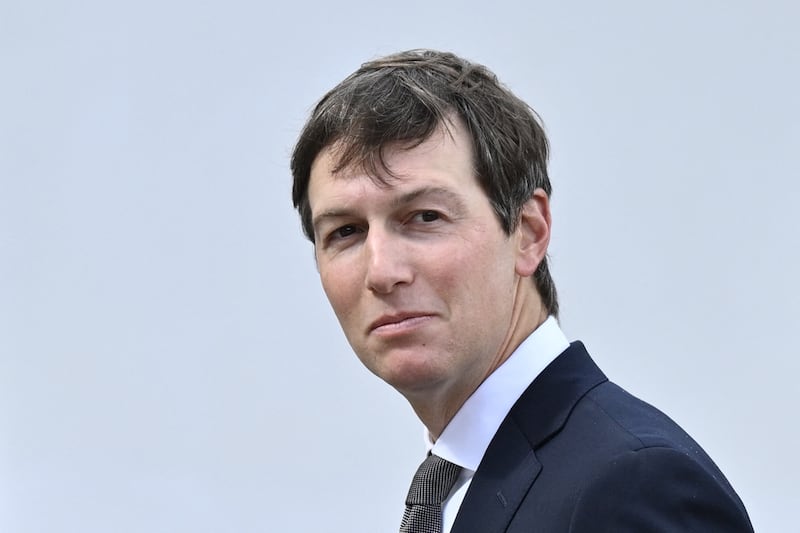
But the overlap has renewed questions about the potential for conflicts of interest in Kushner’s dual role as both a private investor and an unofficial White House representative in one of the world’s most sensitive and long-running conflicts.
Affinity first bought a 4.95 percent stake in Phoenix for $128.5 million in July 2024. It roughly doubled that position less than a week before Trump, 80, returned to office in January 2025.
The bet paid off handsomely after Affinity sold about a quarter of its Phoenix holdings in July for $340 million, a fivefold return on what it originally paid for those shares, according to CNN. It still owns a 7.4 percent stake in Phoenix, which was worth more than $1 billion at the time of the sale.
Phoenix’s military-linked holdings include at least $265 million in Elbit Systems, Israel’s largest arms manufacturer. It also holds more than $68 million in drone-camera maker Next Vision, roughly $56 million in military-engine producer Bet Shemesh Engines, and at least $40 million in Reshef Technologies, which makes electronic fuses for artillery shells.
Kushner has become one of Trump’s central Middle East intermediaries during the president’s second term, helping to negotiate the October 2025 ceasefire between Israel and Hamas as well as working on Trump’s plans for the reconstruction of the Gaza Strip.
The president’s son-in-law has also joined Trump envoy Steve Witkoff in negotiations aimed at ending Vladimir Putin’s full-scale invasion of Ukraine, as well as the U.S. war with Iran. He held no formal role in the White House before Trump named him a Special Envoy for Peace in February.
Before then, he was not subject to the same financial-disclosure and transparency requirements imposed on officials. His new title does not make him a government employee, and it is unclear which federal ethics rules now apply to him.
Kushner worked as an official senior adviser to the president during the first Trump administration. At the time, he resigned from the family real-estate business and agreed to shed foreign investments, stocks, and other assets to avoid conflicts of interest.

His lawyer told CNN that he has “never participated in or directed Phoenix’s decisions” about its investments and had “no involvement in the decision to purchase, hold, or sell any of the nine companies” the network identified.
The Daily Beast has contacted the White House, Kushner’s representatives, and Affinity for comment on this story.
Democrats have already signaled that Kushner could face congressional scrutiny if the party takes control of the House after November’s midterms, ahead of which they hold an almost 9-point lead over the GOP.
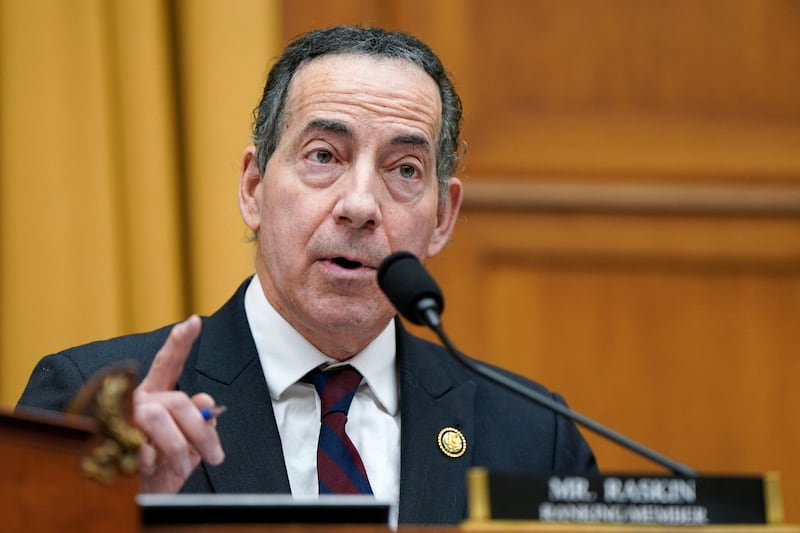
Rep. Jamie Raskin told Reuters last month that Kushner “is a corporate executive that we absolutely will need to talk to” if those polls go his party’s way. He added that Kushner had already failed to answer two letters about Affinity’s dealings with Saudi Arabia, Qatar, and the United Arab Emirates while he has worked on diplomacy for the administration.

He has also set his sights on other members of the first family, including the president himself, who have faced separate conflict-of-interest accusations as their wealth has ballooned since Trump returned to the White House last year.