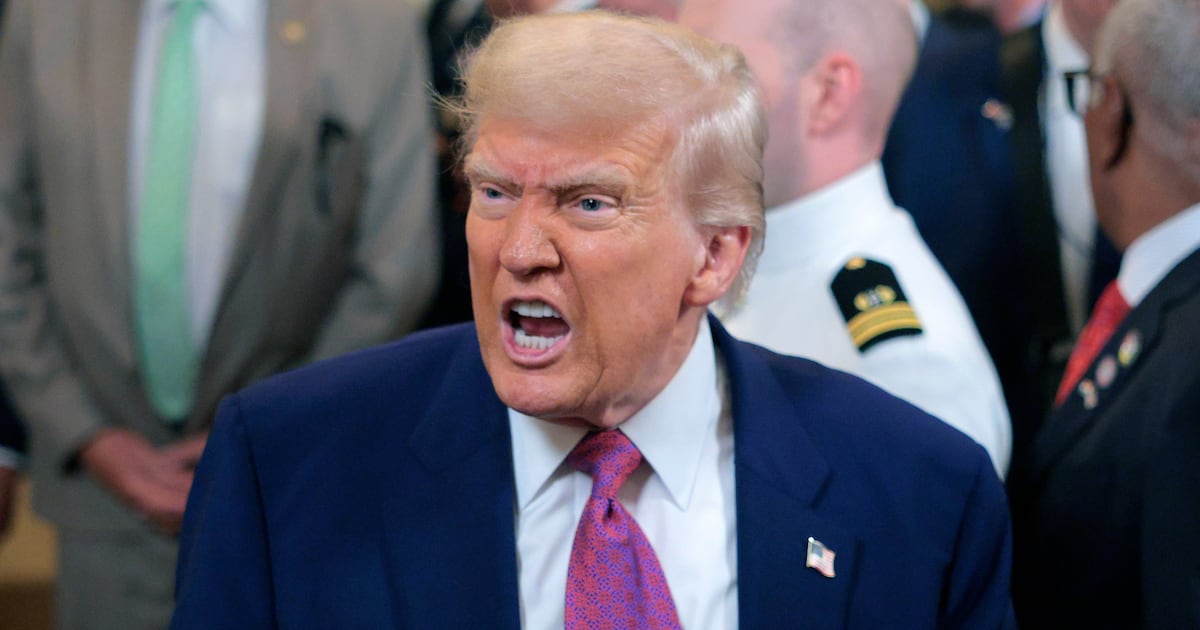
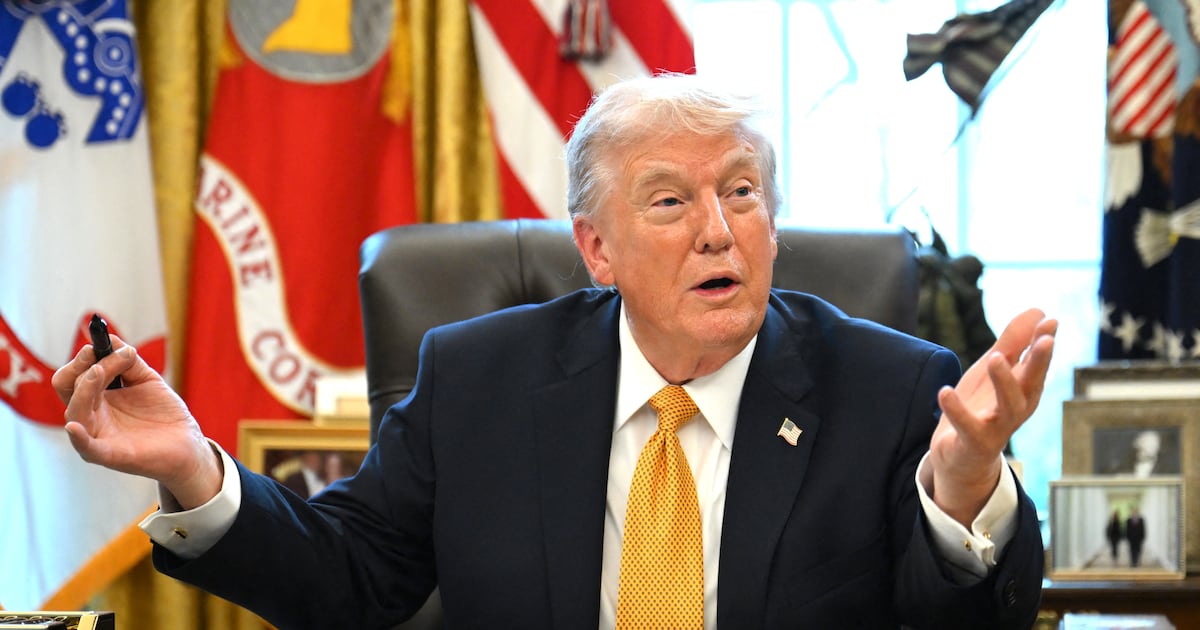
President Donald Trump’s chest-thumping ultimatum against Iran is looking like a misfire.
On Saturday evening, the 79-year-old commander-in-chief threatened to “obliterate” Iran’s power plants if the country did not end its chokehold on the Strait of Hormuz within 48 hours.
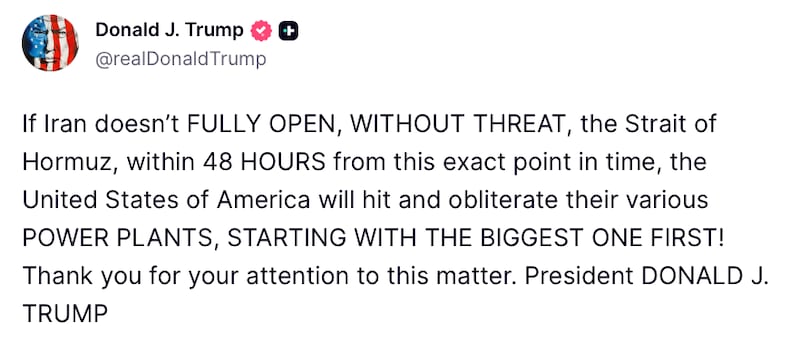
Tehran’s answer came sooner—but it wasn’t the climbdown Trump had hoped for.
Iran’s Parliament Speaker Mohammad Baqer Qalibaf warned Sunday that Iran would “irreversibly” destroy critical infrastructure of its neighbors in the Middle East—including energy and oil facilities—should Trump follow through on his threat to hit the country’s electricity grid, Reuters reports.
Qalibaf said such an attack would keep the price of oil elevated for the long haul.
Trump is already scrambling to contain the economic consequences from the war he started more than three weeks ago. Gas prices in the U.S. have spiked roughly 30 percent as Iran has blockaded the Strait of Hormuz, a vital waterway that transports up to a fifth of global oil supplies.
Trump appears to have issued his ultimatum to compel Iran to back down from the strait—but it appears to have had the opposite effect.
Iran’s powerful Islamic Revolutionary Guard Corps warned it would seal off the strait if the U.S. targets its power infrastructure.
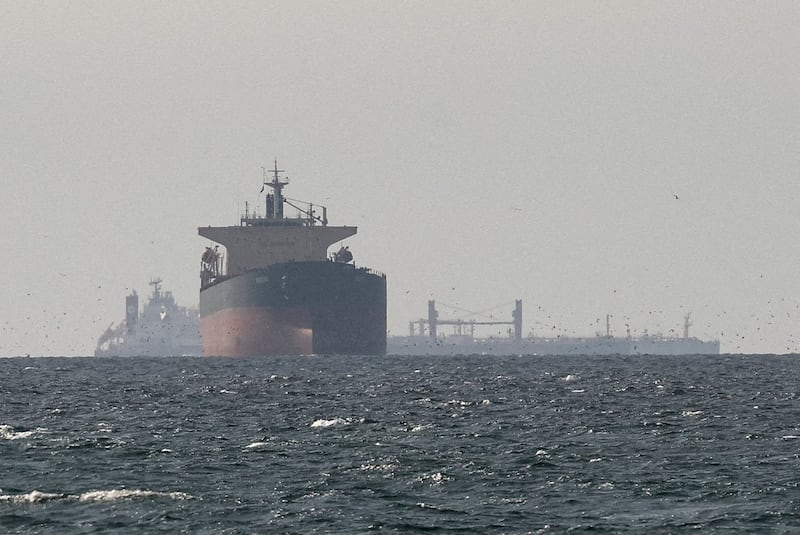
“The Strait of Hormuz will be completely closed and will not be opened until our destroyed power plants are rebuilt,” the Guards said in a statement, Reuters reports.
The possibility of tit-for-tat attacks on civilian infrastructure could further roil global markets and intensifies fears that American allies in the Middle East will be drawn deeper into the conflict.
Strikes on critical infrastructure would be devastating for Iran’s Gulf neighbors, whose per‑capita electricity use far outstrips Iran’s and whose booming desert cities depend heavily on energy‑intensive desalination plants for nearly all of their drinking water.
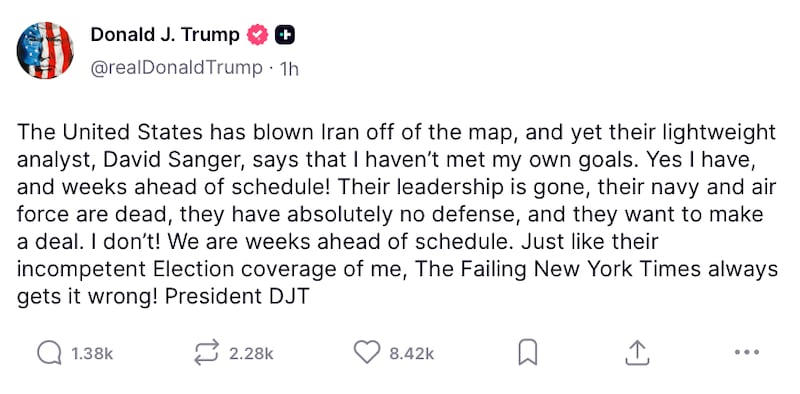
Trump’s ultimatum got off on a confusing note from the beginning, coming just an hour after he claimed that the U.S. has “blown Iran off of the map” and that the country has “no defense” and wants to “make a deal.” “I don’t!” he said.
The escalation also raised legal red flags since targeting civilian infrastructure, like power plants, can be considered a war crime under international law.
The Geneva Conventions prohibit attacks on “objects indispensable to the survival of the civilian population.”
Trump has repeatedly claimed the U.S. is “very close” to achieving his ever-changing war goals, even as thousands more troops are set to be deployed to the region, and strikes continue to escalate. The war has killed 13 U.S. service members and more than 1,000 civilians in Iran.
The Daily Beast has reached out to the White House for comment.