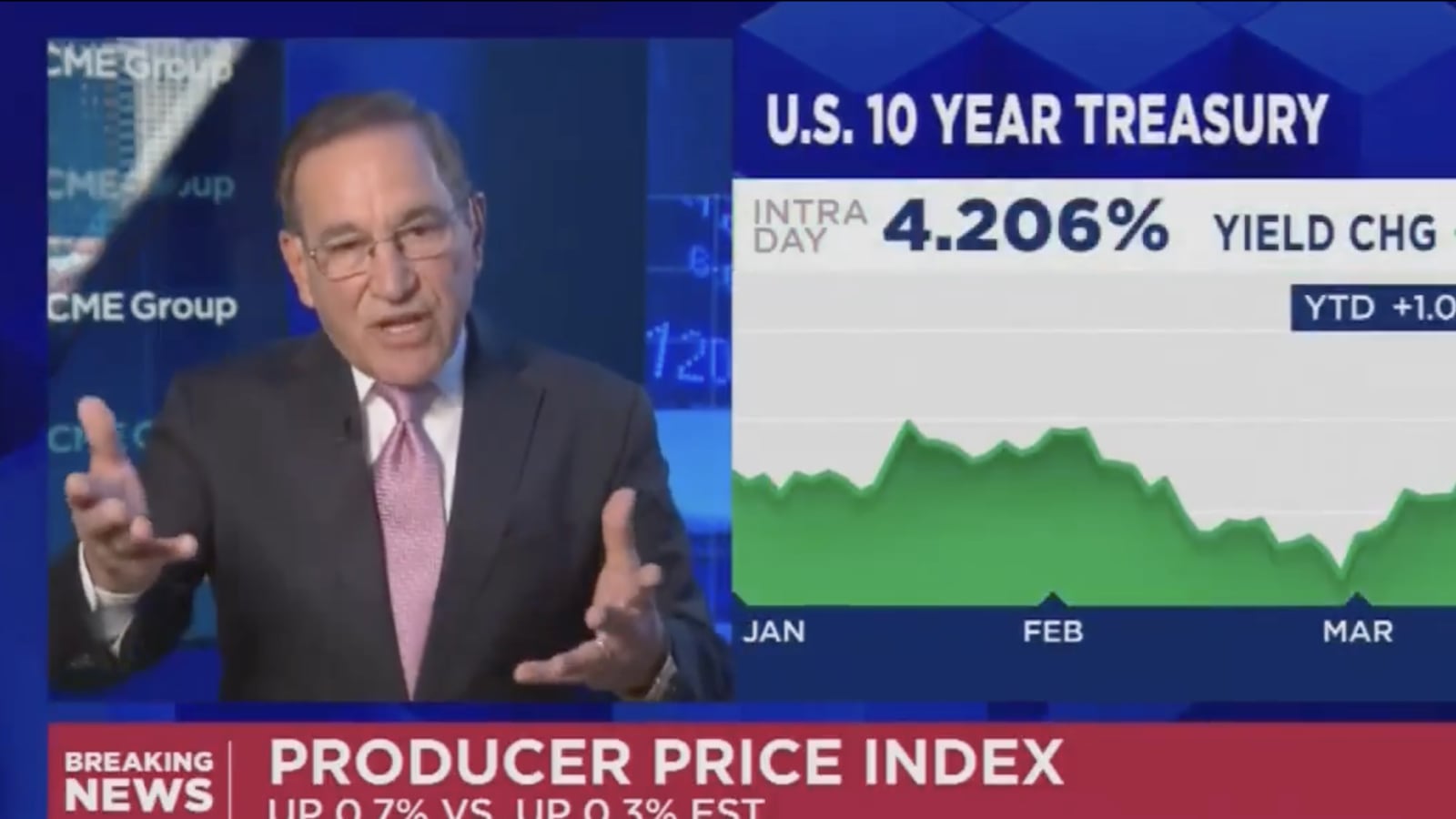
CNBC’s Trump-loving reporter Rick Santelli is sounding the alarm on the economy—warning that it’s shaping up to be the “worst of both worlds.”
The conservative financial journalist told viewers Wednesday that the U.S. may be sliding under President Donald Trump into a “stagflation,” a combination of high inflation and sluggish economic growth.
Fresh data from the Bureau of Labor Statistics backs up that gloom. It shows that wholesale prices, measured by the Producer Price Index, rose by 3.4 percent in February compared with a year earlier.
Even excluding swings in energy and food prices, the figures released Wednesday are higher than economists previously thought.
Santelli warned that higher-than-expected inflation combined with poor growth numbers “is almost the worst of both worlds,” pointing to “a spat of fairly weak numbers” across the board.
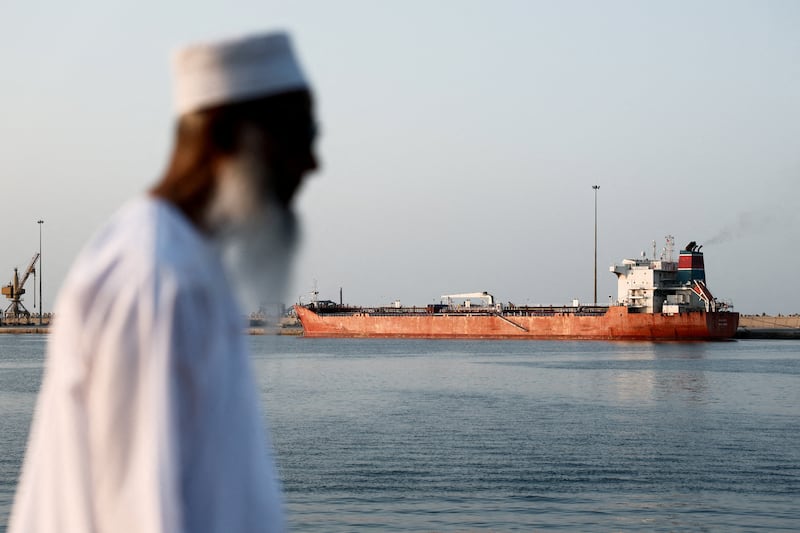
And it could get worse. The data does not capture the price increases caused by the U.S.-Israeli war with Iran, which has effectively shut off the Strait of Hormuz, flatlining oil tanker traffic in one of the most critical shipping lanes on earth.
The price of a barrel of Brent crude oil rose from $73 before the U.S. and Israel began strikes on Iran to $116. It has since settled slightly to just over $100.
The situation echoes the last time the term stagflation was widely used, during Jimmy Carter’s presidency, when the Iranian revolution brought surging energy prices to the U.S., deepening a nationwide economic dip.
With the new data roiling financial sentiment, the Federal Reserve voted Wednesday to keep its benchmark interest rate as-is.
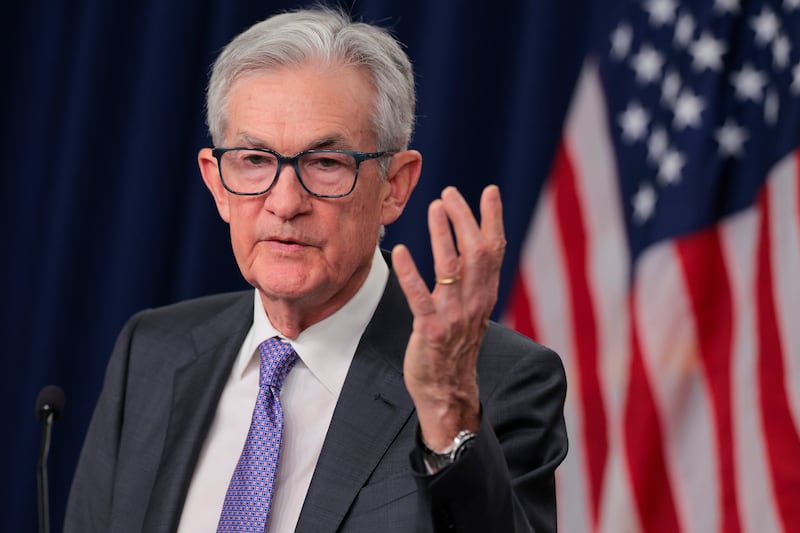
In a press conference following the rate announcement, Fed chair Jerome Powell said it was too soon to know the war’s impacts.
Powell has faced relentless calls from President Trump to lower interest rates. When he refused to fold to the pressure, The White House launched a criminal probe into Powell. A federal judge, James Boasberg, struck down subpoenas related to the effort, slamming the Department of Justice in his opinion.
“The Government has offered no evidence whatsoever that Powell committed any crime other than displeasing the President,” Boasberg wrote.
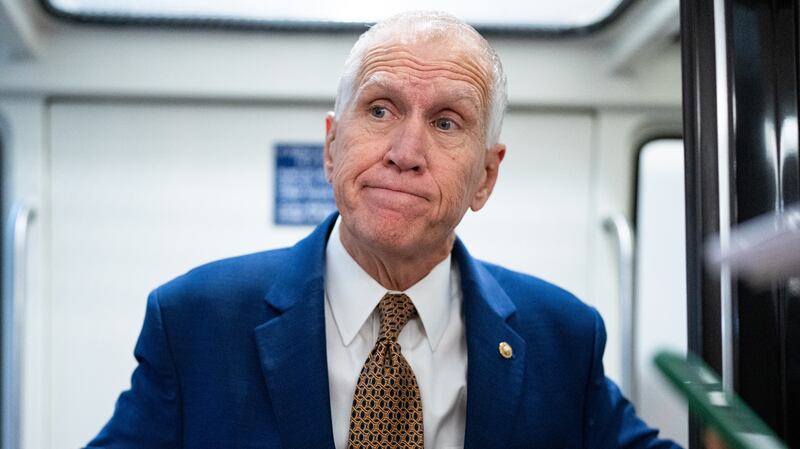
The White House’s pressure campaign even drew some Republican opposition. Sen. Thom Tillis of North Carolina, who is not running for reelection, called the probe into Powell “weak and frivolous.”
The Fed and inflation aren’t the only metrics fueling concern over the future of the U.S. economy. The job market is slowing, too. A report from the Bureau of Labor Statistics showed the unemployment rate reaching 4.4 percent in February, with 92,000 jobs lost.