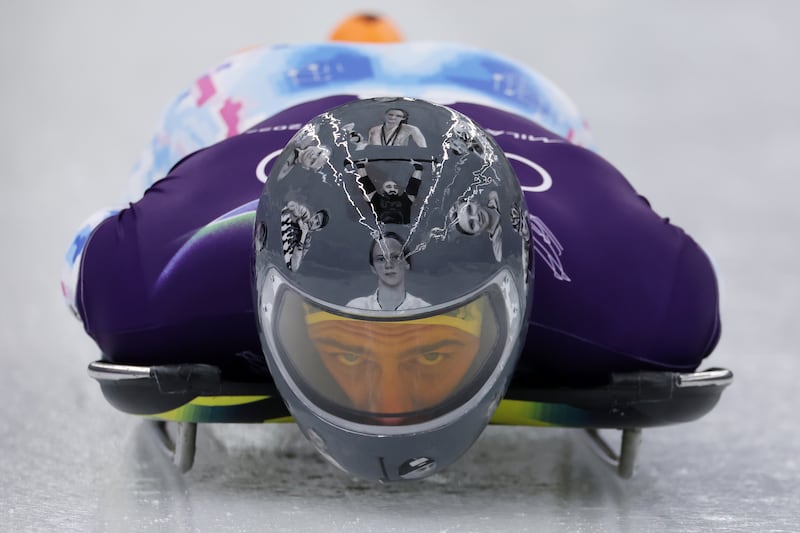
A Ukrainian athlete has been kicked out of the Winter Olympics for wearing a helmet commemorating compatriots killed in Vladimir Putin’s illegal war on his country.
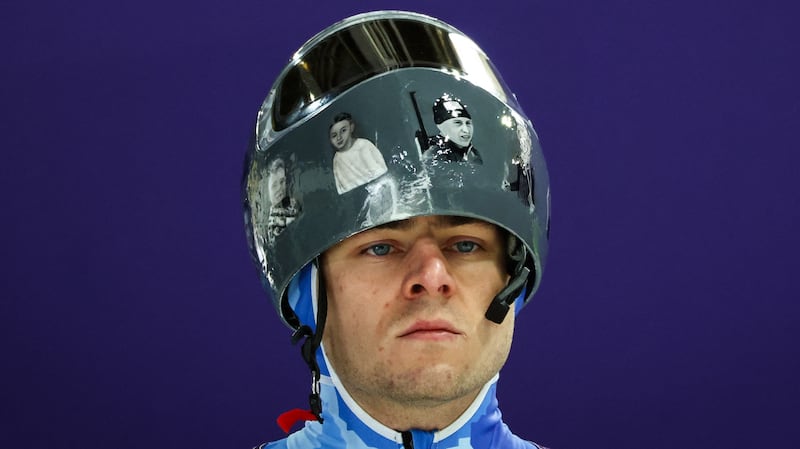
Skeleton racer Vladyslav Heraskevych was told that his helmet, featuring the faces of athletes and friends who had lost their lives in the four-year war, contravened International Olympic Committee rules on political speech.
The 27-year-old lost his accreditation for the Milano Cortina Games on Thursday, the day of the race, after being warned by the IOC that wearing it would result in a ban. On Tuesday organizers had offered him the “compromise” of wearing a black armband. He paid no heed, indicating the following day that he intended to ignore the warning and wear the helmet anyway.
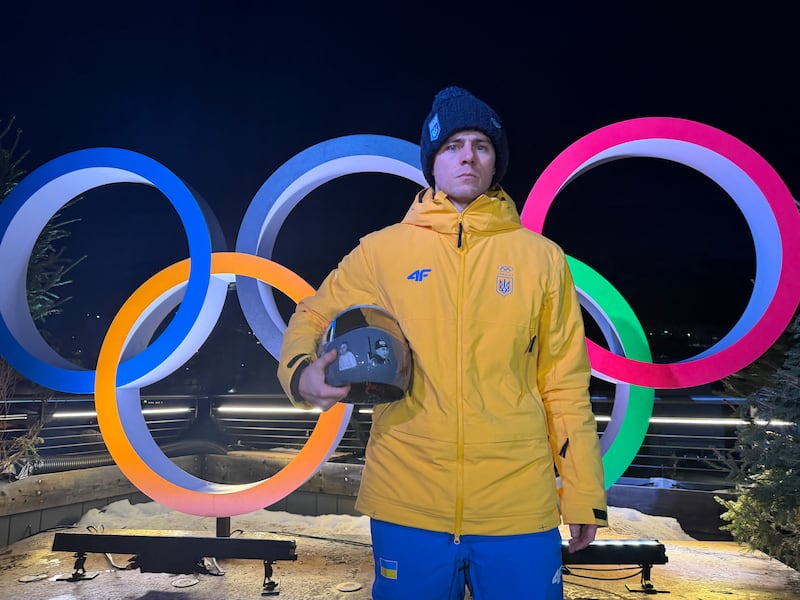
“I will not betray these athletes. These athletes sacrificed their lives, and because of this sacrifice, I am able to be here, so I will not betray them,” he said on Wednesday, before adding it meant more than winning a medal in skeleton. The sliding sport sees competitors hurtle down an ice track headfirst on little more than a tray with runners.
“An Olympic medal would be huge. Since my childhood, it’s my big dream,” he said. “But in this time, in time of full-scale war, some things are really more important than medals. At this point, I would say that a medal is worthless in comparison to people’s lives, and I believe in comparison to [the] memory of these athletes.”
Following his statement, IOC President Kirsty Coventry spoke with Heraskevych to try to persuade him to reconsider.
She failed, and a statement soon followed.
“Having been given one final opportunity, skeleton pilot Vladylsav Heraskevych from Ukraine will not be able to start his race at the Milano Cortina 2026 Olympic Winter Games this morning,” the IOC said on Thursday, according to The Independent. “The IOC has therefore decided with regret to withdraw his accreditation for the Milano Cortina 2026 Games.
“Despite multiple exchanges and in-person meetings between the IOC and Mr Heraskevych, the last one this morning with IOC President Kirsty Coventry, he did not consider any form of compromise.
“The IOC was very keen for Mr Heraskevych to compete. This is why the IOC sat down with him to look for the most respectful way to address his desire to remember his fellow athletes who have lost their lives following Russia’s invasion of Ukraine. The essence of this case is not about the message, it is about where he wanted to express it.”
Speaking to reporters before the competition, IOC spokesperson Mark Adams said, “The Games need to be separated from all types of interference so that all athletes can concentrate on their performances,” The New York Times reported.
Rule 50.2 of the Olympic Charter states that “no kind of demonstration or political, religious or racial propaganda is permitted in any Olympic sites, venues or other areas.”

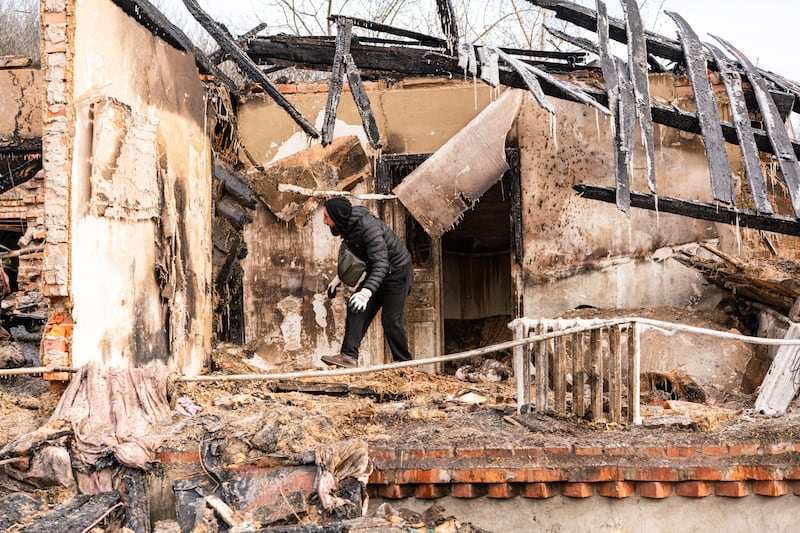
The Center for International and Strategic Studies estimates that between 100,000 and 140,000 Ukrainians were killed in the war between February 2022 and December 2025.
Speaking to reporters following the ban, Heraskevych said, “It’s hard to say or put into words. It’s emptiness.”
On social media, he simply wrote, “This is the price of our dignity.”