The U.S. Army has been forced to take a number of its sites offline after their web domains were hijacked and used to insult Donald Trump.
The messages, first reported by cybersecurity news outlet CyberScoop, contained pro-Kurdish slogans along with messaging like “the US president is a pedophile & thief. f–-k trump & tom barrack,” a reference to the U.S. Ambassador to Turkey.
Trump has spent the past two days at a NATO summit hosted by the Middle Eastern country, itself a member of the alliance. Turkey has waged a decades-long conflict with its Kurdish minority centered on the militant PKK, which both Washington and Ankara have designated a terrorist group.
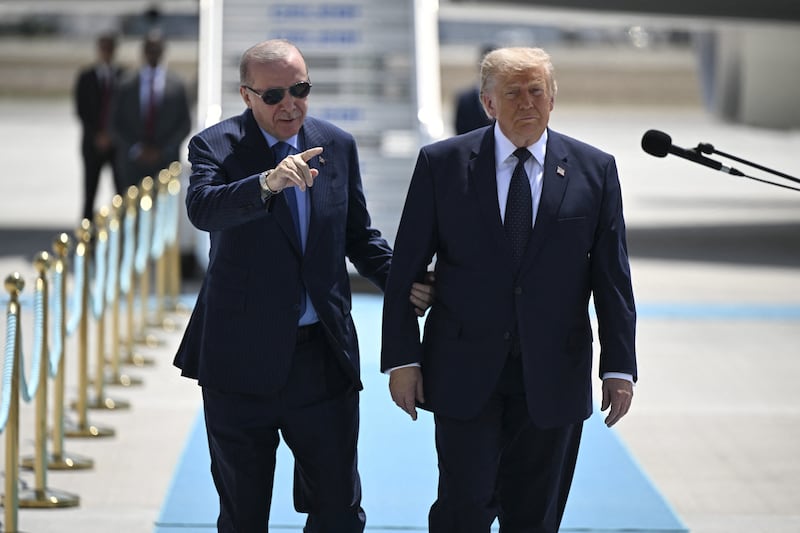
That war has killed tens of thousands over the past forty years and has long underpinned Turkish state suppression of Kurdish language and identity. Trump and Barrack further angered Kurdish advocates in January when they appeared to endorse a government offensive in neighboring Syria to pull Kurdish-held territory back under central control.
Independent cybersecurity researcher Ronald Lovelace was the first person to uncover the hacks and notified both the Army and CyberScoop. He told the outlet that criminals accessing more than one domain “raises the severity” of the breach because “it shows it’s a bit deeper than just one single path” being exploited.
The Daily Beast has contacted the Pentagon for comment on this story. Spokesperson Maj. Sean Minton told CyberScoop in a statement that the military was “aware of unauthorized defacements” and that the matter is under investigation.
It’s not the first time a security breach has embarrassed the Pentagon since Trump retook the White House last year. Defense Secretary Pete Hegseth notoriously shared sensitive details of planned military targets against Iranian proxies in Yemen with a group chat on the encrypted messaging app Signal. It later transpired that one of its members, who included top Cabinet members, had accidentally added a journalist to the group.

The Daily Beast also reported in March that Hegseth has since handed $100 million in contracts to protect IT systems at U.S. facilities worldwide to a tech firm previously hit by a massive breach that saw criminals make off with sensitive personal data from at least 45,000 people.