Two U.S. Navy pilots were rescued from the water Monday night after a “mishap” caused them to be ejected from their aircraft, officials said.
The aviators were trying to land aboard the USS Dwight D. Eisenhower, a nuclear-powered aircraft carrier off the coast of Virginia at about 6:18 p.m. Monday night, the Navy said.
They were ejected after “a mishap occurred during aircraft recovery operations,” the statement said.
“Both aviators were safely returned to the ship and are being evaluated by medical personnel,” officials added.
Four sailors aboard the aircraft carrier were also injured in the incident, with one transported to a Norfolk, Virginia-area hospital for treatment of “non-life-threatening injuries.”
The Navy said the cause of the incident is still under investigation. They did not specify what type of aircraft the pilots were flying.
The U.S. Naval Institute reports that the Dwight D. Eisenhower was in the early carrier qualification process, in which new pilots practice taking off and landing on the aircraft carrier’s flight deck, following a 15-month maintenance period.
In April, while undergoing repairs, three sailors were injured by a fire aboard the aircraft carrier. The Navy did not specify the cause.
The “mishap” also follows multiple recent incidents in which military aviators had to eject from their aircraft.
In May, four Navy pilots deployed parachutes after two jets collided mid-air during an air show in Idaho. One plane caught fire in the crash.
In June, a Marine Corps pilot ejected from his F-18 fighter jet before the plane crashed into a mountainside in Washington state during low-level training over Rimrock Lake. Fox News reported the totaled plane was valued at around $67 million.
Rocket-propelled ejection seats, compressive forces, and high wind speeds can cause injuries, making ejection a last resort for pilots.
Studies show that around 20 to 30 percent of people who survive ejection sustain spinal fractures, with some pilots even reporting losing full inches of height due to the G-forces.
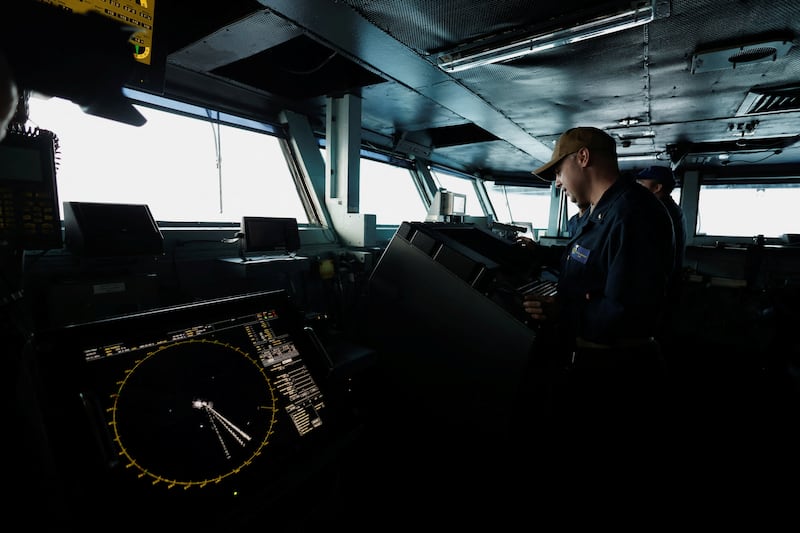
The Dwight D. Eisenhower “mishap” also comes weeks after another aircraft carrier, the USS Abraham Lincoln, made headlines due to reports of a mental health crisis on board.
The Navy confirmed that eight sailors aboard the aircraft carrier attempted suicide during the ship’s ten months at sea supporting the Iran war.
The Lincoln’s crew also faced dwindling supplies and meager food portions by the end of their deployment.
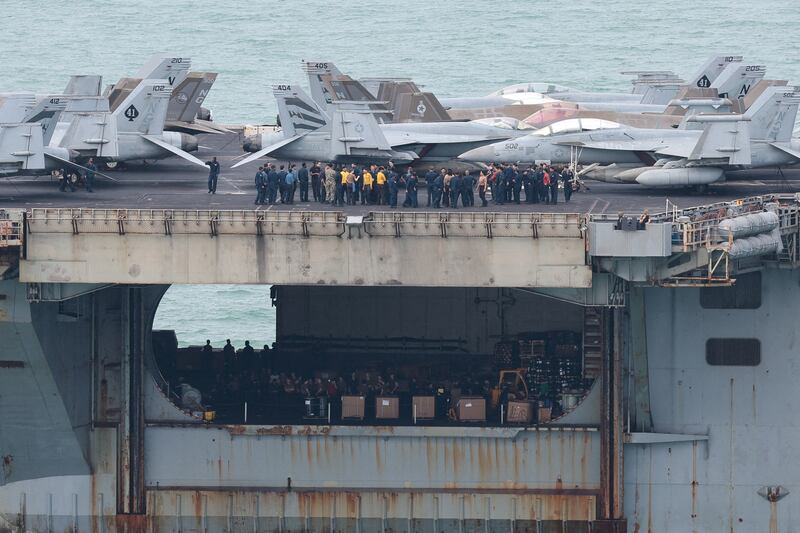
One sailor’s family member told MS NOW they were eating “half a cup of rice and two tortillas” a day.
“I don’t think it’s the ship that’s the issue. I think it’s our president; it’s our government,” they said.
The wife of one sailor who went overboard and was rescued shared a message from him, saying, “I think the boat is finally getting to me, and I really don’t think I can keep up my peace act anymore.”
The sailor’s wife told MS NOW that her husband had raised concerns about his mental health with his chain of command but was allegedly brushed off.