The Department of Veterans Affairs has imposed new guidelines on its hospitals that raise questions about whether VA doctors and other medical professionals can now refuse to treat Democrats and unmarried veterans.
VA hospital bylaws previously barred medical staff from discriminating against patients “on the basis of race, age, color, sex, religion, national origin, politics, marital status or disability in any employment matter,” The Guardian reported.

But now, in response to President Donald Trump’s January executive order on “gender ideology,” “national origin,” “politics,” and “marital status” have been removed from the list, allowing medical staff to deny treatment based on their personal politics, according to the newspaper.
Similarly, the bylaws on staffing decisions no longer prohibit discriminating against candidates on the basis of national origin, sexual orientation, marital status, membership in a union, or affiliation with a “lawful political party.”
The move raises questions about whether individual workers are now free to decline care for patients based on their political beliefs and marital status, since these personal characteristics are not expressly protected by federal law.
A spokesperson for the VA told the Daily Beast in a statement that the updates would have “no impact whatsoever on who VA treats or who works at VA.”
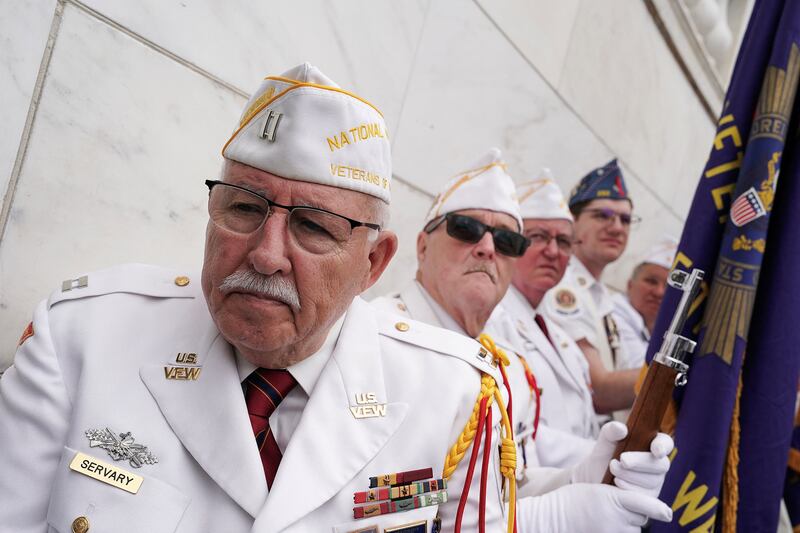
With more than 170 hospitals and more than 1,000 clinics, the VA is the largest integrated hospital system in the U.S. It employs 26,000 doctors and serves 9 million patients annually.
In an emailed statement to The Guardian, VA press secretary Peter Kasperowicz did not deny that doctors can refuse to treat patients based on their beliefs or that hospitals could fire physicians based on their marital status or political affiliation.
“All eligible veterans will always be welcome at VA and will always receive the benefits and services they’ve earned under the law,” he said in a statement, calling the rule changes a mere “formality.”
“All eligible veterans will always be welcome at VA and will always receive the benefits and services they’ve earned under the law,” spokesperson Macaulay Porter said in a statement. Another VA press secretary told The Guardian the rule changes a mere “formality” to comply with the order.
Porter pointed to federal laws requiring all eligible veterans to receive hospital care and medical services. The statue, however, doesn’t explicitly address discrimination against patients.
She also said that federal law prohibits discrimination against federal employees and job applicants on the basis of political affiliation, marital status and union organizing. Those prohibitions are found in Title 5, though, and most VA doctors are Title 38 employees.
Finally, the VA said that a 2013 policy directive, VHA Directive 1019, similarly prohibits doctors from discriminating on the basis of political affiliation and marital status. And yet that directive also prohibits discrimination on the basis of gender identity and transgender status.
Porter pointed to federal laws requiring all eligible veterans to receive hospital care and medical services. The statue, however, doesn’t explicitly address discrimination against patients.
The VA also said that a 2013 policy directive, VHA Directive 1019, similarly prohibits doctors from discriminating on the basis of political affiliation and marital status. And yet that directive also prohibits discrimination on the basis of gender identity and transgender status.
Trump’s January executive order Defending Women From Gender Ideology Extremism and Restoring Biological Truth to the Federal Government—the same order that led to the VA hospital bylaws being changed in the first place—aims to strip government protections from transgender people and denies federal funding of “gender ideology.”It wasn’t immediately clear how the VA made the leap to denying patient care and firing doctors over their political affiliations. Under the new rules, doctors could question veterans about whether they had attended Trump rallies or protests, experts warned.

The VA stopped offering gender-affirming care in March, raising questions about the 2013 directive’s relevance. The move is being challenged in court.
With more than 170 hospitals and more than 1,000 clinics, the VA is the largest integrated hospital system in the U.S. It employs 26,000 doctors and serves 9 million patients annually. Veterans’ advocates told The Guardian they worried that under the rule change, some veterans would have to enroll in medical centers far from home.
Medical ethics experts also called the new rules “extremely disturbing and unethical” and expressed concern that they would allow VA doctors to question veterans about whether they had attended Trump rallies or protests, The Guardian reported.
VA employees told The Guardian that the new rules were imposed without consulting the system’s doctors, which would appear to violate the standards established by the nonprofit organization that accredits hospitals.

“It seems on its face an effort to exert political control over the VA medical staff,” said Dr. Arthur Caplan, founding head of the division of medical ethics at New York University’s Grossman School of Medicine. “What we typically tell people in health care is: ‘You keep your politics at home and take care of your patients.’”
The new rules apply to a wide range of professionals, including psychologists, dentists, optometrists, chiropractors, certified nurse practitioners, podiatrists, social workers, and speech therapists.
VA employees told The Guardian that the new rules were imposed without consulting the system’s doctors, which would appear to violate the standards established by the nonprofit organization that accredits hospitals.
The American Medical Association passed a resolution at its annual convention last week urging the VA to “ensure that any amendments to medical staff bylaws are subject to approval by medical staff in accordance with the Joint Commission standards.”
VA press secretary Peter Kasperowicz told The Guardian the VA had worked with the Joint Commission to make sure the changes would not affect the agency’s accreditation.
Editor’s note. An earlier version of this story reported that a VA official had not denied to The Guardian that under the new rules, doctors could refuse to treat patients based on their beliefs; or that hospitals could fire physicians based on their marital status or political affiliation. This story has been updated to reflect the uncertainty surrounding the rule change.