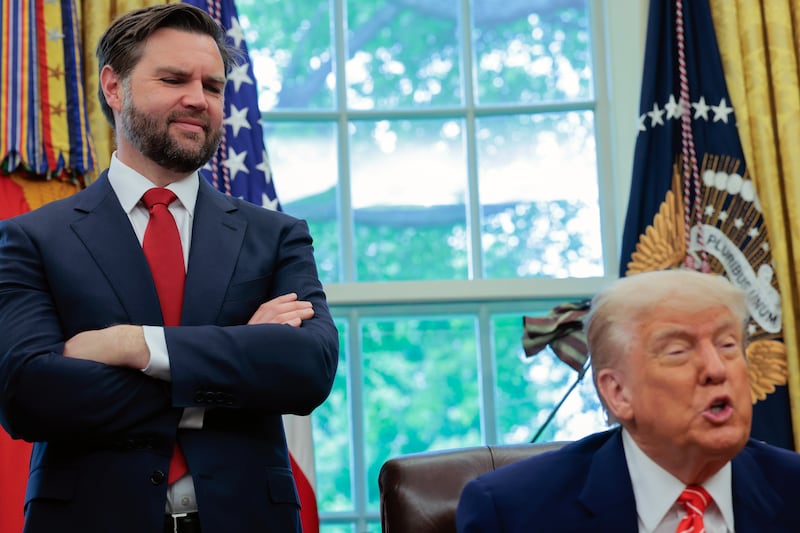
Vice President JD Vance hit out at the way the media asks questions as he sought to defend Donald Trump against claims that he is using the Oval Office to enrich himself.
Speaking at the White House on Tuesday, Vance took offense to a reporter who grilled him over the heavy stock trading on display in Trump’s latest financial disclosures.
Filings released last week showed more than 3,700 transactions, including securities of companies that Trump had talked up at events and in social media posts.
For instance, Trump scooped up shares of artificial intelligence software maker Palantir—the company owned by Vance’s campaign donor Peter Thiel—before he famously praised the stock on Truth Social.
The billionaire president also sold as much as $5 million worth of Palantir on Feb. 10 and made several other stock sales.
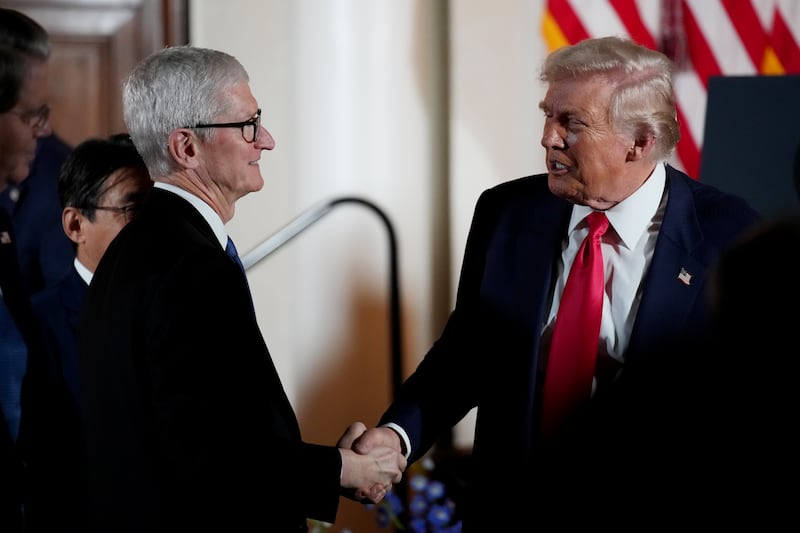
He also bought shares of Nvidia, Apple and Amazon during the first three months of 2026, according to the filings, all of which are companies that he has talked up and whose owners are allies of the president.
And as reported by the Daily Beast, Trump also made a flurry of trades on tech company CoreWeave just as his administration announced a major agreement with the same firm.
As concerns mount about the president using his second term to enrich himself, reporter Andrew Feinberg asked Vance about the issue on Tuesday, noting that “Americans, according to recent polling, are increasingly describing the president as corrupt.”
“This is a hell of a question,” Vance interjected.
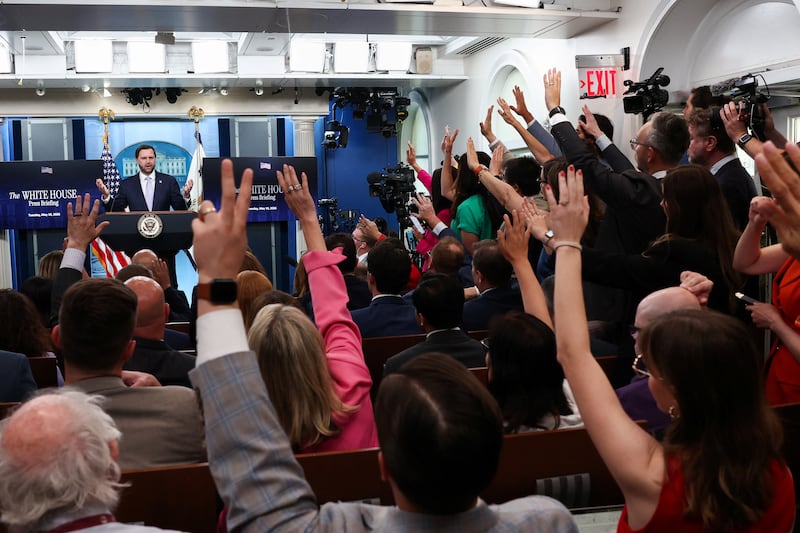
Feinberg continued: “Trading individual stocks is something that you said that public officials should not be able to do when you ran for Senate all those years ago, and yet the president, who arguably has access to more nonpublic information than your average senator, is not only buying and selling individual stocks, either through his through his trust…”
“What’s the question?” Vance said, growing impatient.
“Okay, the question is, the question, sir, is how can you and your administration argue to Americans that you’re cleaning up corruption, you’re preventing fraud, you’re fighting the sorts of things that harm people and people’s financial situations when the president seems to be talking up stocks that he owns, selling them and enriching himself?”

Vance hit back, describing the question as “a doozy”.
“There are different ways to ask a question,” the vice president noted.
“You could just ask a question and try to get your answer, or you could do a speech where you say: ‘oh you know Mr Vice President, you’re a terrible human being… and then your question is ‘how dare you.’ Come on man, have a little bit of objectivity in the way you ask these questions.”
Vance then went on to defend the president’s stock trading spree.
“The president doesn’t sit at the Oval Office on his computer on his, like, Robinhood account, buying and selling stocks,” Vance said in response to Feinberg’s question.
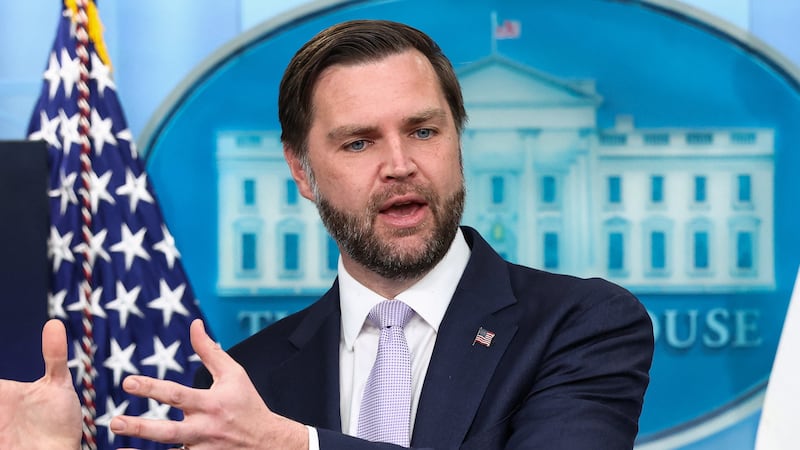
“That’s absurd. He has independent wealth advisors who manage his money. He is a wealthy person. He has had success in business. He’s not making these stock trades himself. And your question implies that.”
Vance also affirmed he is a “big fan” of banning congressional stock trading, and “so is the president of the United States.”
However, some Republicans want the GOP to go even further and ban stock trading for presidents as well.
“I’d be in favor of a uniform rule for everybody,” Senator Josh Hawley told NBC News when asked about Trump’s recent filings.
The president’s son Eric, who runs the Trump Organization, later took to social media to thank Vance and hit out at the media as “so dishonest.”
“President Trump’s investment holdings are maintained exclusively in fully discretionary accounts managed by independent third-party financial institutions,” Eric wrote.
“Neither President Trump, his family, nor The Trump Organization has any role in selecting, directing, approving, influencing or soliciting specific investments,” he added.
“They receive no advance notice of trades, cannot alter or override the managers’ strategies or models, and provide no input regarding investment decisions or portfolio operations.”