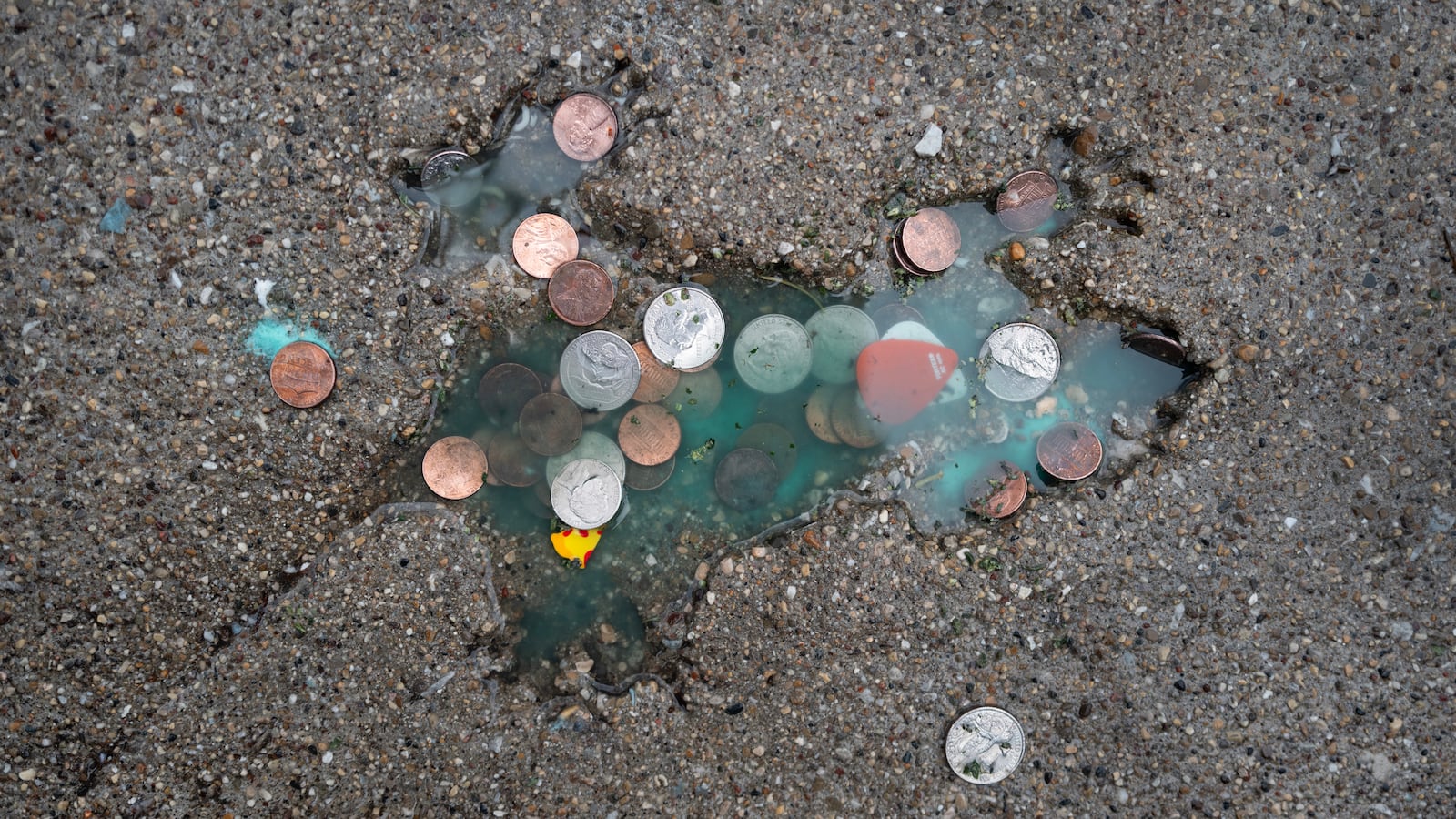
The infamous Chicago “rat hole,” a sidewalk imprint that became a quirky local landmark and viral sensation, has been revealed not to have been made by a rat at all, scientists announced. The imprint, affectionately nicknamed “Splatatouille,” captivated the public in early 2024, drawing crowds who left offerings of coins, candles, and even estrogen in the rodent-shaped hole, long believed to have been created by a rat that met its maker in a patch of wet concrete and left behind a perfect, if tragic, silhouette. But a new study published in the scientific journal Biology Letters challenges the popular folklore. By analyzing photos of the hole, using the coins placed inside it for scale, a team of researchers led by Dr. Michael Granatosky of the University of Tennessee found the hole was too big to have been made by a rat and was instead more likely created by a squirrel, specifically an eastern gray or fox squirrel, which are native to Chicago. Other details bolster the squirrel theory: Squirrels are more active during the day, when wet concrete is poured, and the lack of tracks suggests the animal likely fell from a nearby tree. Residents confirmed one once stood there. However, the truth is unlikely to change how Chicagoans view the lost landmark. “The exact dimensions and causality of the Chicago rat hole were not the driving force of the story,” said local artist Winslow Dumaine. “It doesn’t matter how it was made, but that it brought us together.”
Read it at The New York Times