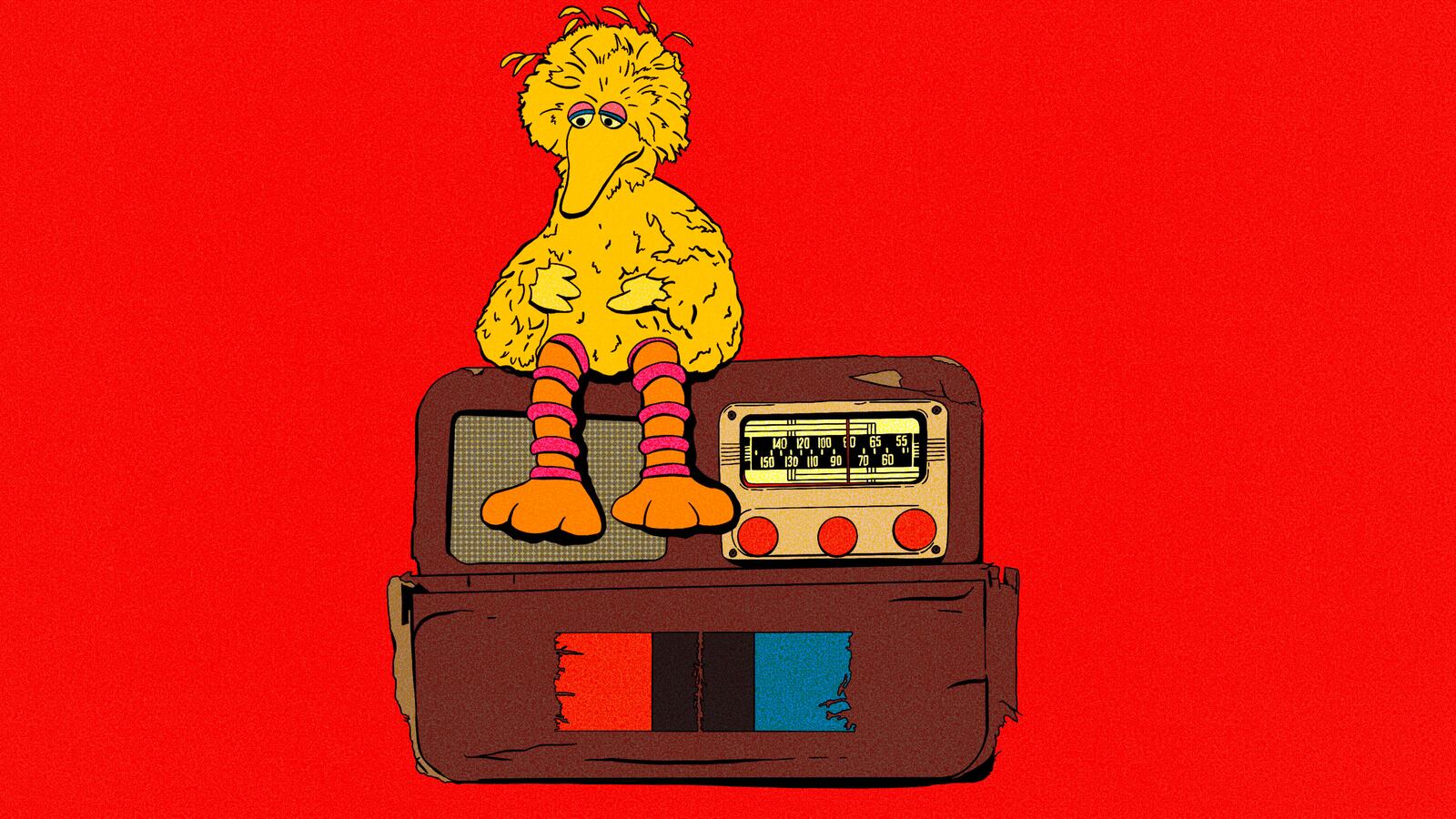
Some of my earliest memories are of fuzzy, big-eyed characters breaking the fourth wall. Of adults reading books to me from the TV. Of fictional worlds nurturing my curiosity. These were healthy parasocial relationships; as kids, my generation was so enthralled we barely noticed what was being taught: The numbers, the letters and the empathy. We learned how to process our emotions and be team players. To value our differences and embrace our commonalities.
Shows like Sesame Street, Reading Rainbow and Mr. Rogers raised us to participate in democratic society—and they were accessible as long as you had a TV with an antenna. And they always should be.
American public media, as we know it today, has been a decades-long project. The government began funding it in 1967 through the nonprofit Corporation for Public Broadcasting (CPB), which then gave money to the Public Broadcasting Service (founded in 1969), National Public Radio (founded in 1970), and other nonprofits.
Until now.
Last week, Congress voted to kill CPB’s funding for 2026 and 2027. Every Democratic representative and senator voted to maintain the funding as did Republicans Brian Fitzpatrick and Mike Turner in the House, and Lisa Murkowski and Susan Collins in the Senate. Every other Republican voted to cut it.

To clarify how much funding this is, it’s $550 million annually. That’s approximately $1.60 per person in the United States.
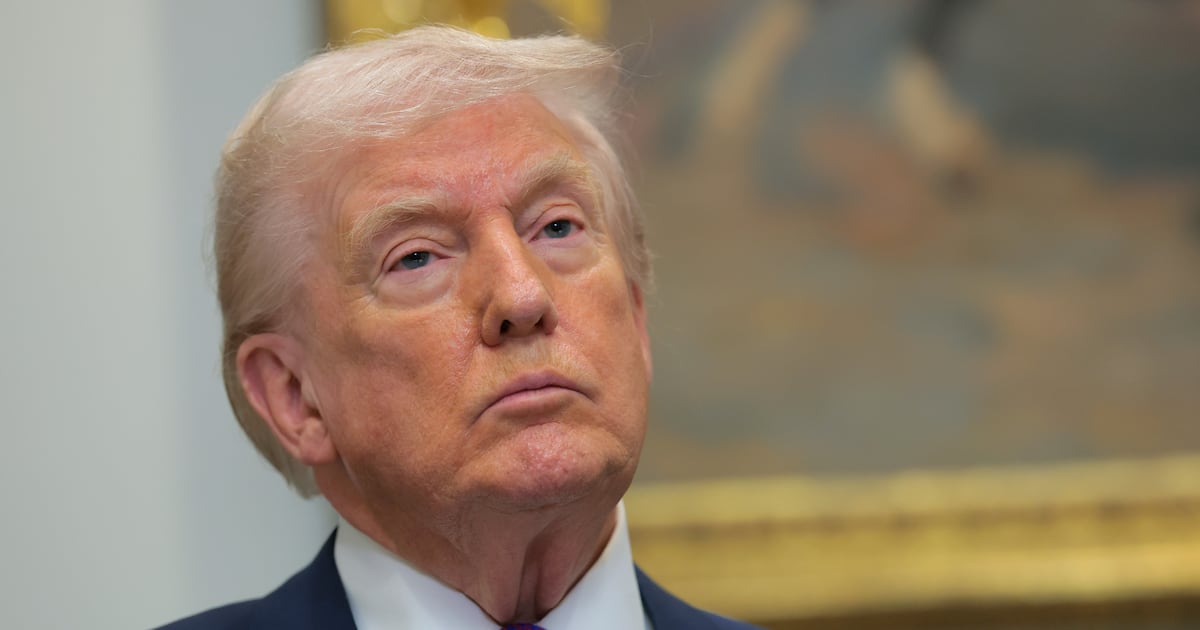
The rationale put forth by President Trump and congressional Republicans is that NPR and PBS are now radical left-wing outlets, whose output is now deviating from their educational mission. It’s true that some national news coverage, particularly for NPR, is left-of-center – as is their audience. But this argument ignores where the federal money actually goes, what it does—and why it matters.
More than 70% of CPB’s funding goes to nearly 1,600 local public affiliates, which reach 99% of the U.S. population. These local TV channels and radio stations—not the PBS and NPR ‘motherships’ in Washington, which are funded by individual donors, corporate sponsors, foundation grants and station dues—will suffer from these cuts. Many could be forced to shut down entirely.
Then what happens?
For starters, local news coverage would decline further. (To be clear, it’s already in a state of freefall.) PBS and NPR affiliates, in many cases, are the best local news option. It’s not ‘woke’ programming that will die from these cuts, but oversight of your county, city, town, and neighborhood. Of your sheriff, district attorney, county executive, mayor, city council and school board—the people with the most impact on your day-to-day life.
We’d also lose out on quality kids programming. Yes, the TV business has changed, and much of today’s most popular kids programming is on YouTube. Still, PBS continues to churn out popular kids shows from Daniel Tiger to Wild Kratts to Odd Squad. These educational series are available to anyone via broadcast, which matters because 26 million Americans still lack access to quality Internet.
And above all, PBS and NPR affiliates offer crucial alerts to warn residents in rural areas of tornados, floods, fires, earthquakes, and winter storms—this is why Alaska’s Lisa Murkowski voted to maintain CPB’s funding. It would be stupid to argue these important emergency services are somehow left-leaning.
This all hits home for me. Not just because of my new PBS show, Civics Made Easy—although that’s clearly related, and I’m now left uncertain of its future—but because my mom spent her career in the U.S. Senate as an aide to Republican Senator Mark Hatfield. For most of the 1980s, Hatfield was chair of the powerful Senate Appropriations Committee, which oversees federal appropriation of non-mandatory spending, like PBS funding.

At that time, there were concerted efforts from Hatfield’s party to cut money for public media. But both the senator, and my mom, understood its importance. In part because of their efforts, funding for PBS and NPR continued uninterrupted throughout the Reagan years. (A 1994 Washington Post article also cited Hatfield’s constituents in rural Oregon, and their needs, as a motivating factor for his position.)
So in this moment we have to ask ourselves: Who benefits from depriving these things to the public?
In 1833, James Madison wrote that, “a popular government, without popular information, or the means of acquiring it, is but a prologue to a farce or a tragedy; or, perhaps both.” Whether it’s cutting public media funding, money for schools through the Department of Education, or simply not requiring schools to teach enough civics (only 7 states require at least a year of it K-12), it seems our leaders are constantly trying to make it harder for Americans to acquire that “popular information.” Without it, they can enjoy less scrutiny, and oversight, from us—their voters.
In light of these cuts, consider making a donation to your local PBS or NPR affiliate. Because if the government won’t take care of us, it’s up to us to take care of each other.
Decades ago, a man in a cardigan told me that’s what good neighbors do.
Ben Sheehan is the host of Civics Made Easy, streaming now on PBS’s website, app, and YouTube channel. He also writes the popular Substack Politics Made Easy and is the bestselling author of What Does the Constitution Actually Say? (which has a kids version).