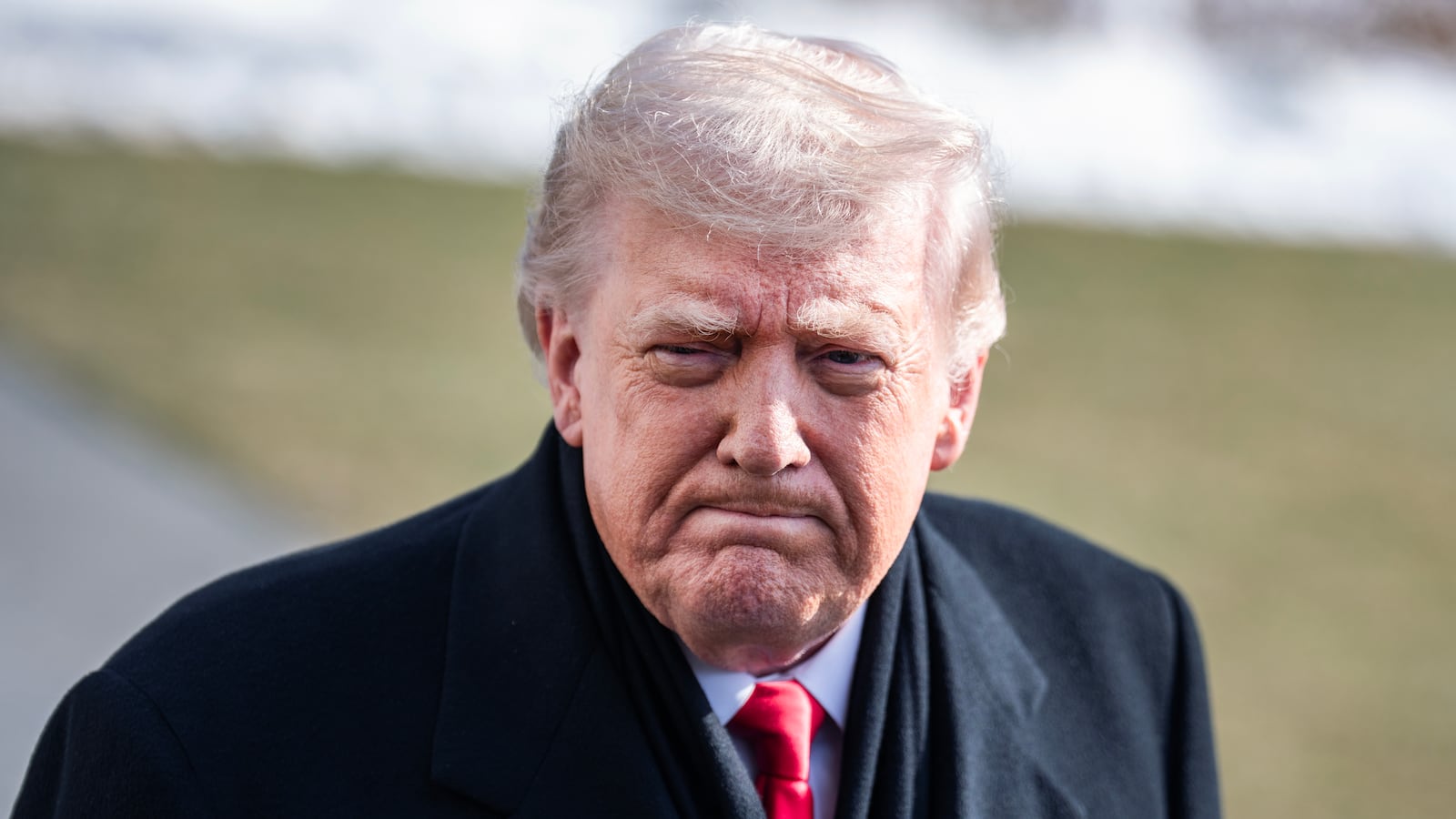
A disgraced attorney who tried to help President Donald Trump overturn the 2020 election has been revealed as the secret driving force behind the administration’s effort to end birthright citizenship.

John Eastman has been working for decades to convince the Supreme Court to take up his fringe legal theory that the Constitution doesn’t automatically confer citizenship on virtually all people born in the U.S., despite the 14th Amendment’s explicit guarantees.
The justices will hear oral arguments on the subject Wednesday in a case challenging a Trump executive order that seeks to end birthright citizenship.
But the administration has apparently sought to obscure Eastman’s influence on the topic, even as it has embraced his legal theories, according to Politico.
Trump did not mention Eastman, 65—who has been barred from practicing law over his effort to subvert Joe Biden’s election victory—when he signed his executive order, even though Eastman had been pushing Trump to try to end birthright citizenship since the president’s first term in office.
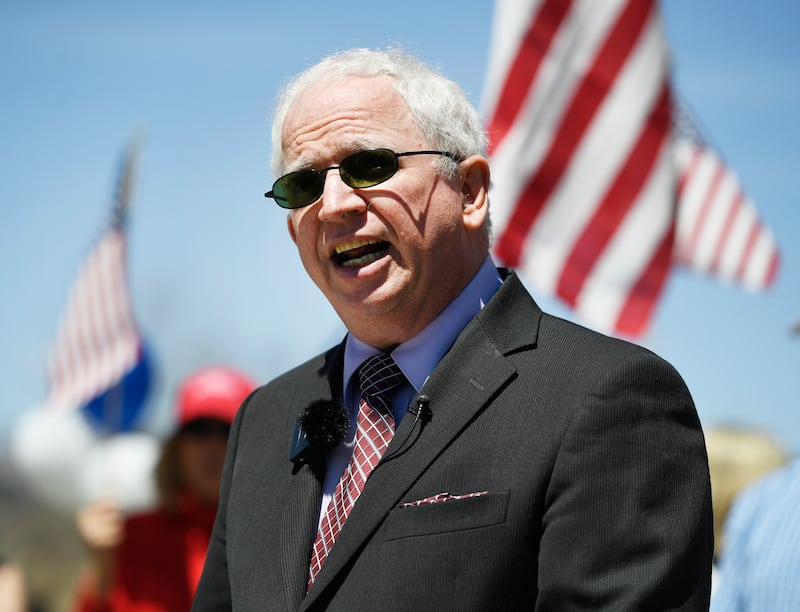
The Justice Department’s briefs also don’t cite any of Eastman’s 100-plus op-eds, interviews, law review articles, debates, speeches, or legislative hearings, despite adhering closely to Eastman’s legal arguments, Politico noted.
Speaking to the outlet, Eastman declined to say whether he’d helped craft Trump’s executive order or the government’s arguments defending it. The DOJ declined to comment on Eastman’s role, and a White House spokesperson did not respond to a request for comment.
Eastman did say, though, that he wasn’t “troubled” by the DOJ’s failure to mention him in its brief.
“Remember, Ronald Reagan used to have a sign on his desk that there’s a lot you can get done in this town if you don’t care who gets credit for it,” he said.
The Daily Beast has also reached out for comment.
In its brief, the DOJ relied on writings of white supremacists to demonstrate that some Americans opposed birthright citizenship at the time the 14th Amendment was drafted.
After the Civil War, Congress passed a constitutional amendment saying that “all persons born… in the United States, and subject to the jurisdiction thereof” are U.S. citizens.
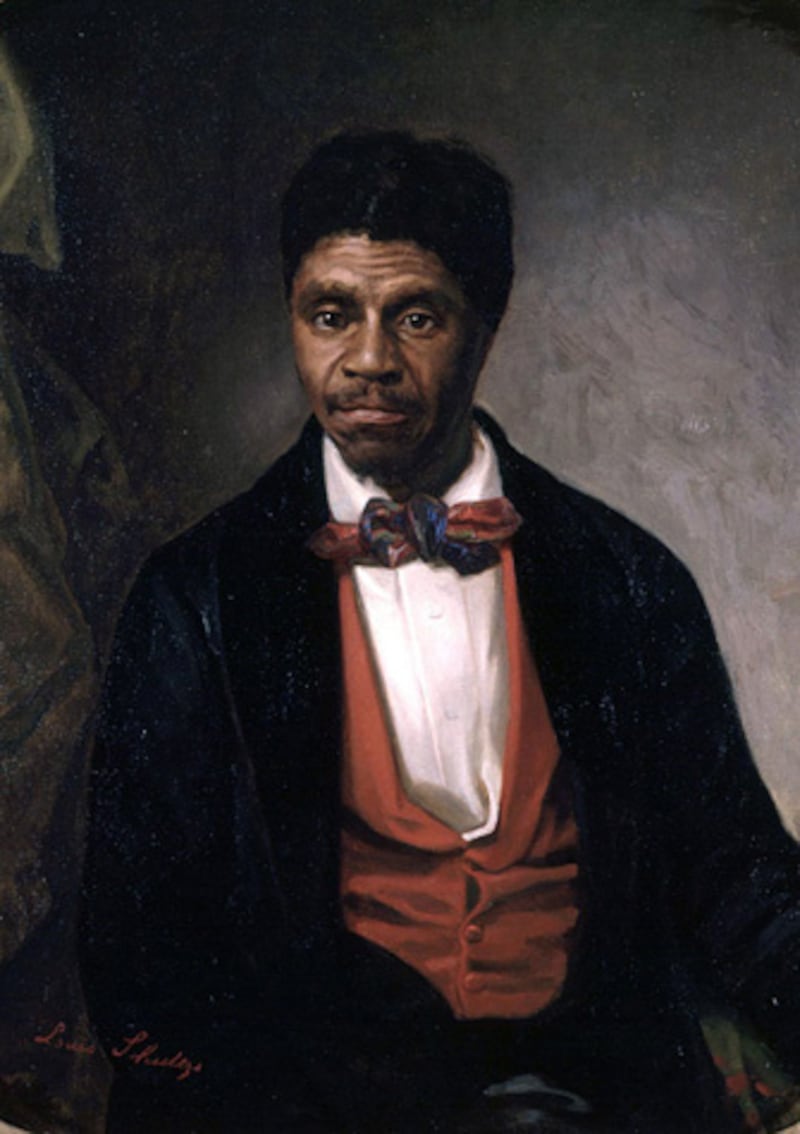
The amendment overturned the infamous Dred Scott v. Sandford decision, the Supreme Court’s 1857 ruling that held that even free African Americans were not U.S. citizens, and granted citizenship to former slaves and their children.
But lawmakers also left the wording intentionally broad to apply to people of all races residing in the U.S., according to historian Heather Cox Richardson.
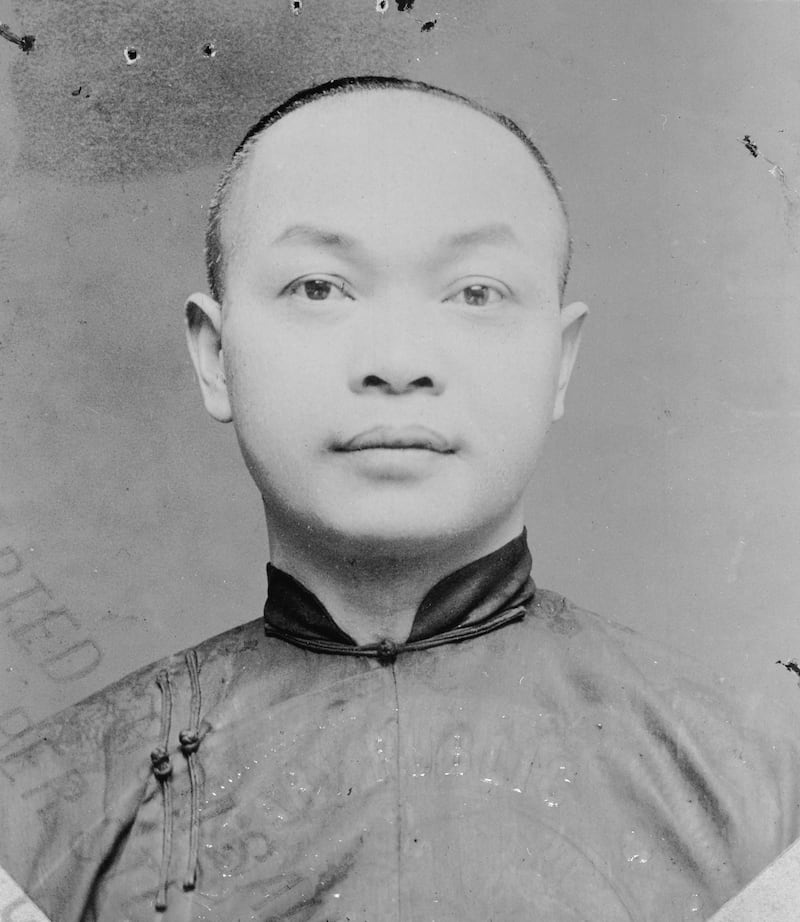
That meant a child born in the U.S. to foreign parents living in California also acquired citizenship at birth, even if the parents didn’t qualify, the Supreme Court ruled in 1898 in U.S. v. Wong Kim Ark.
Eastman has tried to argue that the case only covers children of foreigners living permanently in the U.S., and that subsequent legal decisions expanding citizenship rights were wrong.
The vast majority of constitutional scholars, however, including most conservatives, have rejected that interpretation.
Four federal judges have blocked Trump’s order from taking effect, and two federal appeals courts have agreed.
Eastman has also advanced other questionable theories.
For years he banged the drum about birthright citizenship, sometimes paid to debate it by the right-wing Federalist Society, Politico disclosed.
Eastman also pushed a claim that Kamala Harris was ineligible to serve as vice president and run for the presidency because, he claimed, her parents were not citizens at the time of her birth. Newsweek had to apologize for publishing his claim in 2020. Intriguingly, he had considered that Republican Ted Cruz, who was born in Canada to a Cuban-born father, and who disclaimed his Canadian citizenship in May 2014, was completely eligible to run for office.
He was recruited to join Trump’s legal team after the president’s 2020 election loss, and proposed that former Vice President Mike Pence refuse to count some states’ electoral votes in a bid to keep Trump in office illegally.

Pence later told Fox News that he considered Eastman a “crackpot.”
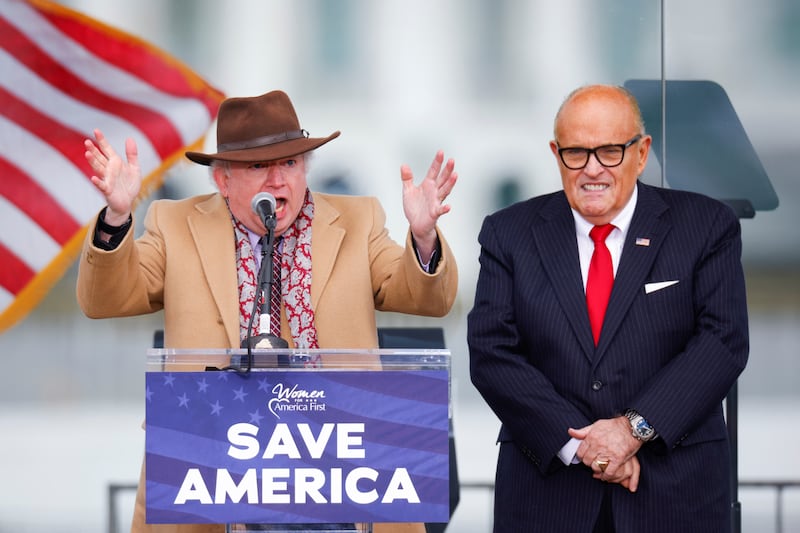
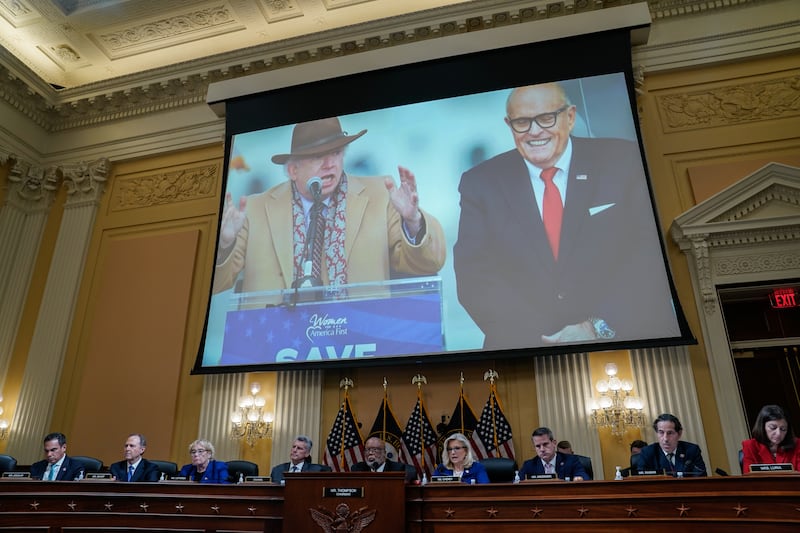
When that idea failed, he appeared alongside former New York City mayor and Trump lawyer Rudy Giuliani at the “Stop the Steal” rally that preceded the deadly Capitol riot on Jan. 6, 2021, and spread false claims about election fraud.
Eastman later filed lawsuits challenging the election results and made “patently false and misleading statements,” according to a judge tasked with reviewing whether he should lose his law license.

Prosecutor Jack Smith referred to Eastman as an unindicted co-conspirator when he charged Trump in May 2023 with four felony counts: conspiracy to defraud the United States; conspiracy to obstruct an official proceeding; obstruction of and attempt to obstruct an official proceeding; and conspiracy against rights. The charges were first gutted by the Supreme Court, and then the remainder dropped when Trump won the election.
The California State Bar Court found in June that Eastman’s conduct was so egregious that he should be disbarred entirely.
He has appealed that decision to the California Supreme Court, which has the final say over matters of attorney discipline.