
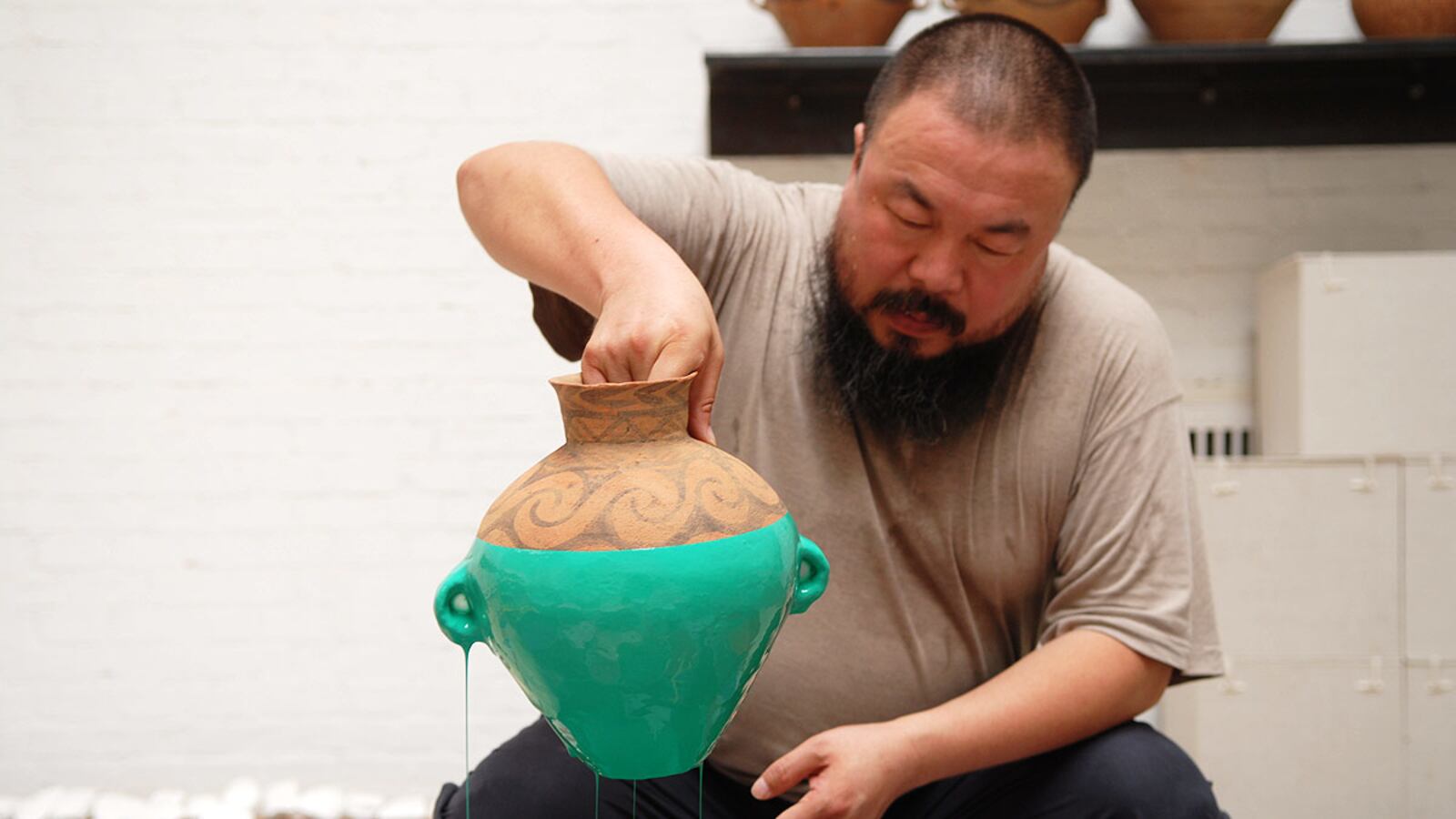
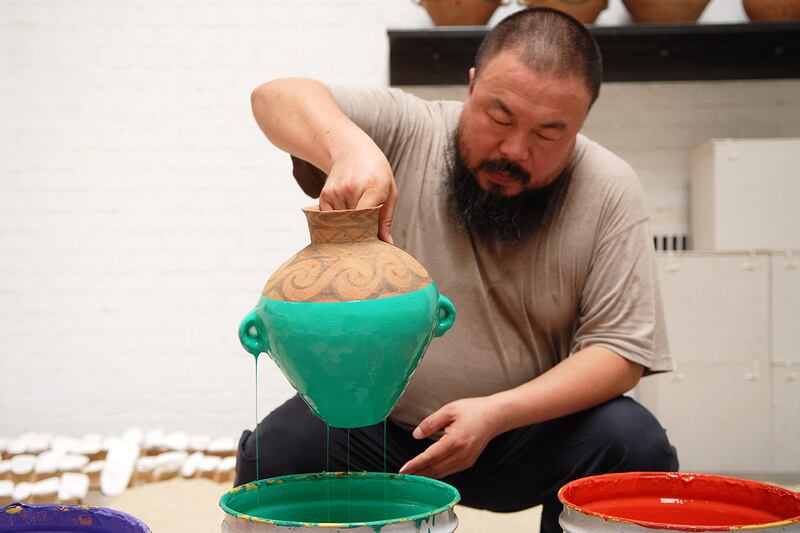
Ai Weiwei is almost certainly China's most important artist, and one of the best in the world. That's partly because of the range and complexity of his work. It goes from dipping 2,000-year-old Chinese pots into very modern paint (and so reprising China's own erasure of its past), to designing a fabulous stadium for the people of Beijing (and repudiating it once it was clear the people wouldn't gain from it), to recording the names of the 5,000 children who died in the great Sichuan earthquake (whom authorities had refused to acknowledge). Ai is equal parts artist and activist, and insists those two halves are indivisible.
Sitting in the courtyard of his studio in Beijing, Ai recently claimed that there can't be such thing as properly Chinese art "when the works that come out of here do not reflect the genuine stuggle of the people. Do not reflect the fear and the hope of the people. Do not relate to the real emotions of this land." He tries to ensure that his work does all those things.
In Washington, the Smithsonian's Hirshhorn Museum just launched "Ai Weiwei: According to What," the artist's first American survey, and this Web gallery presents some of its works.
– Blake Gopnik
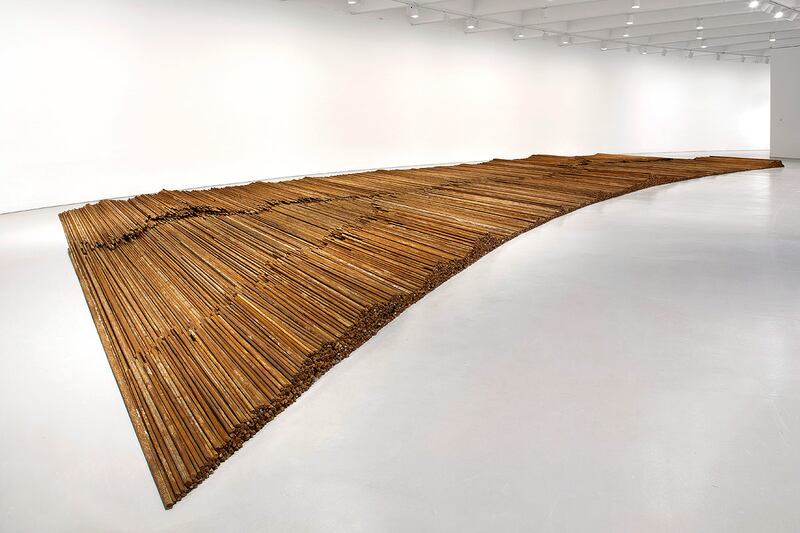
Presented for the first time at the Hirshhorn, this installation is made of 38 tons of rebar, bent in the Sichuan earthquake and straightened for Ai's use in this piece. The bars seem to stand for those who died in the quake, but also for the vain attempt to undo damage once it has been done.
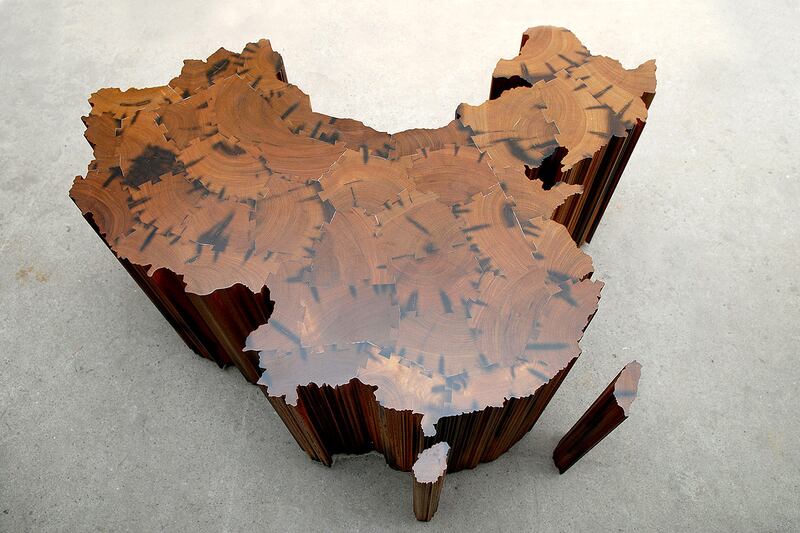
Traditional craftsmen built this map out of tieli wood salvaged from dismantled temples of the Qing Dynasty (1644–1911). China today has a powerful and vexed relationship to its history and lands. This piece seems to probe those relationships.
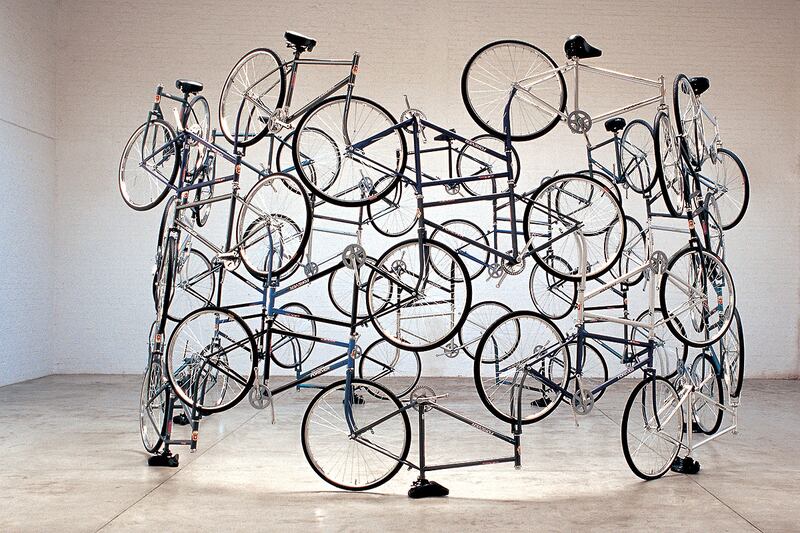
Assembled from 42 bikes, this would be a clever found-object sculpture in any context, but it gets extra meaning from having been made in China: Before the country went car-mad, the Forever-brand bicycle was one of the most popular, and useful, objects on the planet. And now Forever belongs mostly in the past.
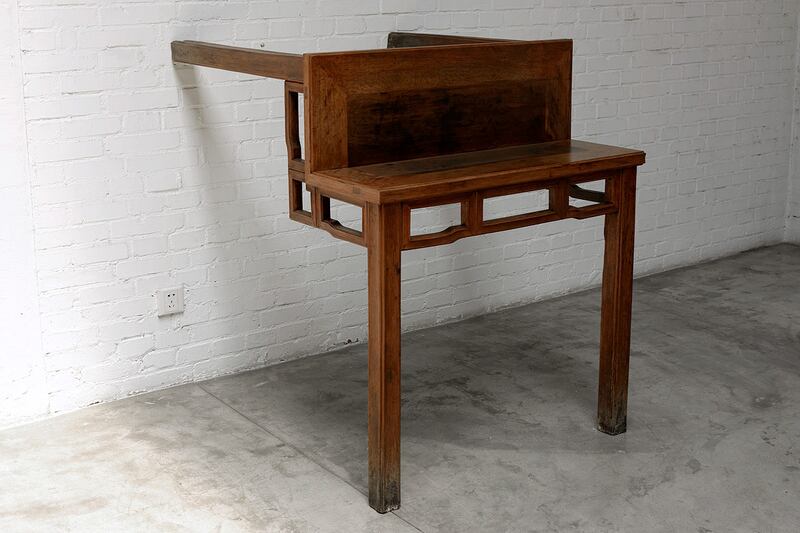
Many of Ai's pieces are assembled from furniture made during the Qing Dynasty, which lasted from 1644 to 1911. They seem to question the whole notion of dividing China's history into vast dynastic epochs, and how that can level all historical detail.
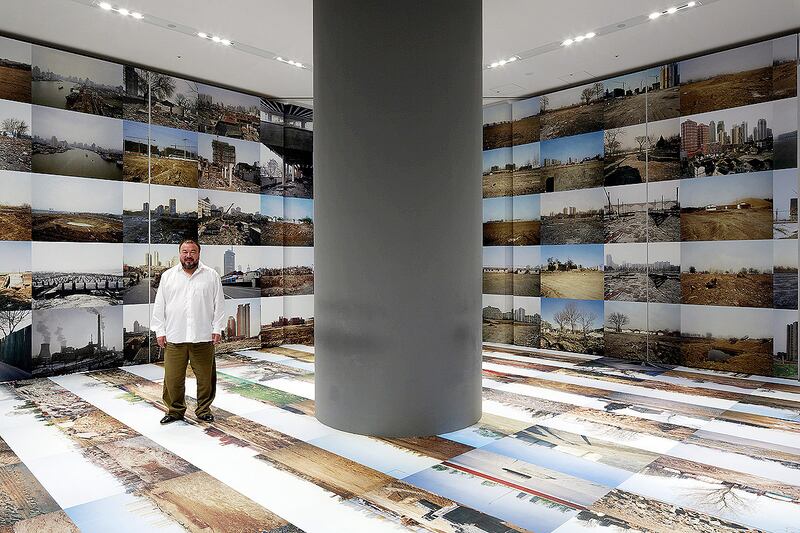
Much of Ai's art does nothing more than chart the transformations that China is now embarked on. This piece documents bulldozed plots awaiting development.
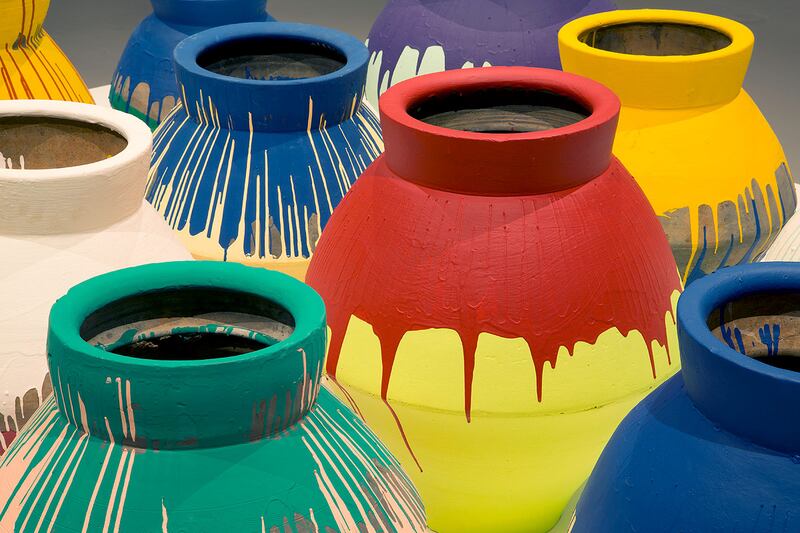
Han Dynasty (206 BC–AD 220) vases dipped in industrial paint: in a country obsessed with its glorious past, Ai Weiwei isn't afraid of "updating" it with modern art supplies.
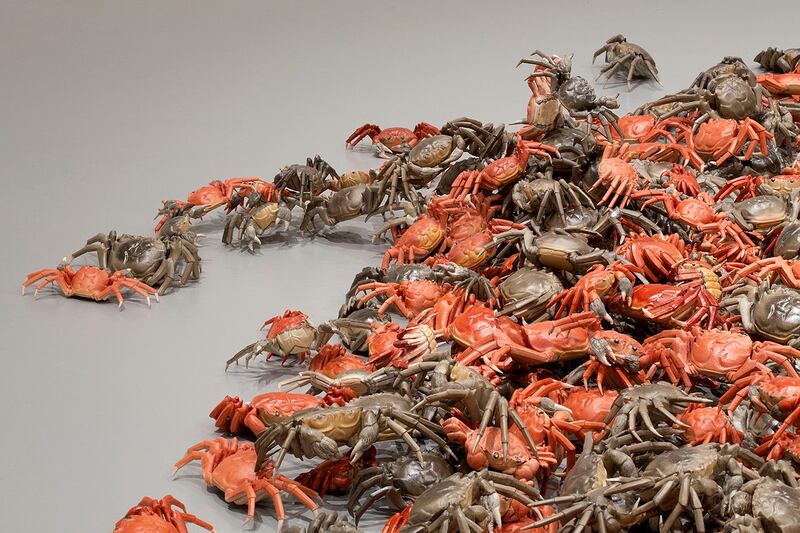
In Chinese, the title "He Xie" can refer both to "river crabs" and also to the word for "harmonious", favored in Communist Party slogans but now also used for China's internet censorship. The installation includes 3,200 river crabs hand-made from porcelain. The sheer effort involved in their crafting seems to call up images of China's laboring masses, now put to work making art, the country's first high-prestige export.
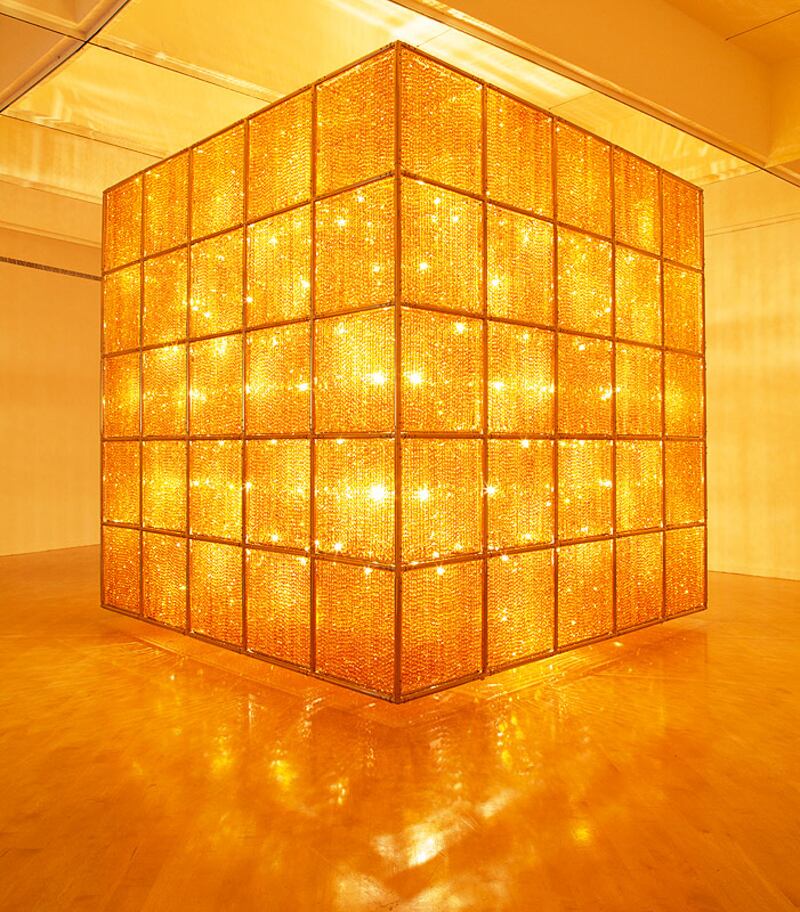
This major Ai work, recently purchased by the Hirshhorn Museum, may be all about the empty bling of modern Chinese culture. It is a 13-foot-tall box constructed from brass-colored tubing, then laced top to bottom with the showy crystal strands used for chandeliers. It recalls the over-the-top interior design favored by some of China's new billionaires, and seems a distillation of the idea of art as pure glitzy display – which some of today's Chinese artists seem to buy into.
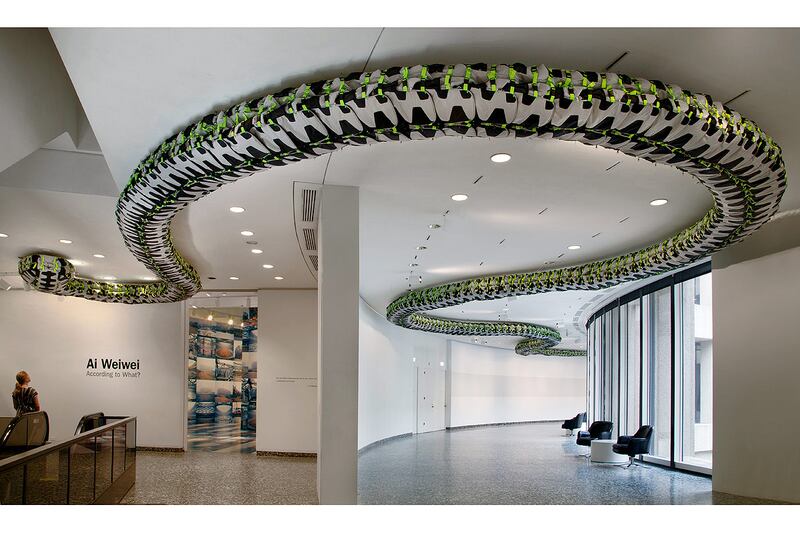
This installation is made from children's backpacks, much like those left behind by the 5,000 children who died in their schools during the great Sichuan earthquake of 2008. Ironically, the snake is often seen as an auspicious symbol in Chinese culture.
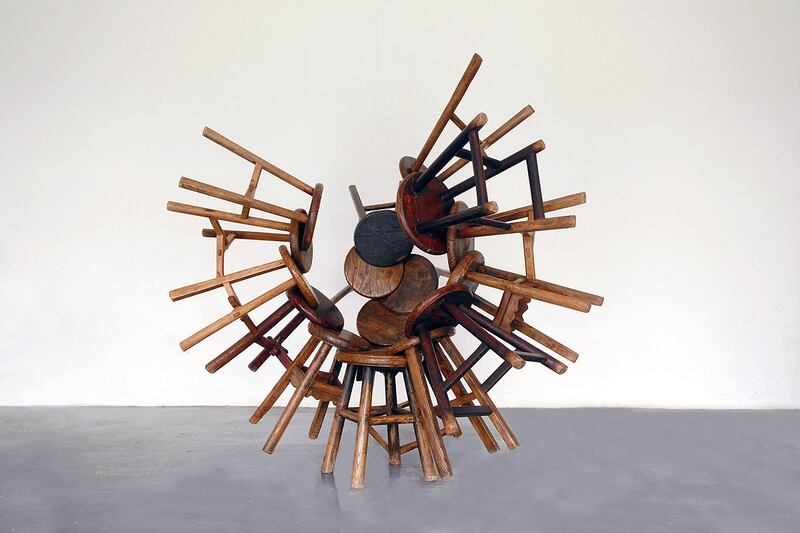
40 stools from the Qing Dynasty (1644-1911), assembled into a single sculpture using traditional carpentry techniques.
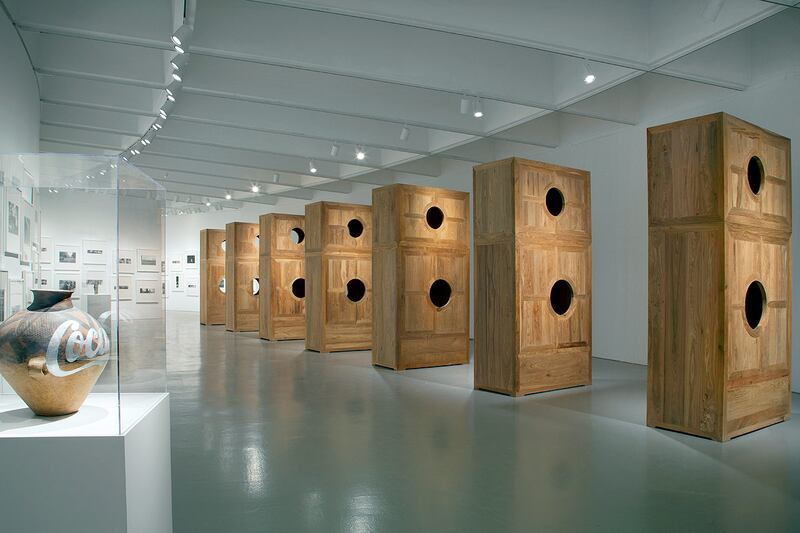
The holes in these chests line up to represent various phases of the moon, an important element in China's traditional lunar culture.
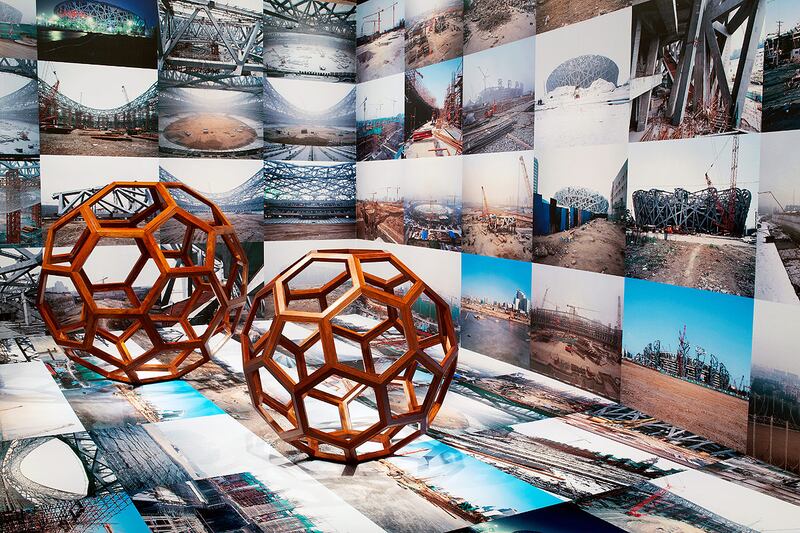
The two sculptures realize geometric solids once drawn by Leonardo da Vinci, here made concrete by traditional Chinese carpenters. That West-meets-East theme is taken up again in Ai's stadium, which he designed in collaboration with the Swiss architects Herzog & De Meuron, creating one of the world's most fascinating buildings.
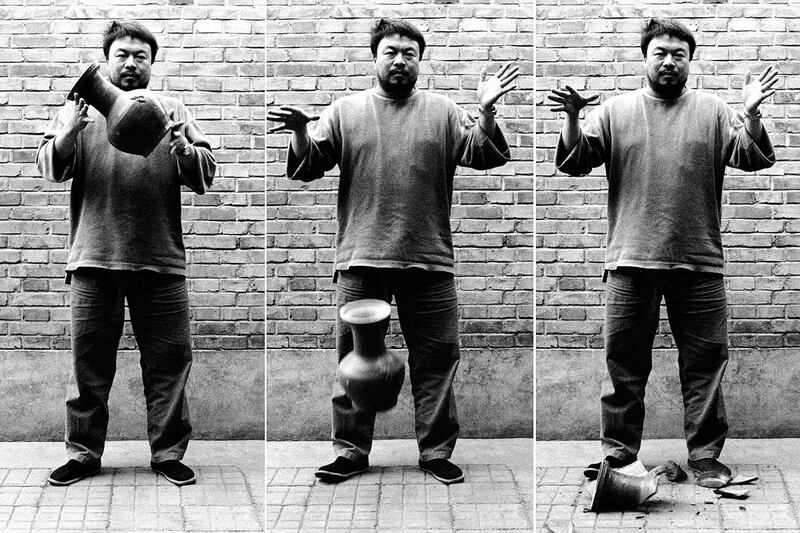
This famous piece by Ai documents the destruction of a 2,000-year-old piece of pottery. (Or, just possibly, of one of the innumerable fakes circulating on the Chinese market). It's worth noting that, in a transmutation typical of modern China, the ancient object would now be worth less than the art that Ai Weiwei created by dropping it.