American Airlines Suffers Its Worst Week Ever
The iconic American air carrier may be falling apart before our eyes. Dan Gross reports on how bankruptcy can undo an airline.
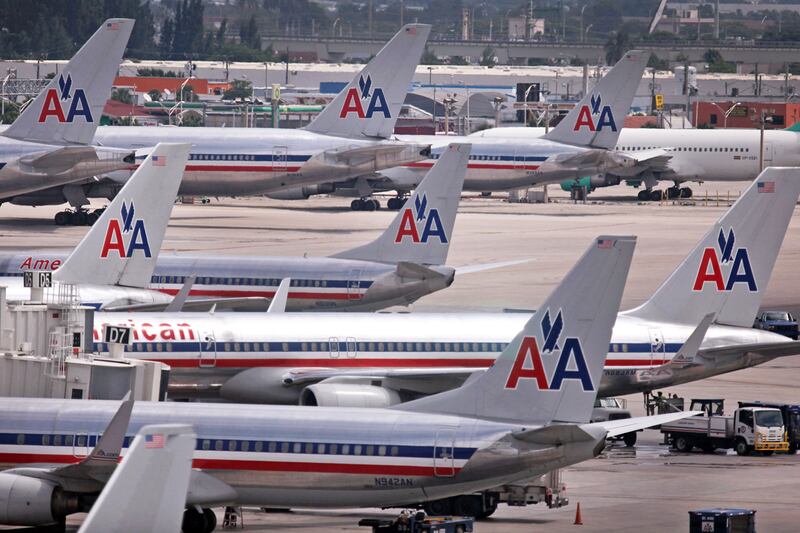
Joe Raedle / Getty Images
American Airlines, the Ft. Worth–based international air carrier, may have already had its worst week ever—and it’s only Tuesday. The airline has been operating in bankruptcy since November and has suffered a series of public relations and operational black eyes in just the last few days.
Their travails started on Saturday with novelist Gary Shteyngart’s caustic op-ed in The New York Times detailing his harrowing 30-hour journey from Paris to New York. Shteyngart declared, on America’s most important op-ed page, that the airline “should no longer be flying across the Atlantic” because American did not have the “know-how” and that its employees “have clearly lost interest in the endeavor.”
The bad news continued today, with news that the federal government is investigating two cases of seats on American Airlines planes coming loose midflight. There have been three reported incidents of loose seats since last Wednesday. A flight on Monday from New York City to Miami had to be diverted back to John F. Kennedy airport when the seats came loose.
Meanwhile, the company’s management team is embroiled in a dispute with its most important employees—the pilots—even while trying to fend off a takeover bid from rival US Airways. All of which shows the perils of operating a complex business like an airline in bankruptcy for an extended period of time.
Although American’s parent company filed for bankruptcy last November, it has continued to operate. The U.S. bankruptcy system gives companies great leeway in restructuring debt, renegotiating contracts, and shucking other financial obligations. The ability of the system to process financial failure while letting businesses continue to operate has been a competitive advantage for the United States. And every year, thousands of companies successfully emerge from bankruptcy protection with better balance sheets without substantial erosion of their brand and underlying business.
Get the best of The Beast delivered right to your inbox
By clicking “SUBSCRIBE” you agree to our Terms of Use and Privacy Policy.
But it’s a lot easier for a restaurant chain or a hotel to operate while in Chapter 11 than it is for an airline, as American has proved. Airlines are complex, capital-intensive businesses that rely on highly skilled labor and expensive machinery and systems that require vigilant maintenance and constant improvement.
In the best of times, U.S. airlines struggle with customer service, maintaining their fleets, and working within a creaky aviation infrastructure. And they’re not very profitable—between 1979 and 2009, U.S. airlines have lost $67 billion.
Running an airline requires a very high level of cooperation, coordination, and meticulous attention to detail. But when companies go into bankruptcy, both attention and resources can be diverted. Flight attendants and pilots are concerned with their job security, pensions, and benefits. Management is concerned about losing its role in case of a takeover by creditors or a rival airline. Business counterparts can be become less responsive to a customer whose ability to pay is in question.
The plan for American Airlines was to reorganize, not to liquidate, as many failed companies do. That’s because despite its financial problems, the company has many valuable assets—its brand, its frequent flyers, and its highly trafficked routes from hubs such as Dallas and New York. But as the bankruptcy proceedings drag on, and as incidents like the ones that have taken place in the last week pile up, the value of those underlying assets can erode. American Airlines may be able to fix its balance sheet while in bankruptcy, but that won’t help much if customers no longer want to fly American.
See more of our coverage in your search results.

Got a tip? Send it to The Daily Beast here.
Register below to read this article for free or subscribe
to unlock unlimited access to The Daily Beast.
Monthly
$1
First month then $5.99/month
Annual
$35
First year then $59.99/year
Premium
$79
First year then $119.99/year
*Substack access provided by the next business day, using your subscription email. Choosing the Premium plan constitutes your permission to share your subscription email with Substack and your agreement to Substack’s Privacy Policy.
Already have an account? Sign In
Looks like you already have a subscription!
You're all set!
Thanks for subscribing.