Amid Questions About Labor Practices, Foxconn Workers Go Back to Work
Dan Levin reports from Beijing on the rumored abuses at the Foxconn factory that workers say makes the iPhone 5.

Zhang Bo / Reuters / Landov
Get the Beast Digest newsletter delivered straight to your inbox
By clicking “SIGN UP” you agree to our Terms of Use and Privacy Policy.
BEIJING—From riot back to the assembly line—the iPhone 5 demands it. The Foxconn plant that workers say makes the iPhone reopened on Wednesday after shutting down production due to a massive riot on Monday. But the plant remains dogged by questions about the treatment of the employees there—and whether anything is being done to improve the rumored labor abuses.
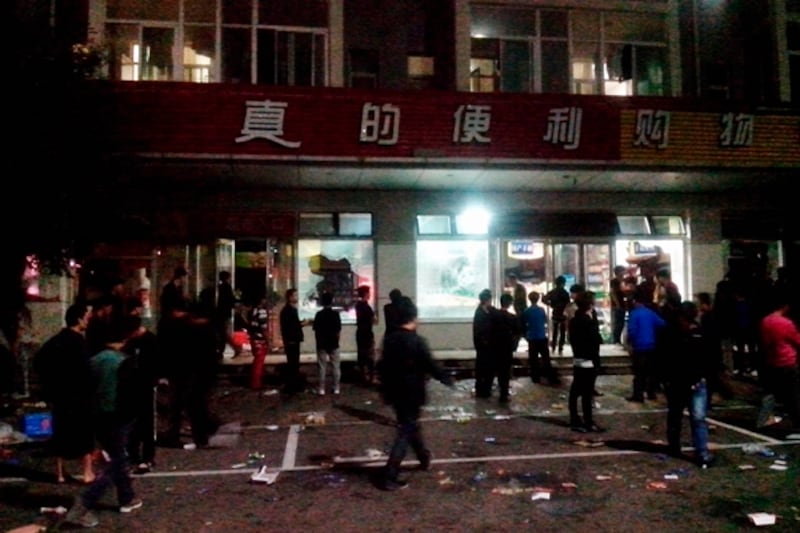
The plant, based in Taiyuan, Shanxi province, is run by Foxconn Technology Group, a major supplier to technology firms such as Apple, Dell, and Hewlett-Packard. Massive chaos erupted early Monday morning as workers damaged property and attacked security guards. With some 79,000 workers employed at the Foxconn factory, the company is a massive campus filled with assembly lines, cafeterias, and dormitories.
According to photos and video posted online, the scene was not pretty: shattered windows, flipped cars, and packs of young people running aimlessly in the night.

Foxconn Technology Group said in a statement that about 2,000 employees were involved in the riot at a privately managed dormitory and 40 were injured—and a number were arrested. The factory closed to give workers time to calm down, while union representatives were in discussions with employees to find out more about the cause of the riot. “The cause of this dispute is under investigation by local authorities and we are working closely with them in this process, but it appears not to have been work-related,” Foxconn said in the statement. Foxconn declined to comment on whether the plant produces parts for the iPhone 5, but labor-rights groups say the new phone is indeed being at least partly produced there.
On Wednesday, the day the plant reopened, a man who said he works at the plant posted a long diatribe online disputing Foxconn’s claims of the incident and the number of people involved while venting his anger over the harsh treatment employees face there on a daily basis.
According to the worker, the incident started when 10 workers from different provinces began fighting, but the anger boiled over when security guards arrived and stabbed an employee, leading to mass rioting.
“Incidents in which guards beat up workers at Foxconn Taiyuan frequently occur, and the methods used are brutal,” the worker said. “In Foxconn Taiyuan, the guards have been the common enemy of all workers from early on. Every worker resents them. However, the company turned a blind eye on such issues, disregarding basic respect towards workers. It is just a matter of time until such eruption of emotions occurs.”
Despite Foxconn’s efforts to distance itself from the riot, the worker places the blame squarely on the company, which employs 1.1 million people in China. “Therefore, the culprit of this 10,000-worker riot at Foxconn Taiyuan is Foxconn itself,” he said. “No matter how moving the words of Foxconn’s spokesperson, none of it can bury the truth of this incident.”
Reached for comment, Apple referred queries to Foxconn while Foxconn refused to give more information about the incident. The conflicting accounts highlight the lack of transparency at one of China’s biggest employers and the dependency of American companies on a Chinese manufacturer with a tarnished record on labor issues.
According to the Hong Kong–based human-rights agency China Labor Bulletin, riots are not uncommon at Chinese factories. “This one is based on long-simmering resentment,” said CLB spokesman Geoffrey Crothall. “The fact is that security guards at Foxconn are seen as management's goons, so this conflict erupts.”
Despite the masses of workers willing to toil in Foxconn factories, the company has a troubled history. After a wave of suicides among workers in 2010, Foxconn installed “suicide nets” on factory dormitories to prevent other desperate people from jumping to their deaths. The company now requires employees to sign a “no suicide” pact as part of their contract.
The riot in Taiyuan comes at an inopportune moment for Apple, which has sold out of iPhone 5 shipments and has promised to manufacture more in time for its launch in 22 more countries on Friday.
“Demand for iPhone 5 has been incredible and we are working hard to get an iPhone 5 into the hands of every customer who wants one as quickly as possible,” said Tim Cook, Apple’s CEO, according to a triumphant press release about the latest release on Monday.
Much of the despair at the Foxconn factory reportedly comes from monotonous work required to assemble electronics for some of the world’s biggest brands. While Foxconn increased monthly wages in August from about $244 to $283, most workers reportedly must work overtime to save money after paying for room and board.
Earlier this month, the Shanghai Evening Post sent a reporter undercover to work in Foxconn’s Taiyuan plant. While working there, the reporter made friends with several employees who define the country’s ambitious workforce—young, eager, and increasingly frustrated with the brutality and mindlessness they must endure as part of daily life in China.
With the launch of the iPhone 5 just weeks away at the time, the Shanghai Evening Post reported that workers were told “you might feel uncomfortable of how we treat you, but this is all for your own good.” Once they sat down to work, a supervisor said, “This is the new unleashed iPhone 5 back plate, you should be honored having the chance to produce it.”
According to the Shanghai Evening Post, several workers have admitted to falling into depression from their labor. “I’m only here to learn some business as I’ve never been to such a large factory before, but now I feel totally lost and hopeless,” said a 23-year-old worker.
On Wednesday, the Hong Kong–based newspaper Apple Daily reported that Chinese reporters has sneaked into the hospital housing injured Foxconn workers, who claimed that police attacked workers regardless of whether or not they were involved in the riots. The plant is running on a 24-hour work shift to provide spare iPhone 5 parts, according to the paper.
Employees have also reported that their cellphones were confiscated by police, who allegedly deleted sensitive images and video. The Chinese government has been allegedly working hard to censor news of the riot in other ways, including the removal of related images from China’s most popular microblog, Sina Weibo.
China Labor Bulletin is not surprised by the censorship, both within the factory walls and without. “There’s never been transparency with Foxconn,” said Crothall, the organization’s spokesman. And yet, Crothall says, “Every time there’s an incident at Foxconn it certainly refocuses attention on working conditions employees have to endure.”
See more of our coverage in your search results.

Got a tip? Send it to The Daily Beast here.
Unlock a year of full access to The Daily Beast for $35.
Monthly
$1
First month then $5.99/month
Annual
$35
First year then $59.99/year
Premium
$79
First year then $119.99/year
*Substack access provided by the next business day, using your subscription email. Choosing the Premium plan constitutes your permission to share your subscription email with Substack and your agreement to Substack’s Privacy Policy.
Looks like you already have a subscription!
- Account (completed)
- Payment (completed)
- Confirmation (completed)
You're all set!
Thanks for subscribing.
- 1Account
- 2Payment
- 3Confirmation
Sign in or create an account
Register below to read this article for free or subscribe
to unlock unlimited access to The Daily Beast.
Monthly
$1
First month then $5.99/month
Annual
$35
First year then $59.99/year
Premium
$79
First year then $119.99/year
*Substack access provided by the next business day, using your subscription email. Choosing the Premium plan constitutes your permission to share your subscription email with Substack and your agreement to Substack’s Privacy Policy.
Already have an account? Sign In
Looks like you already have a subscription!
- Account (completed)
- Payment (completed)
- Confirmation (completed)
You're all set!
Thanks for subscribing.
- 1Account
- 2Payment
- 3Confirmation