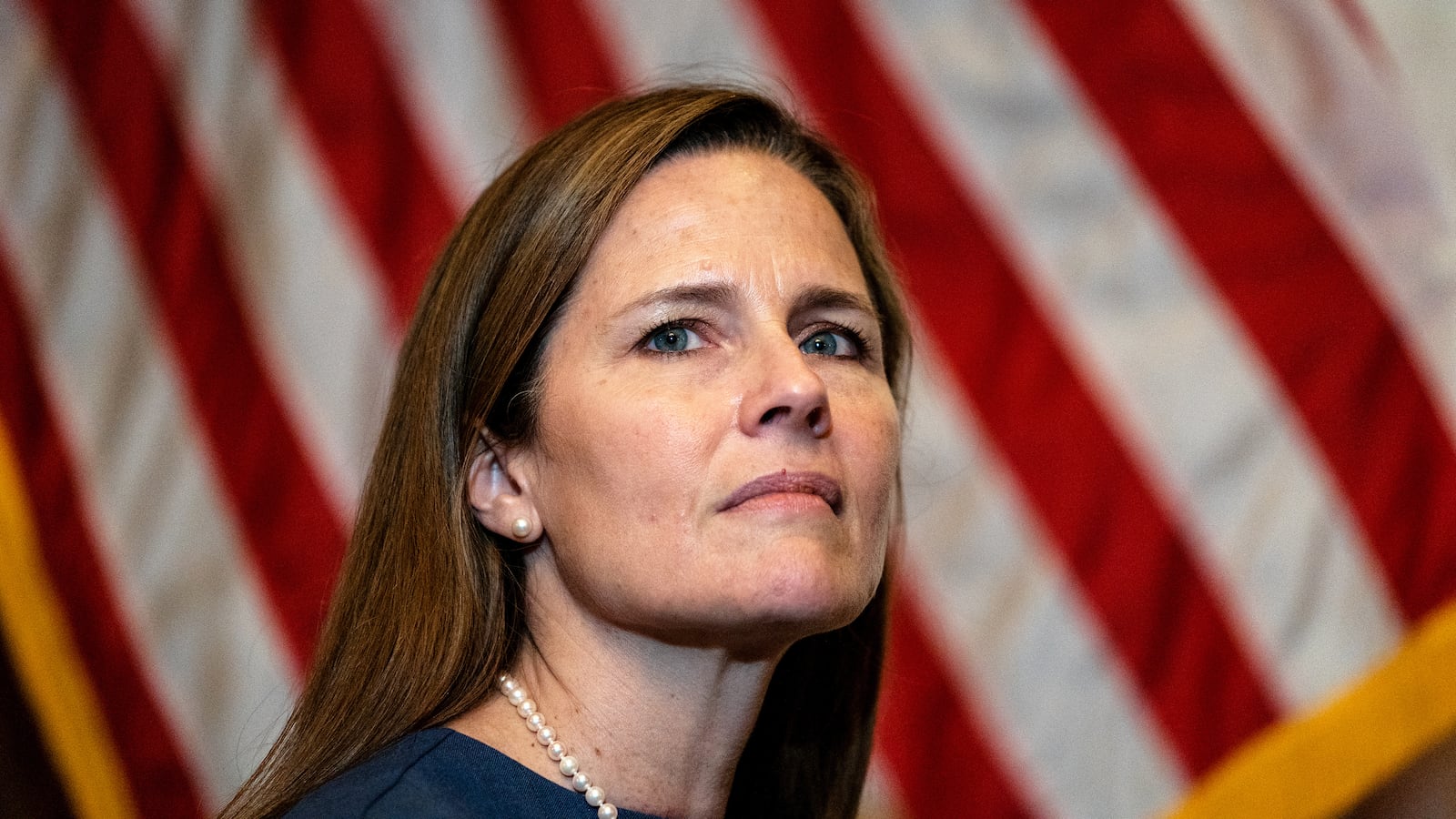
A top legal scholar is sounding the alarm about a “genuinely ominous” signal Justice Amy Coney Barrett quietly included in a Supreme Court ruling.
Barrett added her name to a concurrence last week that suggests she may be leaning toward ruling in favor of the Trump administration in a rash of other cases set to go before the Supreme Court.
That’s according to Steve Vladeck, a Georgetown University Law professor who closely tracks the rulings handed down by the nation’s highest court, which currently boasts three appointees of President Donald Trump and a 6-3 conservative advantage.
Barrett, one of three Trump appointees, has drawn the president’s ire this term by ruling against him on issues such as a foreign aid freeze, birthright citizenship, and tariffs.
However, a detailed analysis by Vladeck on his Substack, One First, says Barrett’s latest action, buried in an otherwise mundane ruling last week, has led him to believe that she is set to be more sympathetic to Trump in future cases.
The ruling in question came in Margolin v. National Association of Immigration Judges.
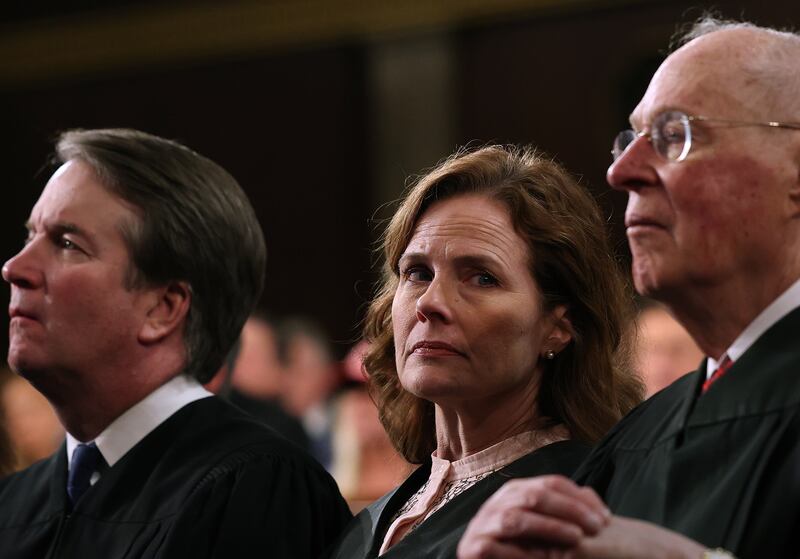
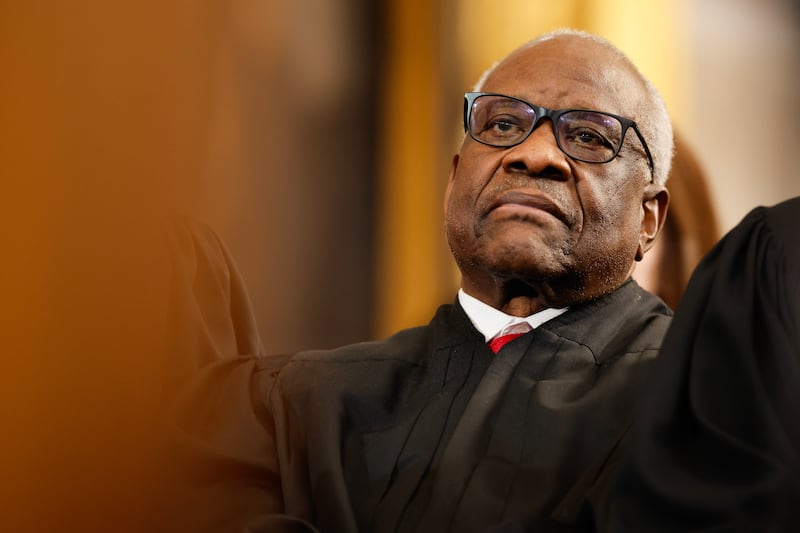
It was a narrow procedural decision that received little press, but Vladeck noticed that Barrett added her name to a concurrence with the Trump-aligned Justice Clarence Thomas, something that he believes may have been strategically included.
Vladeck writes that her concurrence with Thomas means the case could have been decided on its merits and “slammed the courthouse door on the immigration judge’s claims for good.”
He added, “I think Justice Barrett’s willingness to put her name on Justice Thomas’s Margolin concurrence is an important—and, in my view, genuinely ominous—signal for how that whole family of cases is likely to come out.”

Among the cases of a similar nature was the prosecution of Mahmoud Khalil, a lawful resident that the Trump administration sought to deport over political statements he made at Columbia University regarding Israel and Palestine.
Barrett’s alignment with the court’s arguably most conservative justice is especially noteworthy because her vote is typically the decisive one in these similar cases, Vladeck said.
“Her visible choice to join Thomas here could end up being a very big deal,” he wrote.
Vladeck said Barrett has indicated she no longer holds a split-the-difference position, as she did in National Institutes of Health v. American Public Health Association last summer.
Instead, her co-signing with Thomas’ opinion “is a full-throated endorsement of channeling even when the channel does not work. And it tells us something about how she may approach the Khalil-style cases and the broader grant-termination disputes when they arrive on the merits docket—cases in which her vote, as in NIH, is likely to be the decisive one.”
Vladeck described Thomas as holding “the most aggressive pro-channeling position available,” which Barrett has now hinted at also holding.
“I hope I am reading too much into it,” Vladeck wrote. “I worry mightily that I’m not.”