Plus: Check out Book Beast, for more news on hot titles, authors and excerpts from the latest books.
Happiness and the Historian
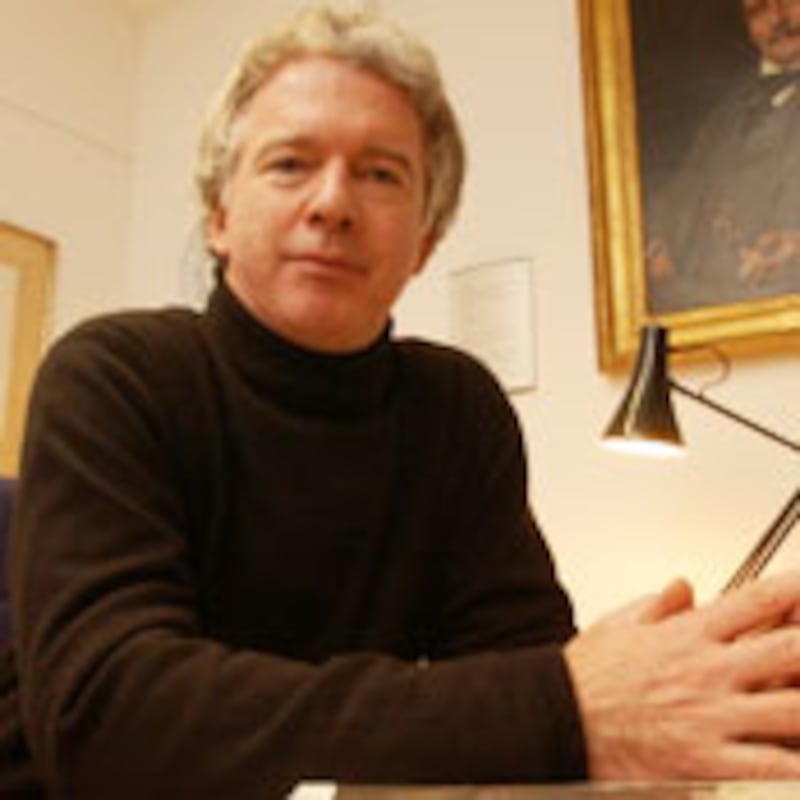
The world's greatest historian of early modern England, Sir Keith Thomas, has earned that accolade from just two books in 50 years, Religion and the Decline of Magic (1971) and Man and the Natural World (1983). So the arrival from Oxford University Press of a third— The Ends of Life—is already a big event. Its subject is personal fulfillment: What was it that made people happy? His answers, as described in the Times Literary Supplement this week, are inevitably seen as both a commentary on his own life and a challenge to the lives of his readers. Hard work was one of the routes to happiness recommended by our forefathers. Thomas's own method of work, the meticulous amassing of detail into a structured mosaic, links the historian securely to his subject. Thomas’s avowed intent “to read everything” has resulted in a book that should carry a “health warning" to fellow writers: For all his small output, "trying to emulate Thomas’s industry might endanger your life.” He keeps his notes on paper scraps in envelopes labeled "Clothes" or "Dirt." He may be the last great historian of the pre-digital age.
A Novel View of Ireland
The novel attracting passionate admirers in London right now is also the end of a long wait. Josephine Hart, best known for her 1991 novel, Damage, and Louis Malle's film starring Jeremy Irons, has just produced The Truth About Love, her sixth novel and the first in eight years. It stands proud in the tradition of exiles' perspectives on the history of Ireland. The opening pages, a monologue of fractured syntax by a boy who has accidentally blown himself up in a bomb blast, are praised in the TLS as “a terrible confluence” of all the book's themes—that there are many kinds of love, none of them any fun at all, all deadly serious and needing to be endured.
Hacks Vs. Franco
As newspapers and their critics consider the war coverage of today, a book by the leading historian of Franco's Spain, Paul Preston, looks back to the Spanish Civil War and the difficult compromises of foreign correspondents who witnessed the march of fascism and Madrid’s long resistance. The TLS praises a cool account of when “reasons of state outweighed any consideration of journalistic truth.” One young poet in Spain at the time was Stephen Spender, whose centenary is celebrated this year. In the TLS Commentary section, David Aberbach unearths roots in Jewish culture of a writer who was “peripherally in the thick of things”.
Sir Peter Stothard is Editor of the Times Literary Supplement, the international journal of books and ideas. Between 1992 and 2002, he was editor of The Times and in 2003 he wrote, Thirty Days, a fly-on-the-wall account of Tony Blair in Downing Street during the Iraq War.