A Mountain of Crumbs: A Memoirby Elena Gorokhova
A rebellious young Soviet citizen recounts her eventual journey to America.
First-time author Elena Gorokhova recounts her life story that began in what is now St. Petersburg, Russia, where she grew up during a transitional period in the former Soviet country’s history—she was born too late to participate in the Bolshevik revolution, but too early to see the Berlin Wall crumble to the ground. As her homeland collapsed as well, humiliated by its missteps after World War II, the young Gorokhova struggles to come to terms with the truths of becoming in adult in a country whose politics are muddied with lies, in her debut effort A Mountain of Crumbs. It was that environment that both oppressed and inspired the teenage girl to dive headfirst into English, a language and accompanying world largely veiled by the Soviet borders that held her. With a captivating, firsthand voice on the world that made her the Russian-American she is today, Gorokhova explains how she both came to terms with and escaped the life she was born into “with spare, lyrical beauty and wry humor,” as More magazine reviews of her memoir.
The Hidden Brain: How Our Unconscious Minds Elect Presidents, Control Markets, Wage Wars, and Save Our Livesby Shankar Vedantam
A columnist explains how our biases dictate our behavior without us even knowing it.
Freud may have been the first to bring the unconscious to our attention, but the latest work from longtime Washington Post columnist Shankar Vedantam reminds us just how pervasive The Hidden Brain is. The Department of Human Behavior author argues that though much of our brain functions, emotional responses, and cognitive processes occur outside of our consciousness, they collectively dictate how we behave. From crisis response to racism to murder incentive to sexism to sympathy, Vedantam pulls from the latest research to explain our natural biases and how they dictate our day-to-day lives. What it comes down to, the author concludes, is imitation in social situations—our hidden ability to sync our behavior with that of the group at large. Vedantam’s theory is particularly gripping when he parallels different responses to emergency situations. “The crisis vignettes are skillfully spun out, Grisham-style,” The New York Times ’ Susan Pinker reviews in what she deems to be an “entertaining romp through covert influences on human behavior.”
I.O.U.: Why Everyone Owes Everyone and No One Can Payby John Lanchester
An engaging and incisive look at the historical steps that lead to the Great Recession.
There’s no shortage of books on the Great Recession these days, but few will be able to match John Lanchester for his “literate” and “wickedly funny” take on the financial fiasco, The New York Times says. Tracing the crisis’s roots to the fall of the Berlin Wall, Lanchester methodically explains the complicated financial instruments that reckless bankers used to gamble away the country’s economy “with mathematical rigor.” But he’s also “guided as much by perception and feel,” the Times says, and his history lesson refers to everything from Annie Hall to Hemingway. The book skewers bankers who pried money from the poor through predatory lending, and then pooled the cash and resold it, ultimately passing the risk on to taxpayers. It was “a 100 percent pure form of socialism for the rich,” Lanchester writes. Privatized risk, socialized losses: “That is literally nobody’s idea of how the world is supposed to work,” he says. But if it all makes you feel a bit depressed, just grab a copy of I.O.U., the Times says—“Good humor and good company will be the things that’ll get us through.”
Map of the Invisible World: A Novelby Tash Aw
The parallel story of two brothers from Indonesia pulled apart by a civil war.
A teenage boy named Adam searches for his adopted Dutch father, who was dragged away by soldiers from their remote island home in Indonesia, as civil war looms in Tash Aw’s Map of the Invisible World. His elder brother was adopted earlier by a wealthy family in Kuala Lumpur, and their lives are narrated in parallel. Adam finds an anthropologist who knew his father, and together they search for him with the help of a CIA agent. Meanwhile, a radicalized university student plans to kill the president. “Aw's prose can be powerful and mesmerizing in its sense of place… and psychological acuity,” The Guardian says. It is the “the traumatized brothers' enduring bond, in their relationship with the sea or with their own fragmented memories that the novel is at its most haunting and memorable.”
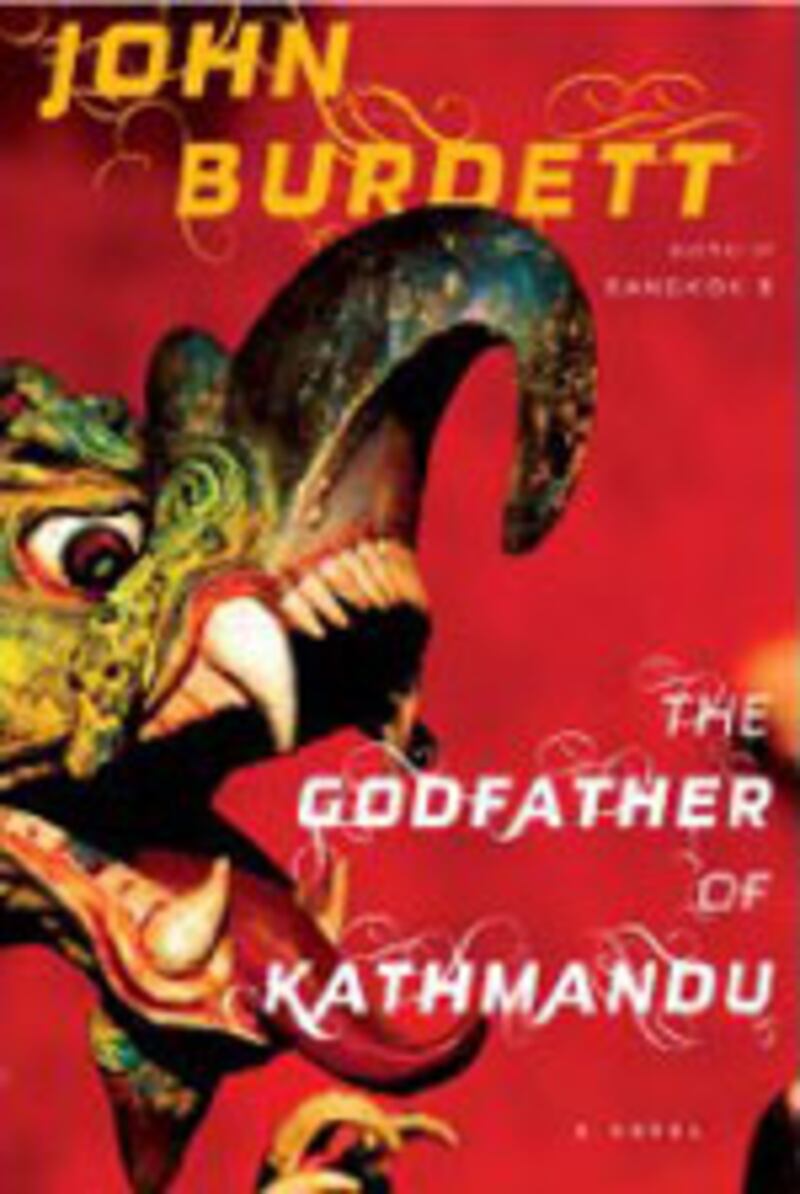
The Godfather of Kathmanduby John Burdett
John Burdett’s inimitable Royal Thai Police detective attempts to solve the crime of his career.
John Burdett has squeezed several books from the rich material offered by his home city, Bangkok, and despite its name, The Godfather of Kathmandu offers plenty for Burdett fans hungry for more tastes, sounds, and smells of the Thai capital. "Godfather" is used intentionally; Mario Puzo’s classic novel serves as a reference point for Burdett’s—but this godfather has no qualms about dealing in the drug trade. The protagonist, a police chief tempted by corruption, is the son of a Thai mother and American father, giving him the perspective of both the “consummate insider and curious outsider,” says The San Francisco Chronicle. That, with the second-person narrative, means explanations of Bangkok’s cultural oddities and customs seem natural, never didactic. “And in the end, it is this liminal quality of the protagonist, more than Burdett's undoubted skills as a mystery writer, that the reader will carry away from this latest book as well.”