
The Martin Amis Question
Almost 40 years on from the first Martin Amis novel, a new one is still a Great British event. Critics argue whether the author of Money and The Rachel Papers is not better employed now as superior journalist or “public intellectual.” But since the former designation hardly matches his achievement and the latter is a term still met with British suspicion, the arrival of The Pregnant Widow, a novel set in Italy in the summer of 1970, has attracted much comment.
As Bharat Tandon recounts in this week's TLS, Amis has been candid in interviews about the novel’s autobiographical genesis; but he has also stressed how the work grew beyond his original plans. A more profitable way of reading the novel, Tandon argues, would be as “a long critical dialogue with the works that Amis produced just after the period he represents—most notably The Rachel Papers (1973) and Dead Babies (1975), especially given the fact that both Dead Babies and The Pregnant Widow feature characters called ‘Little Keith.’ It is as if the early novels scatological comedy of sexual misdemeanor were being interrogated by the voice of experience (and the voice of Experience).”
At the beginning of The Pregnant Widow Keith finds himself spending his university vacation in an Italian castle, mugging up on the history of the English novel while finding his affections, and his definitively male gaze, wandering between his on-off girlfriend Lily and the aristocratic Scheherazade (“Lily: 5’5”, 34-25-34. Scheherazade: 5’10”, 37-23-33”); the former is ostensibly more street-smart about the impending sexual revolution, the latter a reformed do-gooder only beginning to become sexually aware in the new style. In a plot pitched somewhere between a Shakespeare comedy and an Iris Murdoch novel, Amis depicts his characters not only occasionally groping one another, but also groping awkwardly for a stable understanding of what is expected of them, at a time when values are in flux, but where the new rules are not yet set down.
For the writer of any historical novel, there is the danger that nostalgia can tidy the pain and inconveniences of the past into an unblemished object of longing, while fictional “Whig histories” shrink it into an unsuccessful but necessary rehearsal for the glorious present. Amis steers clear of both temptations: as befits a novel structured around a series of allusions to canonical 19th-century English fiction, The Pregnant Widow shares with George Eliot and Thomas Hardy a sense for how historical novels can also be historiographical ones. Past and present, 1970 and 2009, are repeatedly measured against one another, in order to answer the unspoken question that runs throughout Amis’ narrative: just how did we get here from there? Unfortunately, Tandon says (and there is almost always an “unfortunately” in critical responses to Amis' recent fiction) there are points in The Pregnant Widow where the sound of the question threatens to drown out the conversations around it.
Who’s Who of Ireland?
The definition of Irishness is notoriously contested, which is perhaps the reason why the Irish have had to wait so long for a dictionary of national biography. Individual and rather scrappy volumes have long circulated. But, as Roy Foster explains this week, the nine new volumes from the Royal Irish Academy offer a fest of Irish lives for anyone prepared to pay £775 for the privilege—among many a scholarly disentangling of different Marianus Scottuses and pseudonymous poets. It is safe to say, he writes, that it will transform the world of Irish scholarship. There is much space given to politicians, including many British ones who held office across the Irish Sea. There is also much space for writers and ranters, both British and Irish. But there is no room for W. E. Gladstone, the man who devoted more great words to Ireland than most: Never having held a specific office there, he misses the cut.
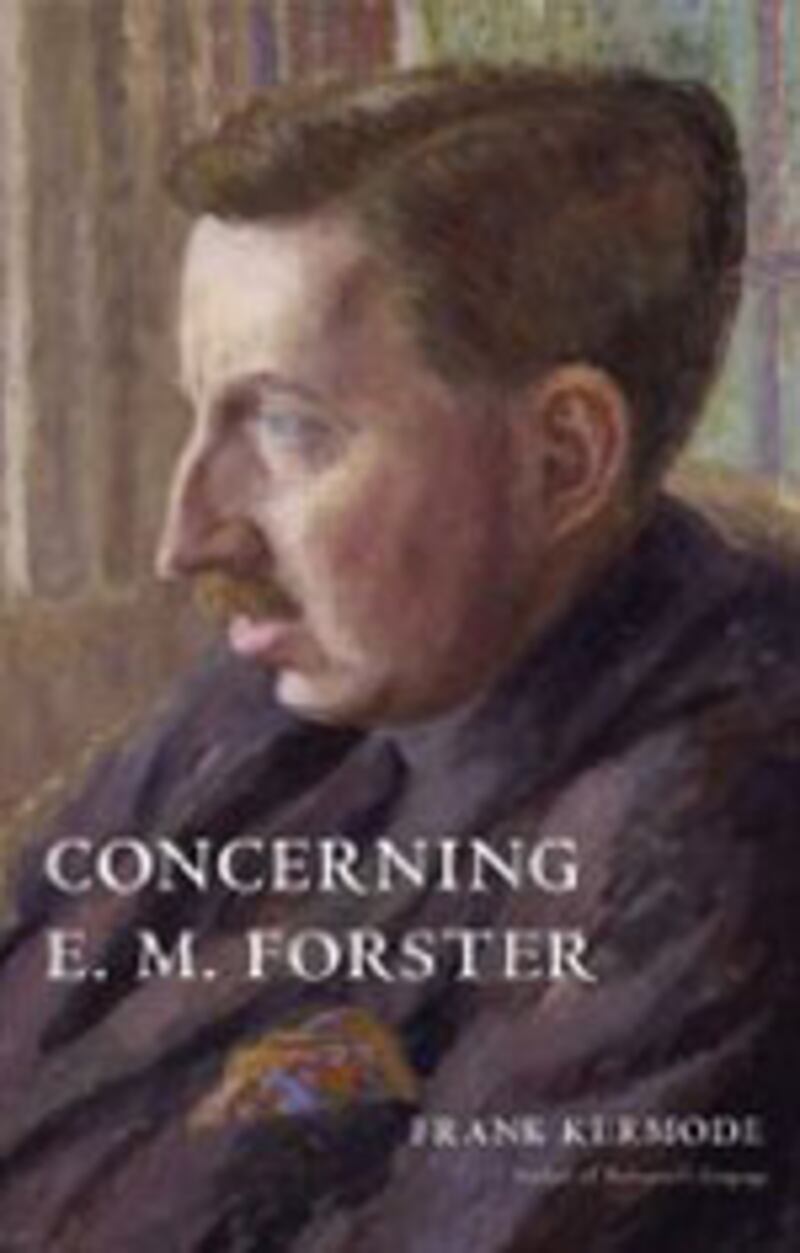
England’s Great Man of Letters
The critic Sir Frank Kermode, now 90, is a link to an earlier more confident era in his craft. For Dinah Birch in the TLS, reflecting on his career through a thoughtful new study of E. M. Forster and Bury Place Papers, a selection of some of his best essays, is a sobering business for those who share his commitment to literature. His life of writing books and articles that unapologetically address literary greatness, with no apparent concern for interdisciplinarity, grant capture, or collaborative projects, and no anxiety about the potential impact of his work on the economic welfare of the nation, might seem to represent a lost intellectual freedom. And yet, she reminds us, Kermode’s passage has not been an easy one, and succeeding generations have been spared some of the conflicts he has had to endure, not least in six years of wartime service in the Royal Navy. A young academic’s fear of being blown out of the water by a departmental research review is not a trivial matter, but Kermode and his fellow sailors had to face a rather more direct kind of threat.
Peter Stothard is the author of Thirty Days, a Downing Street diary of his time with British Prime Minister Tony Blair during the Iraq war and On the Spartacus Road: A Spectacular Journey Through Ancient Italy which will be published in January.