Stalin’s Mysteries
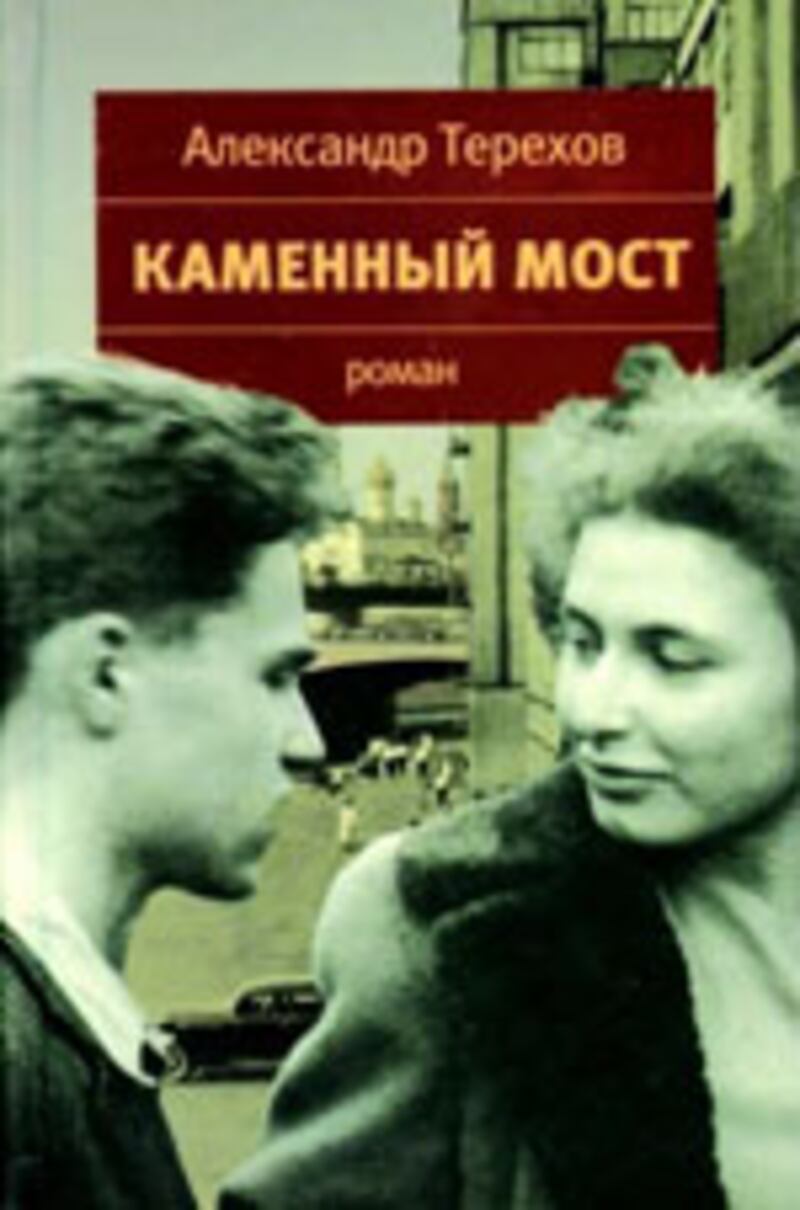
“Whatever was wrong with the Stalinist state”, writes Gregory Freidin in the TLS, reviewing last year’s most talked about work of fiction in Russia, The Stone Bridge by Alexander Terekhov, “it was saturated with a sense of mission.” That is what both the novel’s protagonist and its author find lacking in post-communist Russia today. The novel takes its title from the site in Moscow of the historical murder mystery at its center. Sometime in the 1990s, while working as a reporter on Russia’s investigative tabloid, Top Secret, Terekhov came across the “Case of the Wolf Cubs,” as the murder-suicide of two teenagers on the Great Stone Bridge on June 3, 1943, came to be known. The 15-year-old only son of Stalin’s minister of aviation, Volodya Shakhurin, had shot and killed Nina Umansky, the 15-year-old only daughter of a Soviet diplomat who had just been appointed ambassador to Mexico. Nina had been due to accompany her father to his new post the following day. Volodya, who was in love with her, asked her to stay. When she refused, he shot her and then turned the gun on himself. The weapon belonged to a friend who was with them on the bridge—Vano Mikoyan, the son of Anastas Mikoyan, one of Stalin’s closest comrades-in-arms and a member of the wartime Supreme Military Council.
The investigation quickly took another turn on the discovery of Volodya’s diary, which contained details of a Nazi-inspired secret society at the elite school the three teenagers attended, “The Fourth Empire,” named by analogy with the Third Reich. All, including two of Mikoyan’s sons, were from prominent families; they gave themselves Nazi titles and fantasized about seizing power from their fathers once the war came to an end. “Wolf cubs,” Stalin is said to have remarked on hearing the report, “they must be punished.” They were: After six months of interrogation in the Lubyanka Prison and a signed confession, all were sentenced to a year in exile. What however, reflects Terkhov, if Vano Mikoyan was a “third man,” the one who pulled the trigger and killed both Volodya and Nina? When Nina's father died in a plane crash, was it an accident or, rather, an American assassination of a man suspected of being a conduit for Soviet nuclear spies? Or was it perhaps a “special operation” carried out by Stalin's agents as a prelude to the post-war purge of prominent Soviet Jews? These are some of the questions that propel the narrative, often underpinned by the texts of official documents and a parade of historical figures, mostly dead but some still alive, strutting about under their real names. And yet, the novel itself, Freidin decides, is decidedly about something else. Instead of the standard Russian problems—What is to be done? Who is to blame?—Terekhov’s novel raises postmodern (or post-Soviet) questions: Who am I?
Byron’s Favorite Clown
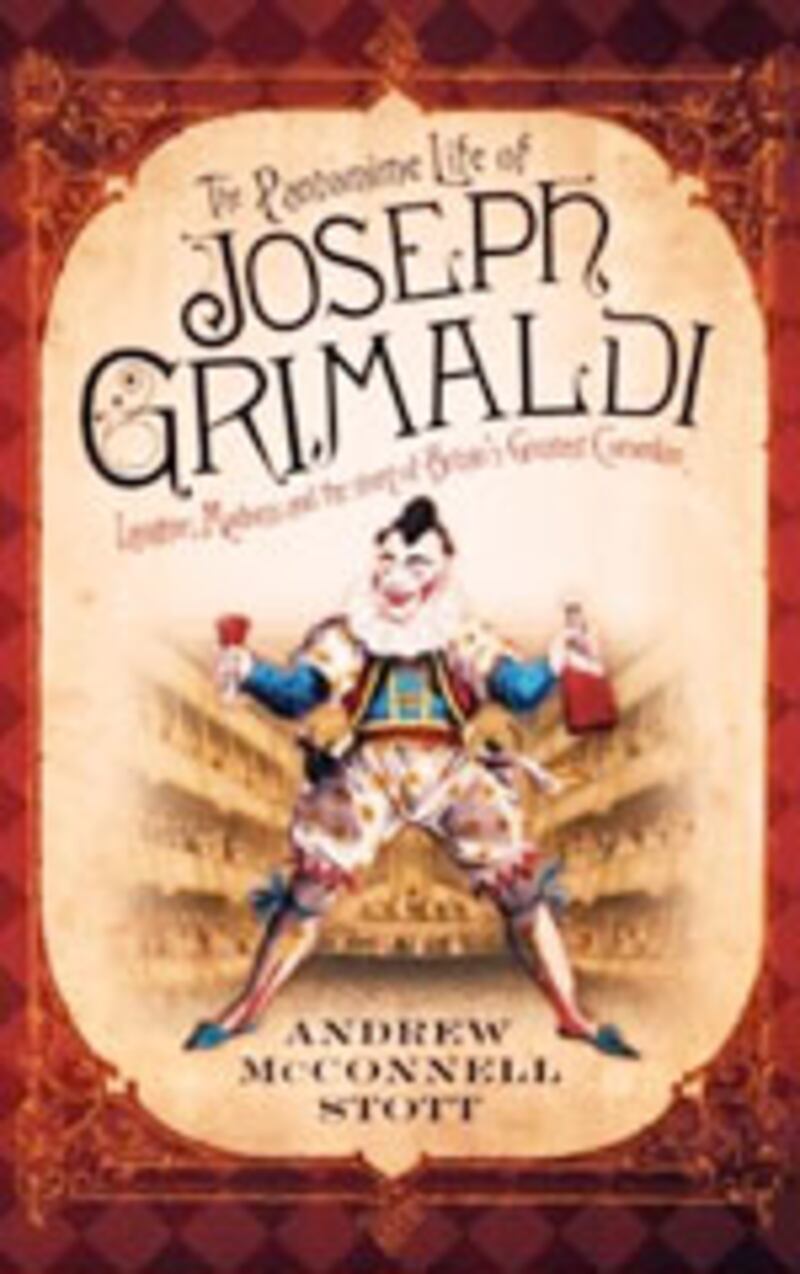
What did Lord Byron see in the clown Joseph Grimaldi? The friendship between poet and performance artist is just one unlikely aspect of a life which is still celebrated each year with a memorial service conducted by the Clowns’ Chaplain at Holy Trinity in Dalston, London. “Grimaldi was pantomime,” writes Andrew McConnell Scott in his biography, The Pantomime Life of Joseph Grimaldi. The star comic turn at Covent Garden, Drury Lane, and Sadler’s Wells in the early decades of the 19th century, Grimaldi, like many comedians, traded in humor that was laced with violence and cruelty. To invite laughter and mockery is often the refuge of wounded and uncertain souls, in the words of the TLS critic, Patrick O’Connor, and this was surely what drew Byron to the clown. They would sometimes spend the afternoon together, and then Byron would stand in the wings of the theater awaiting the conclusion of the performance, so that they might continue their conversation. The Grimaldi story is that of five generations, beginning with Joseph’s great-grandfather, John Baptist, a dancer, comedian and dentist—“pursuits that were far from incompatible”: Scott cites a Parisian tooth-puller on the Pont-Neuf who entertained the crowd with jokes and a pet monkey while he performed the operations.
Zadie Smith’s Classical Anxieties
One of the most moving pieces in Changing My Mind, a collection of Zadie Smith’s essays, lectures, and journalism, is her funny and frank testament to her father, a fan of John Cleese's Fawlty Towers who died, like fellow TV comedian Tommy Cooper, halfway through a joke. Smith borrows an old comic formula to tell the story of class sclerosis that held her father back from grammar school because (“wait, it gets better”) his parents couldn’t afford the uniform. Growing up in the multi-ethnic pool of Willesden, educated at Cambridge, and then graduating to become a big fish in the literary world (“a puddle”, she confides in one of her many engaging, autobiographical asides), it is small wonder that Smith’s own relish for “Hancock, Fawlty, Partridge, Brent... all clinging to the middle rungs of England’s class ladders” comes with an acute perception of the status anxiety that drives British comedy. This is also a major fault line in British cultural life. Small wonder, too, writes Caroline Miller in the TLS, that “fluency” and “fluidity” are the most highly praised literary qualities in this collection in which there are perceptive articles on a pantheon of cultural idols, from Katharine Hepburn and Barack Obama to Bernard Shaw, David Foster Wallace, Vladimir Nabokov, George Eliot ,and William Shakespeare. When her bestselling first novel White Teeth was published in 2000, some critics heralded it as a poster for a post-racial society. In her lecture on Obama’s ability to speak in tongues, she adjudicates between the appeal and the limits of this ideal and its opposite, the authenticity politics of a black consciousness that demands you “keep it real,” and is hostile to Eliza Doolittles who alter their vocabulary and their vowel sounds.
Plus: Check out Book Beast, for more news on hot titles and authors and excerpts from the latest books.
Peter Stothard's latest book is On the Spartacus Road: A Spectacular Journey Through Ancient Italy. He is also the author of Thirty Days, a Downing Street diary of his time with British Prime Minister Tony Blair during the Iraq war.