Bitcoin Purchasers Should Just Keep Their Dollars Instead
Forget Bitcoin. You’ve already got the currency that’s maintained its value over last several years, writes Daniel Gross.
Natacha Pisarenko/AP
Bitcoin—the virtual, digital, hard-to-explain currency—is getting a lot of ink these days. See my colleague Winston Ross’s great piece on his fitful efforts to buy and use Bitcoins here. What’s motivating the widespread interest in Bitcoin? Well, it’s partially a sign of continued interest by early adapters in new modes of commerce. We’re in the midst of developing revolutionary new payment and banking systems—Square, depositing checks via iPhone, etc.—and creating an entirely new currency can be seen as just another step in the evolution of money.
But the Bitcoin is also partially a symptom of the global fear about currency debasement. The combination of rolling financial crises and slow growth in developed economies has spurred central banks in the United States, Europe, and Japan to conjure up new money from thin air at a record pace. And since no major economy pegs its currency to gold, many people fear that the supply of new money would cause the value of existing currency to fall. Gold bugs and adherents of the Austrian school of economics have been warning for years about the impending, inevitable fall in value of currencies like the dollar. This fear is one of the animating spirits of David Stockman’s pessimistic worldview.
People worried about the value of their main store of value, currency, have been looking for alternatives in recent years: gold, silver, art, real estate, hard assets like timberland and farm acreage in Iowa. Bitcoin is yet another alternate store of value. But the system through which Bitcoins are created, stored, traded, and used is very young, apparently susceptible to hacking, and unproven. It’s likely that many of those purchasing Bitcoins today will wind up suffering losses.
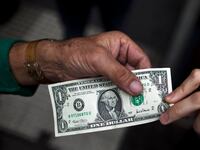
So I have some advice for people who are looking for a currency that has enjoyed relative stability and strength in recent years, that you can get from pretty much any ATM, and that is widely accepted by merchants and service providers. It’s called the U.S. dollar. Maybe you’ve seen it.
Sure, the Federal Reserve under Ben Bernanke has significantly expanded its balance sheet—and hence the supply of dollars—in recent years. And it continues to do so. Under the current round of quantitative easing, the Fed has an open-ended commitment to purchase up to $85 billion of securities per month. But everything in life is comparative. Over the past few years, the U.S. economy has performed better than virtually all the other developed economies. And the dollar has held up quite well, despite the expanding money supply, concerns over growth, and political gridlock.
Below, I’ve posted a chart of the trade-weighted dollar since the beginning of 2008. The trade-weighted dollar is a measure of the value of the U.S. currency against the currencies of our main trading partners. Effectively, it tells you how far the dollar can go when buying the basket of imports that helps fuel our economy and makes American consumers happy. What does it show? The trade-weighted dollar is worth almost exactly what it was three years ago. It’s also worth more than it was five years ago. It has fluctuated, but generally within a relatively narrow band—from up 5 percent to down 5 percent. And you don’t need a series of explainers to understand how the dollar works.

See more of our coverage in your search results.

Got a tip? Send it to The Daily Beast here.
Register below to read this article for free or subscribe
to unlock unlimited access to The Daily Beast.
Monthly
$1
First month then $5.99/month
Annual
$35
First year then $59.99/year
Premium
$79
First year then $119.99/year
*Substack access provided by the next business day, using your subscription email. Choosing the Premium plan constitutes your permission to share your subscription email with Substack and your agreement to Substack’s Privacy Policy.
Already have an account? Sign In
Looks like you already have a subscription!
You're all set!
Thanks for subscribing.