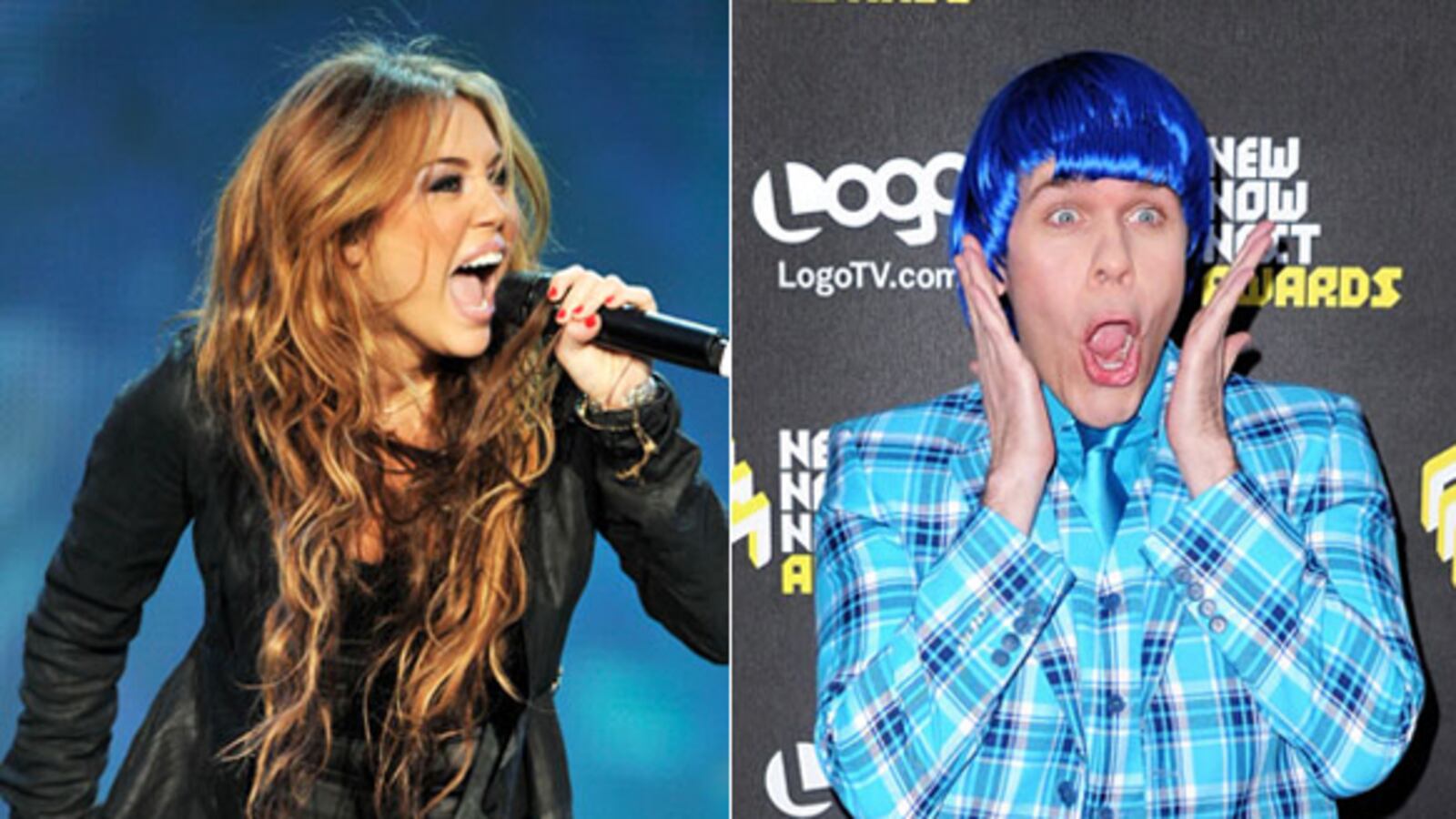
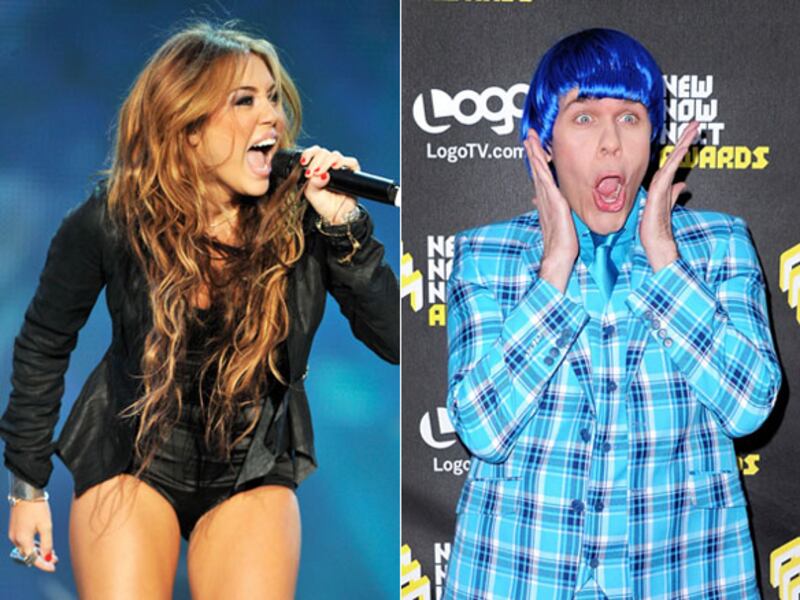
Although Miley Cyrus has had her share of photo scandals, the self-proclaimed "Queen of All Media" Perez Hilton may have gone too far when he tweeted a link to what looked like an "upskirt" photo of the Disney star sans underwear on Sunday. Since the 17-year-old Cyrus is not legally an adult, Hilton could face charges of intent to distribute child pornography. Hilton removed the link, instead posting a picture showing that Miley was fully clothed and claiming the image was Photoshopped. But according to a legal analyst at Salon, underwear or not, he can still be charged as a sex offender.
Getty Images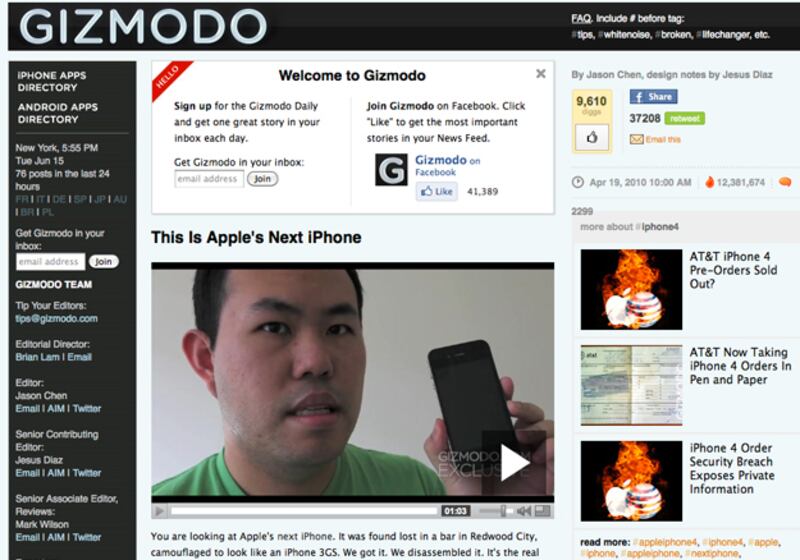
Gizmodo journalist Jason Chen allegedly paid $5,000 for a secret prototype of a fourth-generation iPhone lost in a bar in March. The site's parent, Gawker, insisted that, in doing so, Chen was protected by California's press shield laws. Apple CEO Steve Jobs, however, had a different take. Incensed by the event, he rattled off a litany of charges against Gawker. "This is a story that's amazing," he told Reuters. "It's got theft, it's got buying stolen property, it's got extortion. I'm sure there's some sex in there." In April, Gawker's lawyer agreed to let a special master—a third party appointed by the court— search for evidence on Chen's computer hard drive that might be relevant to the case.
gizmodo.com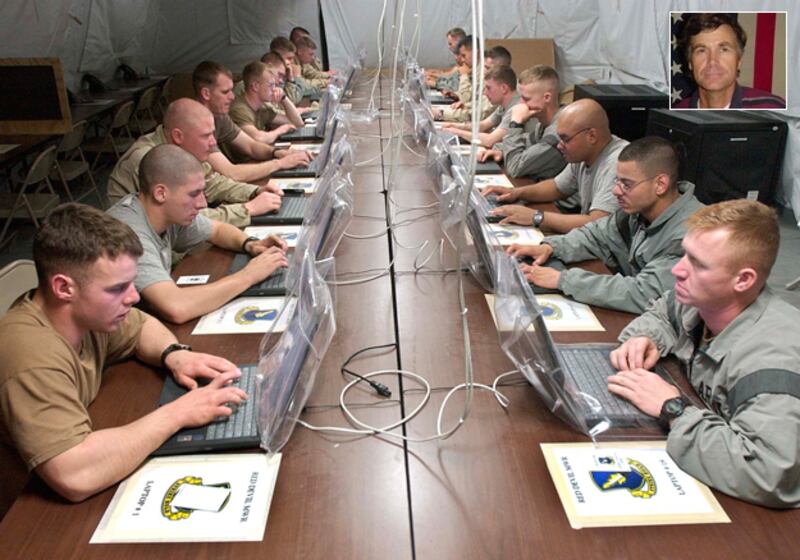
In August 2005, Leonard Clark, an Arizona National Guardsman stationed in Iraq, was demoted for venting anti-war opinions on his blog. Clark, at the time a 40-year-old kindergarten teacher, said officials went too far when they accused him of putting American troops in danger and making the charges public. Clark and his supporters said his blog was simply a diary, truthfully chronicling his experience as a solider in Iraq. Nevertheless, Clark was demoted one rank, to private first class. He was then fined and charged with failure to obey an order under the Uniform Code of Military justice and two counts of reckless endangerment.
Julie Jacobson / AP Photo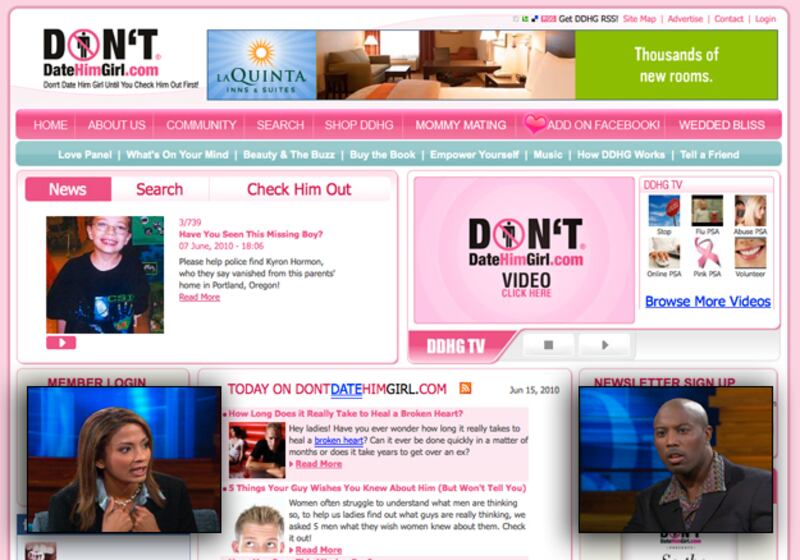
Pittsburgh defense lawyer Todd Hollis filed a defamation suit against the operator of DontDateHimGirl.com in July 2006 for lambasting him and his " scoundrelly" ways, The Wall Street Journal reported. On the dating site, on which women gossip about men they supposedly dated, there were claims the 38-year-old lawyer had herpes, was a slob, and was gay. Hollis denied the trifecta of claims, but the site's operator, Tasha Joseph, and her lawyers got the case dismissed under Section 230 of the Communications Decency Act, which grants immunity to website operators if the content is created by third parties.
dontdatehimgirl.com; The Dr. Phil Show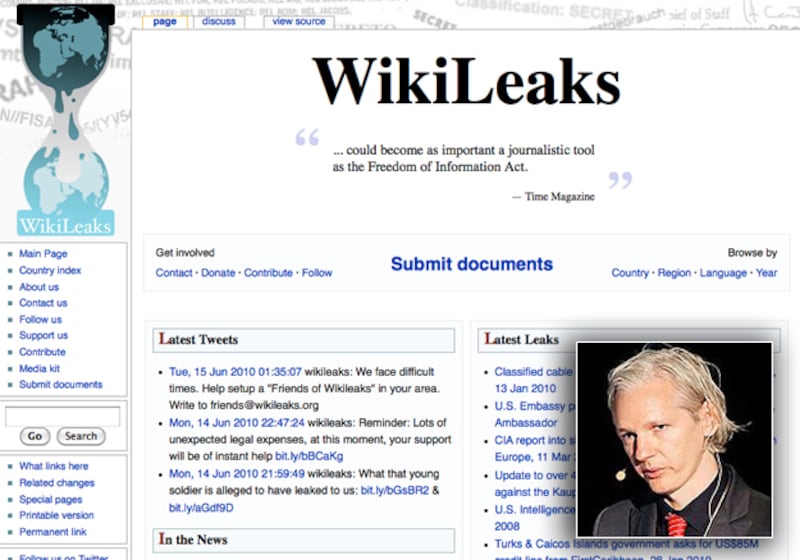
Wikileaks, created as a whistleblower site without sources, created a firestorm in April when it posted a video of an Army helicopter's 2007 assault on two Reuters journalists and a civilian, and the site's founder, Julian Assange, found himself under fire from all over, including Stephen Colbert. Army Spc. Bradley Manning was arrested for leaking the video, and the Pentagon has reportedly begun a search for Assange. Wikileaks has come under attack in the past: In 2008, Swiss-based Bank Julius Baer filed a lawsuit in U.S. District Court against the site, and a judge ordered the site shut down. The ACLU, the Electronic Freedom Foundation, and the Reporters Committee for Freedom of the Press—a coalition of journalists from all forms of media—protested the injunction, and the same judge lifted the injunction shortly after.

Former model Liskula Cohen was not pleased with the anonymous creator of the now bygone blog Skanks in NYC, whose sole purpose, she claimed, was to defame her, The New York Post reported. In August 2008, a judge ruled Cohen's favor, maintaining that she was entitled to know the identity of the creator of the blog. Judge Joan Madden said that "the thrust of the blog is that [Cohen] is a sexually promiscuous woman" and that Cohen was thus entitled to file for defamation. Still, unmasked blogger Rosemary Port claimed the whole "circus," as she referred to the incident to the New York Daily News, did more harm than good. "Before her suit, there were probably two hits on my Web site: One from me looking at it, and one from her looking at it," the 29-year-old Fashion Institute of Technology student said. "That was before it became a spectacle. I feel my right to privacy has been violated."
Beckwith, Splashnews / Newscom; Brigitte Stelzer, Splash News / Newscom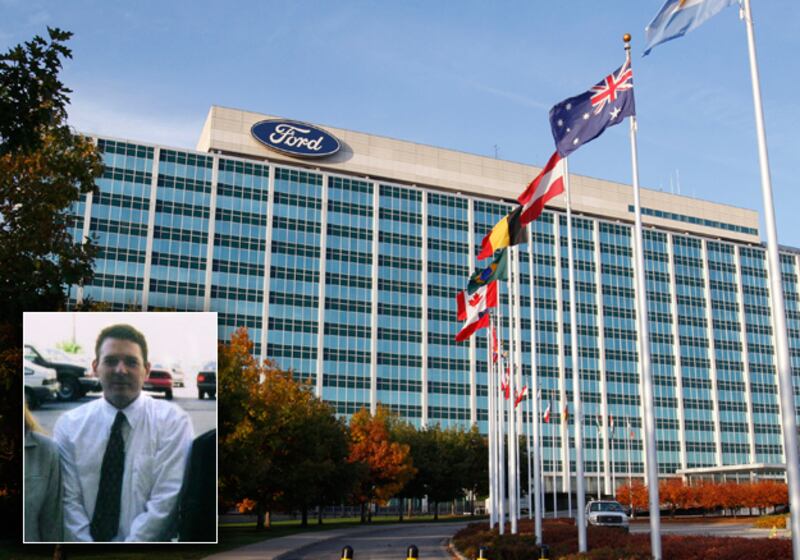
Robert Lane began publishing a blog about Ford Motor Company in 1998, FordWorldNews.com (later changed to BlueOvalNews.com), with the self-proclaimed goal of giving more in-depth coverage of the company and operate as a type of on-line trade magazine. Things turned sour, however, in July 1999, when the blog broke news of the 1999 Ford Cobra Mustang's problems from internal memos, and Ford threatened legal action unless the article was pulled. Lane refused to comply, and in August, a judge issued a temporary restraining order against the site and Ford threatened to have the site permanently shut down. In September 1999, federal judge Nancy Edmonds ruled in favor of BlueOvalNews.com, setting a precedent that allowed internal documents to be posted online. Two days after the ruling, Ford recalled the 1999 Cobra Mustang. Although Ford threatened continued legal action against BlueOvalNews.com, the two sides eventually formed a truce and in May 2005, they announced they would be working in partnership to produce the best news about the company.
blueovalnews.com; Carlos Osorio / AP Photo
After lifting about 15,000 documents from the internal staff server of Diebold Election System, which had manufactured electronic voting machines in the 2000 election, an anonymous hacker delivered the documents, which revealed security concerns about the machines, to voting right activist Bev Harris, who subsequently wrote a book about it, and a Wired News reporter. Harris published the memos with the nonprofit Online Publishing Group (OPG), and Swarthmore College students Nelson Pavlosky and Luke Smith also received the letters and published all 15,000 on their website. Cease and desist orders were ordered by Diebold against the OPG and the Swarthmore students, claiming copyright infringement under the Digital Millennium Copyright Act, DMCA, a law designed to protect creative works from being stolen. In October 2003, OPG, Pavlosky and Smith retaliated with a court order against Diebold, but the company than did an about face shortly afterward and said it would send letters retracting its earlier demands. OPG and the Swarthmore students then filed a lawsuit for damages, and a federal judge ruled in their favor, saying Diebold abused copyright laws by claiming the memos were protected under them.
Rich Pedroncelli / AP Photo
Steven Tyler may be a fan of dudes who look like ladies, but not, apparently, of dudes who look like him. The Aerosmith frontman sued numerous anonymous bloggers who allegedly impersonated the singer on the web, writing about the death of his mother and other "intimate details" about his life in September 2008. The lawsuit, Reuters reported, "accuses the bloggers of public disclosure of private facts, making false statements and misappropriation of likeness…It also seeks an injunction to have the defendants stop impersonating him online or elsewhere."
Jeff Roberson / AP Photo
The notoriously secretive Apple filed a lawsuit in 2004 against three unnamed individuals, alleging that they had leaked information about new products to blogs, including AppleInsider and PowerPage. The company alleged that they had leaked information about a FireWire addition to GarageBand called Asteroid. The Electronic Freedom Frontier took on the case and argued that the bloggers' secret sources were protected under the First Amendment. A judge first sided with Apple, calling the documents stolen property and issuing a subpoena to stop publishing, but the California Court of Appeals ruled in May 2006 that the bloggers were protected under the First Amendment.
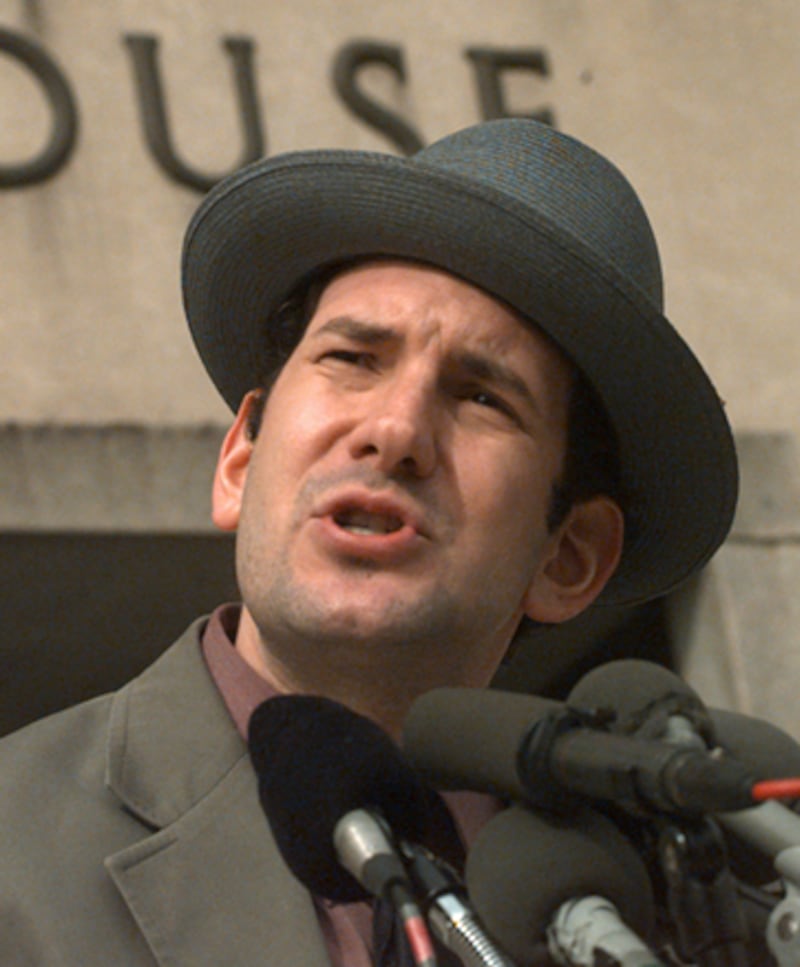
It may be hard for some to remember as far back as 1997, but Matt Drudge burst onto the scene in the late 1990s with one of the first political blogs, The Drudge Report. In an August 10, 1997, posting, Drudge wrote that White House aide Sidney Blumenthal "has a spousal abuse past that has been effectively covered up," quoting an anonymous source. Blumenthal, who had been married to his wife for 21 years and insisted the posting was a baseless lie, sued America Online, the ISP for Drudge, for $30 million. The oft-cited Section 230 of the Telecommunications Act of 1996 states specifically that no ISP shall be treated as publishers, but Blumenthal's lawyers tried to argue this was not the case with AOL. In April 1998, the court refused to dismiss the case against Drudge but said AOL was protected under Section 230. One year later, a federal district court judge dismissed the case against Drudge, citing his privileges as a reporter. Blumenthal eventually dropped the suit and reached a settlement for damages with Drudge in 2001, saying later in his book, The Clinton Wars, he could not longer afford to keep the suit going.
Brian K. Diggs / AP Photo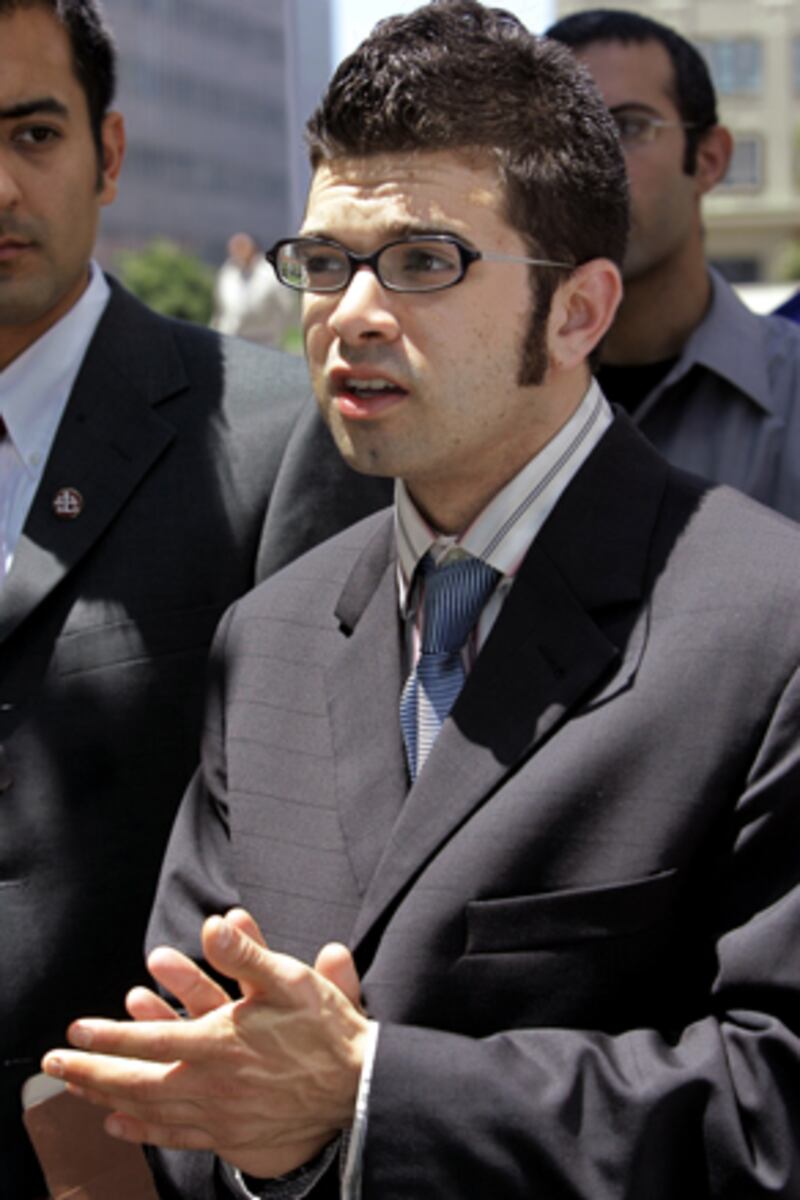
In 2005, Josh Wolf, a 21-year-old San Francisco college student, recorded a San Francisco protest against the G8 summit that had turned violent. He sold the video of a protester being choked by police, and other police officers threatening bystanders with guns, to a local news site and a local television station. Police asked for his video, but he refused, citing his First Amendment rights. Since he was not affiliated with any news organizations—only his own blog—his case went relatively unnoticed, and many questioned whether a blogger should get the same rights as a journalist. A grand jury issued a subpoena for the tape, claiming they needed to know the identities of the protesters for possible arson charges, but Wolf refused to comply. He was arrested on September 18, 2005, and a federal court said he would be held until he released the footage. He spent 226 days in the jail, the longest of any U.S. journalist for refusing to turn over sources, and was eventually released after he posted the footage on his blog .
Paul Sakuma / AP Photo
Think Secret, a blog started by The Daily Beast's Nicholas Ciarelli in 1998, published details about the Apple's Mac Mini two weeks before the official announcement, and Apple sued him for publishing trade secrets in January 2005. Since Ciarelli was not an Apple employee, he was not bound to protect any of Apple's secrets, but Apple argued that he should be held liable anyway and attempted to find out Ciarelli's sources. Ciarelli refused, and the eventual settlement never forced him to reveal his sources. The two parties settled the case in 2007, and Ciarelli left Think Secret to work at The Daily Beast.
Steven Senne