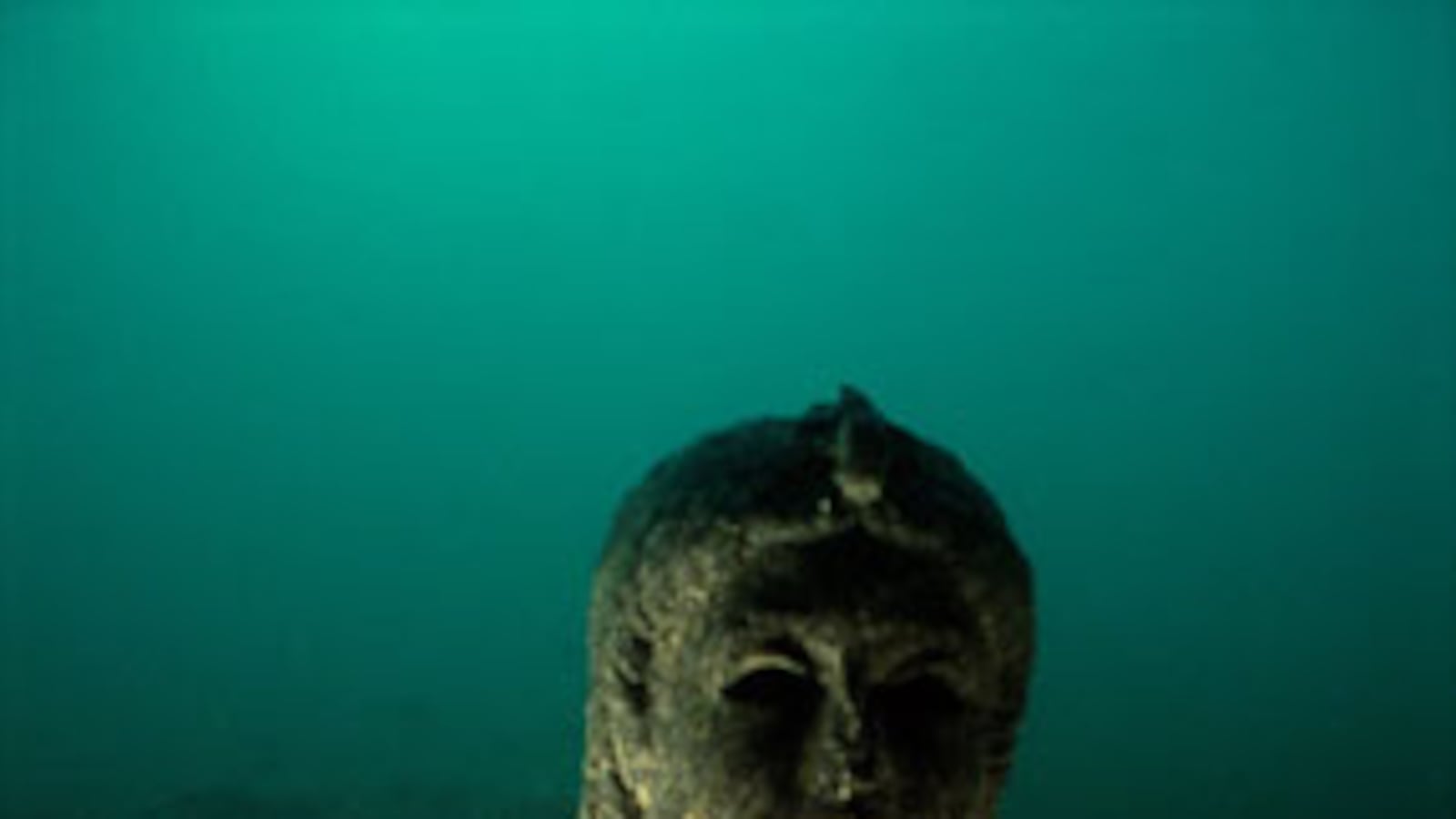
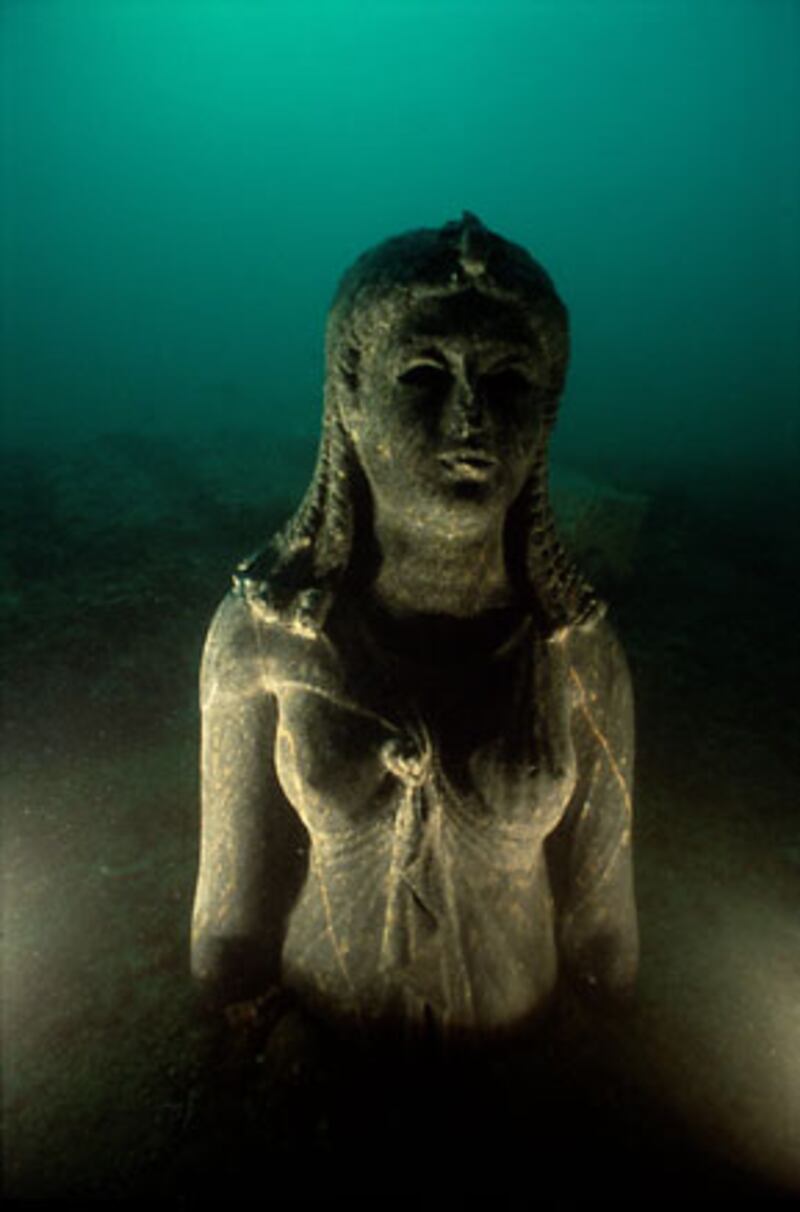
Statue of a Queen
Black Granite
Ptolemaic period
H. 7.2 ft
One of the finest finds from the bay of Aboukir is a remarkable Graeco-Egyptian product of the Ptolemaic era—a statue of a Ptolemaic queen in dark stone wearing the usual robe that identifies the sovereigns of Isis incarnate. Found at the site of Heracleion, the statue is certainly one of the queens of the Ptolemaic dynasty. Most likely, a representation of Cleopatra II or Cleopatra III, dressed as goddess Isis. The hair, whose plaited tresses are handled with entirely naturalistic detail, is crowned with a diadem decorated with the uraeus-snake.
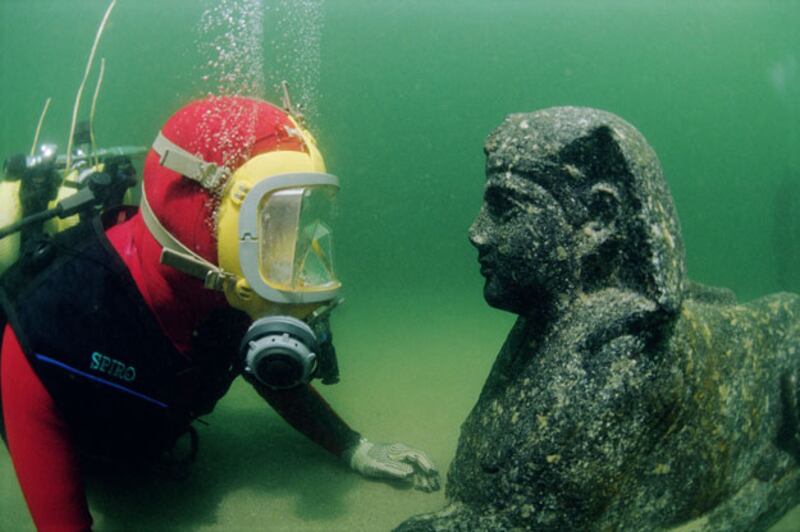
Sphinx (Ptolemy XII)
Alexandria
1st century BCE
Granodiorite
H. 2.3 ft / L. 4.9 ft
A diver eye-to-eye with a sphinx made out of black granite. The face of the sphinx is believed to represent Ptolemy XII, father of the famous Cleopatra VII. The sphinx was found during excavations in the ancient harbour of Alexandria.
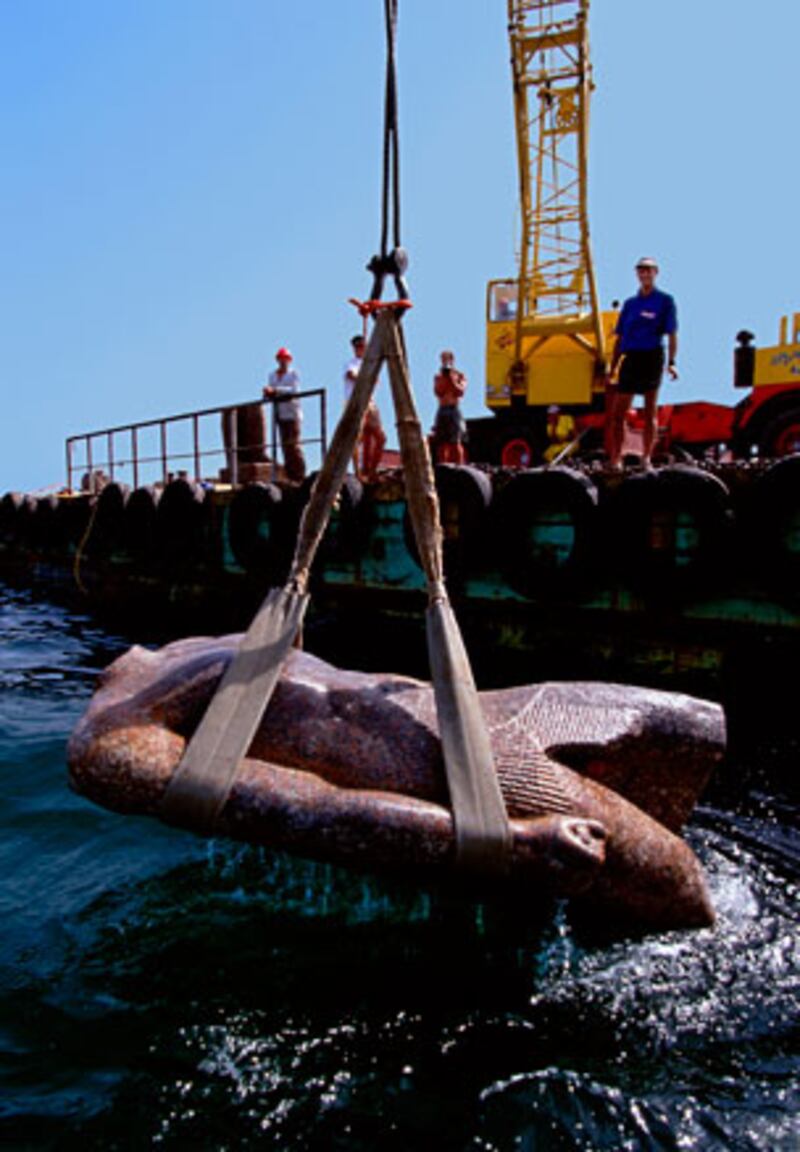
The torso of a statue of a pharaoh is being raised. The colossal statue is of red granite and measures over 16.4 ft. It was found close to the big temple of sunken Heracleion.
© Franck Goddio / Hilti Foundation, photo: Christoph Gerigk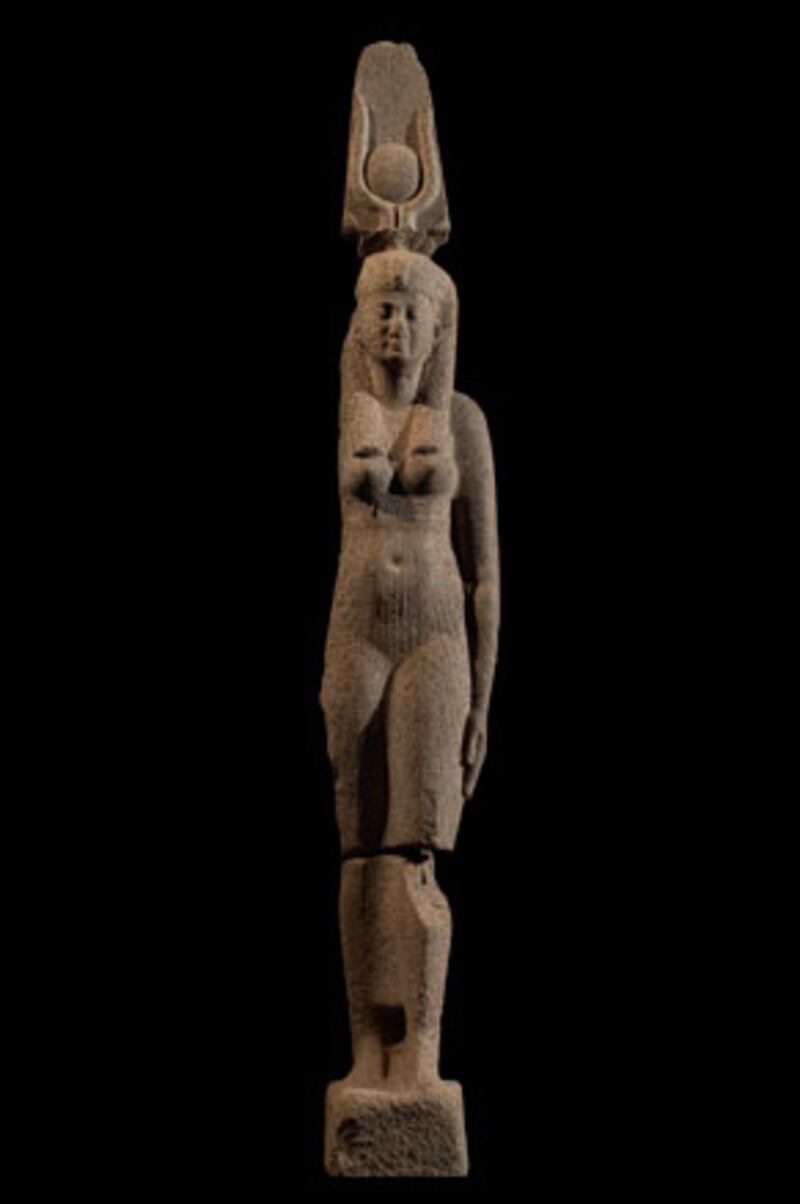
Recovered from the submerged ancient city of Heracleion during the explorations of Franck Goddio's team, this red granite statue is about 16 feet tall and weighs 4 tons.
©Franck Goddio / Hilti Foundation, Photo: Christoph Gerigk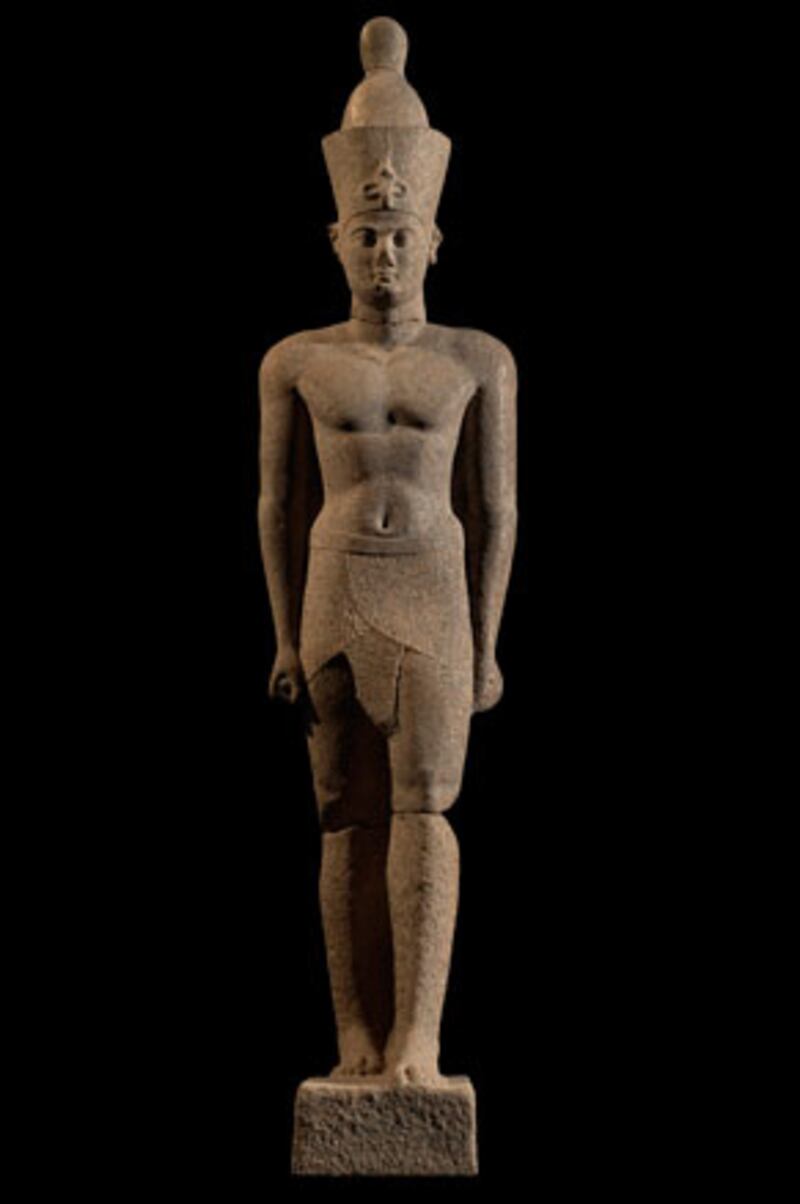
Recovered from the submerged ancient city of Heracleion during the explorations of Franck Goddio.s team, this red granite statue is the largest artifact in the exhibition, at about 16.5 feet tall and 5.5 tons.
©Franck Goddio / Hilti Foundation, Photo: Christoph Gerigk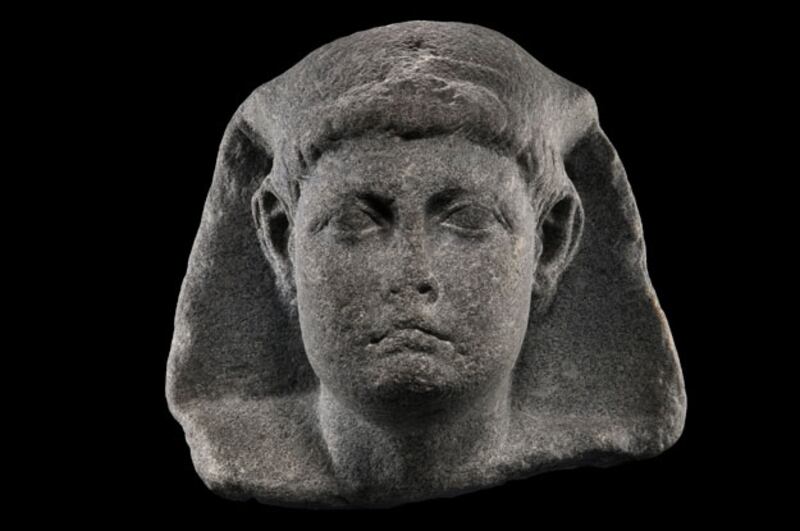
Colossal Head of Caesarion
Alexandria
1st century BCE
Granodiorite
H. 2.6 ft / W. 1.9 ft / D. 1.6 ft
This granite head (2.6 ft) is attributed to Caesarion (Ptolemaios XV), son of Cleopatra VII and Julius Caesar. It is part of a statue of about 16.4 ft in height and dates from the 1st century BC. It was found in Alexandria's ancient harbour opposite the island of Antirhodos.
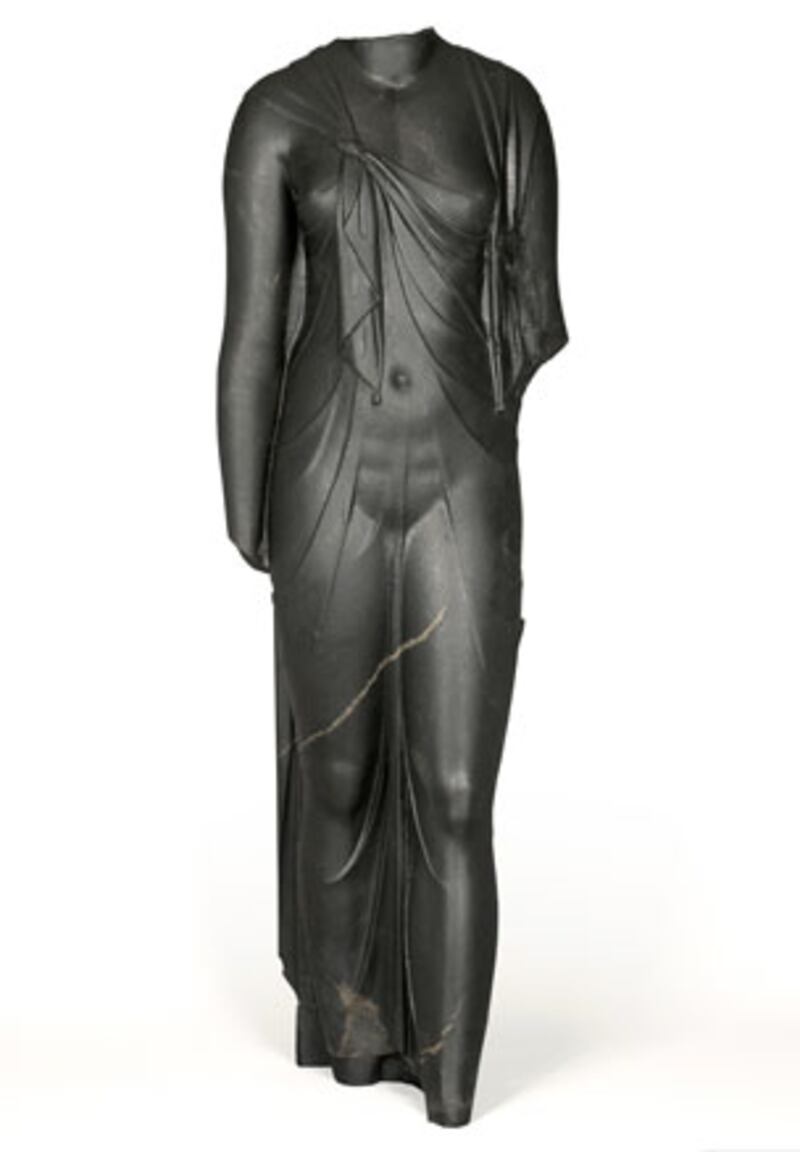
Statue of a Ptolemaic Queen
Black Granite
3rd Century BC
H. 150 cm / W. 55 cm / D. 28 cm
Cut in hard, dark stone, this feminine body has a startlingly sculptural quality. Complete, it must have been slightly larger than life-size. The statue is certainly one of the queens of the Ptolemaic dynasty (likely Arsinoe II) dressed as the goddess Isis, as confirmed by the knot that joins the ends of the shawl the woman wears, which was representative of the queens during this time period. The statue was found at the site of Canopus.
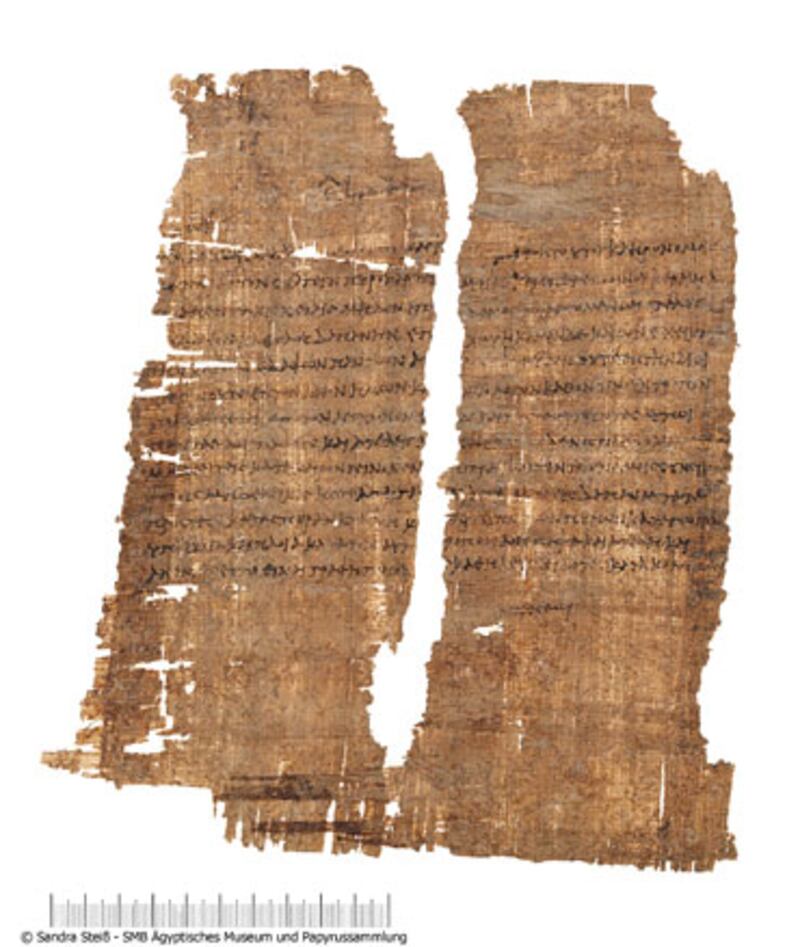
This papyrus document, signed by Cleopatra, grants tax exemption from sales of imported wine to the Roman businessman Publius Canidius, a friend of Mark Antony.
The manuscript, intended for an official in the Egyptian bureaucracy, was prepared by a court scribe. At the bottom of the document, in a rare example of her handwriting, Cleopatra herself added the Greek word "ginesthoi," "make it happen."
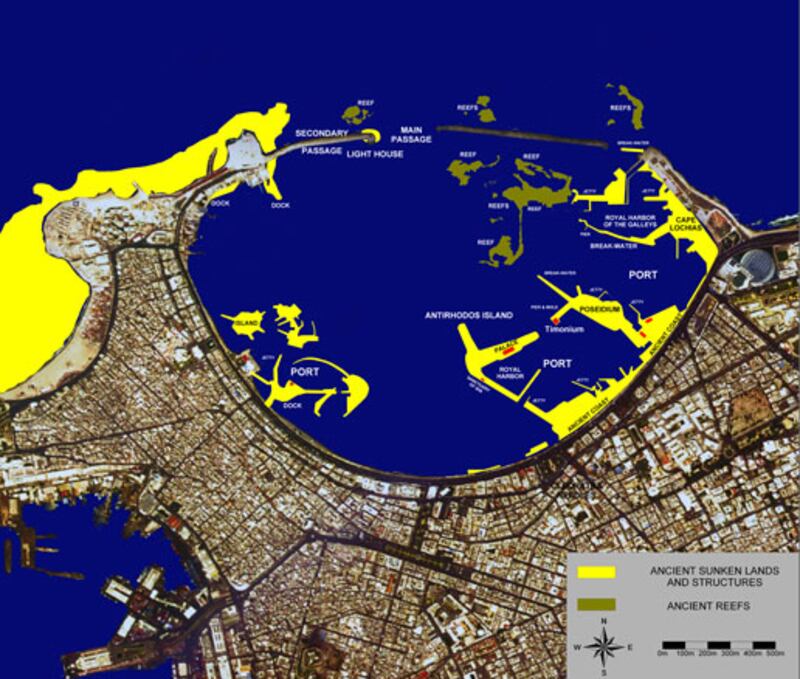
After fourteen years of electronic probing and underwater archaeological exploration, the outline of the famous Portus Magnus ("Great Port") and the sites of the main monuments have been clearly established. Here the land surface and ancient port infrastructures of the Portus Magnus have been projected onto a satellite image of modern Alexandria.
EarthSat NaturalVue © Franck Goddio/Hilti Foundation