Donald Trump’s most loathed network has laid bare just how the president has capitulated on key goals of his war with Iran in a desperate bid to bring the conflict to a swift conclusion.
The president has signed a 14-point agreement with Iran to halt the fighting for two months. His opponents have blasted the arrangement for containing significant concessions to the regime while deferring U.S. demands to later negotiations.
CNN, which Trump has long slammed as a “fake news” outlet for its coverage of his administration, rolled not one but two supercuts of the president and his Cabinet members commenting on crucial aspects of that deal, both before and after it was struck.
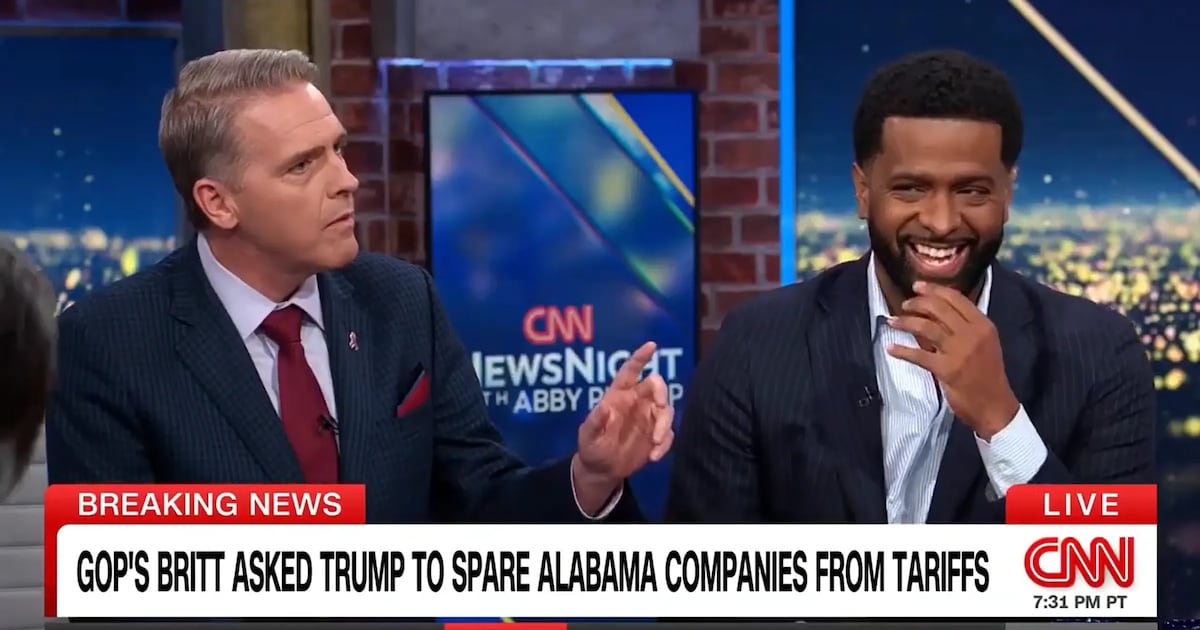
“One of the things we’ve talked about is the ballistic missile component of this,” host Abby Phillip told the Newsnight panel Wednesday night. “I just want to play what the administration had been saying about ballistic missiles, and what they’re saying now.”
The first clip then showed Trump—during his State of the Union address on Feb. 24, four days before he launched the war—warning that Iran had “already developed missiles that can threaten Europe and our bases overseas.” He added that the regime was “working to build missiles that will soon reach the United States of America.”
A second clip captured Secretary of State Marco Rubio telling reporters on March 27, around a month into the conflict, that the administration was seeking to “significantly destroy their missile launchers, so that they can never hide behind these things to get a nuclear weapon.”
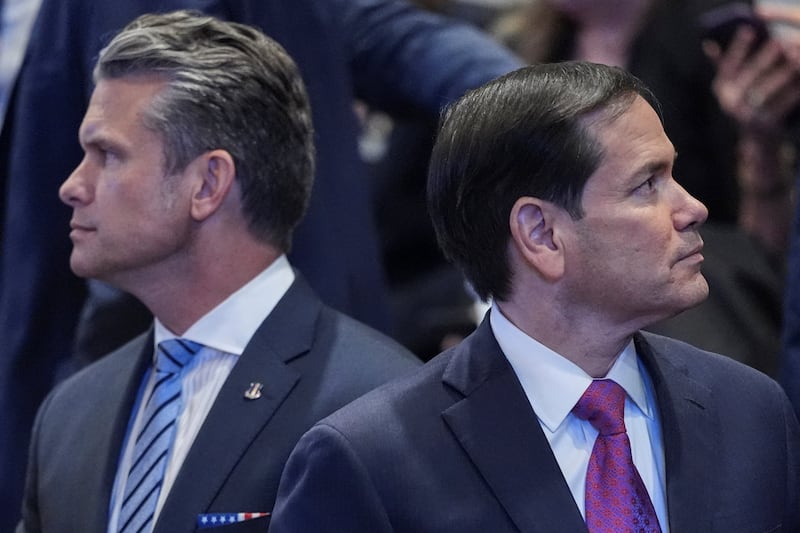
Defense Secretary Pete Hegseth had already teased those objectives during a March 2 press conference at the Pentagon, when the supercut showed him saying, “This operation is a clear, devastating, decisive mission: destroy the missile threat, destroy the navy, no nukes.”
The agreement makes no mention of ballistic missiles. Trump has said the issue will be taken up separately with Gulf states, and that Iran should be allowed to keep an arsenal proportional to those of its neighbors.
“Well, what am I gonna do?” the president told reporters Wednesday at the G7 summit in France, responding to questions about the ballistic aspect of the peace agreement. “Am I gonna let Saudi Arabia have missiles, but they can’t have them? Yes, sir! Can’t… it doesn’t work that way, you know? It doesn’t work that way.”
“Missiles aren’t the problem,” he added. “They hurt a little location, but they don’t blow up the planet.”
Phillip was quick to spell out the sharp reversal for viewers. “The rationale of this operation was to take the ballistic missile threat off the table, so that they could no longer use ballistic missiles as a shield for their nuclear program,” she said. “Now, you have the president saying, ‘Well, why can’t they have ballistic missiles? Everybody else in the neighborhood has them!’ How do they justify that?”
The network wasn’t done laying out how the Trump administration now appears to have abandoned several of the president’s key aims in launching the conflict in the first place. A second supercut, aired less than 15 minutes later, showed the president talking about the threat of Iran’s nuclear program.
“We want no enrichment, but we also want their enriched uranium,” he told reporters on March 23. “Oh, 100 percent,” he added in a May 12 radio interview about whether he could prevent Iran from building a nuclear bomb. “They’re gonna stop, and they told me, the Iranians told me, and I deal with them, and they said that we’re going to get the nuclear dust.”
Trump’s reference to “nuclear dust” means Iran’s stockpile of enriched uranium, which he previously claimed last year’s U.S. airstrikes against Iranian nuclear facilities had left buried and beyond reach. The agreement defers its fate to the coming talks, setting only a floor that the material be diluted inside Iran under international monitoring, rather than being removed or destroyed.
“We’ve been pretty tough on them,” Trump said during his Wednesday press conference. “It is a little hard though, when you say… somebody wants it, other people have it, other adjoining states have it, and you’re not letting them have it for purposes of electricity. That’s always a little tough, you have to use common sense.”

Phillip was again quick to clap back, underscoring just how far the president now appears to have flip-flopped on his earlier pledges. “The deal says, we’ll talk about enrichment,” she said. “And then he says, right there, maybe they might need to enrich—for other purposes. That is something that I think, for many conservatives, has been their red line on Iran.”
Trump spent a decade branding Barack Obama’s 2015 nuclear agreement with Iran as the worst ever negotiated, and abandoned it in 2018. His own deal is weaker by his party’s own measures. It sets no enrichment cap, no limit on centrifuges, and no fixed reduction of Iran’s stockpile, while handing Tehran sanctions relief and a potential $300 billion reconstruction windfall.
Opponents of Trump’s peace agreement with Iran have attributed those concessions to the administration entering the conflict without a clearly defined set of goals from the start.
“I think it just shows there was no clear objective from the beginning,” Yemisi Egbewole, former chief of staff and adviser to the White House press office under Joe Biden, told panelists on Phillip’s show. “I think the president and this administration sold this war in very large terms, and there is a middle ground.”
The Daily Beast has contacted the White House for comment on this story.