Doctor Addresses Big Question After Trump, 79, Sets Alarming Health Record
Mystery surrounds a key part of the president’s physical.

Donald Trump’s latest unwanted record is drawing scrutiny from medical experts.
The oldest president ever elected turns 80 on Sunday and his body and mind are showing signs of wear and tear. Trump was brought to Walter Reed National Military Medical Center in Bethesda, Maryland, last month for his annual check-up and was scrutinized by 22 specialists.
The Washington Post reported that the number is nearly double the number of physicians involved in his last physical, a comparatively meager 14 doctors, and is also the highest number of specialists recorded at a single examination of a president.

Probed on this question on Thursday, the White House insisted to the Daily Beast that the aging president remains in “excellent health.”
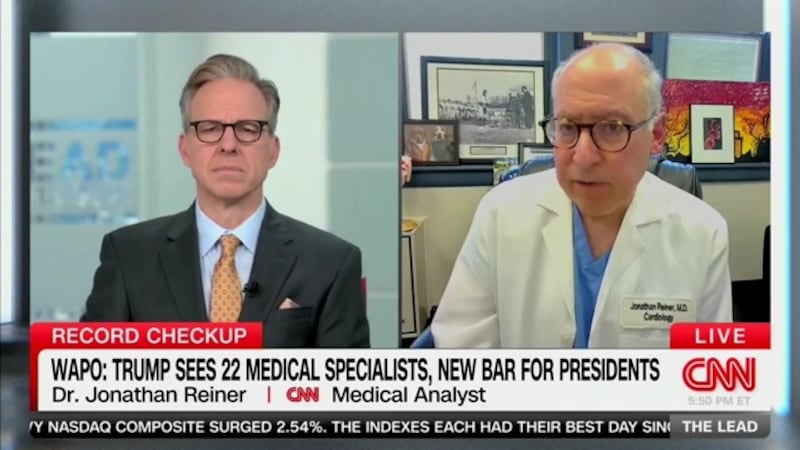
Reiner was alarmed at the number of specialists.
CNN
But Dr. Jonathan Reiner is not so sure. “It’s a very large number of docs, and I was struggling to outline a potential list of consultants that you would bring in that would fill up, you know, 22 slots,” the longtime doctor to the late Vice President Dick Cheney said on The Lead with Jake Tapper Thursday.
He also raised concerns about the timeline of the visit on May 26. “It’s obviously impossible for 22 different specialists to see the president during the three-hour visit to Walter Reed. Even if you only limited these visits to, you know, 15 minutes, that would only really account for about half of them. So, many of these evaluations are not done on the day of the president’s evaluation, but they’re done in the days or weeks leading up to that,” he explained.
Sign Up for The Swamp Newsletter
By clicking “SUBSCRIBE” you agree to our Terms of Use and Privacy Policy.
He noted that a memorandum from Trump’s doctor, Navy Captain Sean Barbabella, said Trump’s “comprehensive preventive evaluation included a thorough review of all diagnostic studies and laboratory testing conducted over the past year, as well as consultations with twenty-two specialty providers from multiple academic institutions.”
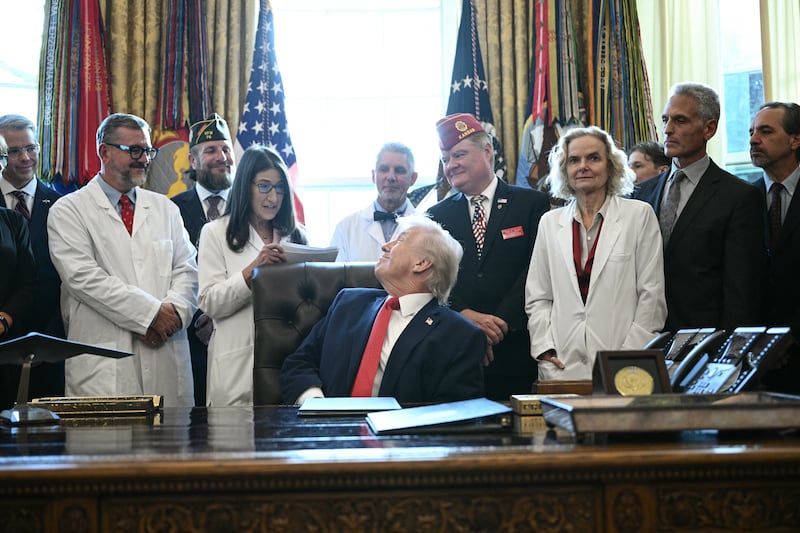
Trump with medical professionals in the Oval Office last year.
BRENDAN SMIALOWSKI/AFP via Getty Images

A bruise is visible on the back of President Donald Trump's right hand.
Chip Somodevilla/Getty Images
“Dr. Barbabella said that that note really reflected a review of all the tests and labs that he’s had in the prior year and the evaluation of 22 specialists. So, we really have no idea when the president was seen by these folks and nor do we know who he saw and for what reason. But it’s a gigantic number and a lot of logistics are involved in getting 22 different specialists from three different universities to see the president. It’s a big deal. And you would only bring someone in when they have something to add. You don’t need to bring in someone to look at sort of a normal ear,” Reiner explained.
He noted that “typically the president sees specialists that represent potentially important or lethal problems.”
“The consultants who come in, largely, are picked to evaluate a particular problem,” he said. “So you would have an orthopedist see the president if he or she were complaining of discomfort in the knee. You might have a neurologist see the president if they were noting headaches or difficulty walking or some such issue. So typically, consultants are brought in not just to screen the president, but also to assess a problem. And there’s no sense in the note from the president’s physician of why these consultants reported to see him or who they were.”
Physicians connected to Harvard University, Duke University, and other prominent institutions helped with the evaluation.

Asked for an outside diagnosis, Reiner pored over the president’s various issues. “I’m not sure there’s a unifying diagnosis for all of them,” he began. On Trump’s cankles, he said: “The swelling, he did not have the swelling last year at his exam, that developed over the summer. So that’s more of an acute process than a chronic process, although they’ve called that chronic venous insufficiency.”
Onto the recurring bruising on Trump’s hands. That “is related to a medication the president takes. We’ve been told by the president that he takes much more aspirin than his doctor recommends, four times as much. I don’t know why he would do that, particularly if he was bruising,” Reiner said.
And one of Trump’s more headline-grabbing issues: his propensity to fall asleep at public events, including Oval Office meetings. “As for his daytime somnolence, his sleepiness, you know, the White House can state that the president is blinking, but it’s obvious to anyone who watches these press events that the president falls asleep and it’s not really a mystery he doesn’t sleep at night. He’s up posting on social media in the middle of the night, but then, the net effect is that he’s sleepy during the day, and this is a real concern,” he said.
The White House has been contacted for comment.
See more of our coverage in your search results.

Got a tip? Send it to The Daily Beast here.
Register below to read this article for free or subscribe
to unlock unlimited access to The Daily Beast.
Monthly
$1
First month then $5.99/month
Annual
$35
First year then $59.99/year
Premium
$79
First year then $119.99/year
*Substack access provided by the next business day, using your subscription email. Choosing the Premium plan constitutes your permission to share your subscription email with Substack and your agreement to Substack’s Privacy Policy.
Already have an account? Sign In
Looks like you already have a subscription!
You're all set!
Thanks for subscribing.
Sign in or create an account
Login dialog
Loading comments…