
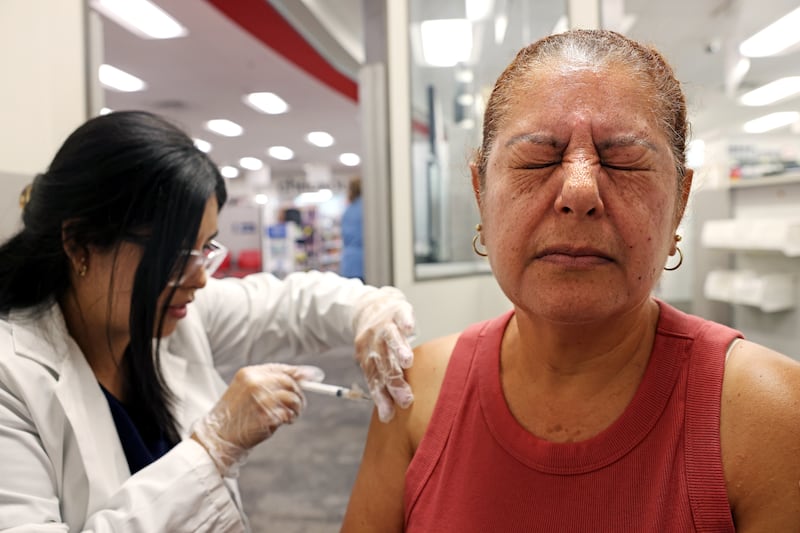
Doctors have sounded the alarm over rising cases of dangerous diseases long mitigated by vaccines.
They say that incidents of bacterial infections and whooping cough have increased, despite both previously being managed with medicine, sparking fears that growing vaccine hesitancy could finally be catching up with the nation.
President Donald Trump and his Health and Human Services Secretary Robert F. Kennedy Jr. have long peddled discourse drenched in conspiracy and vaccine skepticism on the heels of the COVID-19 pandemic. Now, a lower percentage of young American children are getting vaccinated against some illnesses.


The nation has endured spiking rates of measles nationwide, another condition that has historically been controlled through vaccines. Measles is considered a first warning sign because of its high contagiousness.
Whooping cough cases have spiked too, with 28,000 cases reported last year. It’s a major leap from the circa-7,000 reported in 2023. Overall vaccination rates are down, and while many of the cases that have presented have been children who were too young to have been inoculated yet, they are more at risk of infection because of falling vaccination rates, doctors say.
Doctors told The New York Times that they had seen an anecdotal increase in patients who had suffered cuts but refused tetanus jabs, and others who needed blood transfusions rejecting or delaying them because they didn’t want to take the blood of a vaccinated donor.

Doctors say that they feel like they are staring down a huge barrage of preventable illness, but feel powerless to stop it.
“It just feels like you’re a tiny little boat with a giant tidal wave coming at you,” Seattle-based regional pediatric hospitalist Dr. Erin Charles told the Times. “And you might convince one family here and there.”
There is data on the increased prevalence of some conditions, but doctors’ anecdotes suggest they are seeing upticks in their practice that numbers do not yet show.
Among them is Dr. Meghan Hofto, a pediatric hospitalist at the University of Alabama at Birmingham, who told the Times that she had treated as many children for rotavirus already this year as she could remember in the last 10 years.
All of the children were unvaccinated, she said, despite the condition having previously been pegged back to minuscule rates due to inoculation.
Andrew Nixon, a spokesman for the Department of Health and Human Services, told the Times, “We reject the premise that providing Americans with transparent information about the benefits and risks of medical products undermines public health.”
It comes after a study published in the scientific journal Nature Human Behavior found that Republicans’ distrust of the U.S. medical system is pushing a broadening healthcare gap.
“We turn to the survey data and show that people on the right are less likely to trust, engage, or use medicines to treat chronic illness relative to the left,” said study co-author and University of North Carolina, Chapel Hill, political science professor Neil O’Brian.
“People on the Right are less likely to go to their doctor, less likely to trust their doctor, less likely to think medicines to treat hypertension are safe and effective.”
The Daily Beast has contacted the Department of Health and Human Services for comment.
In a statement to the Beast, White House spokesman Kush Desai said, “The Trump administration remains focused on restoring public trust in our public health bodies, which had strayed from relying on Gold Standard Science as the only guiding factor in decision-making.”